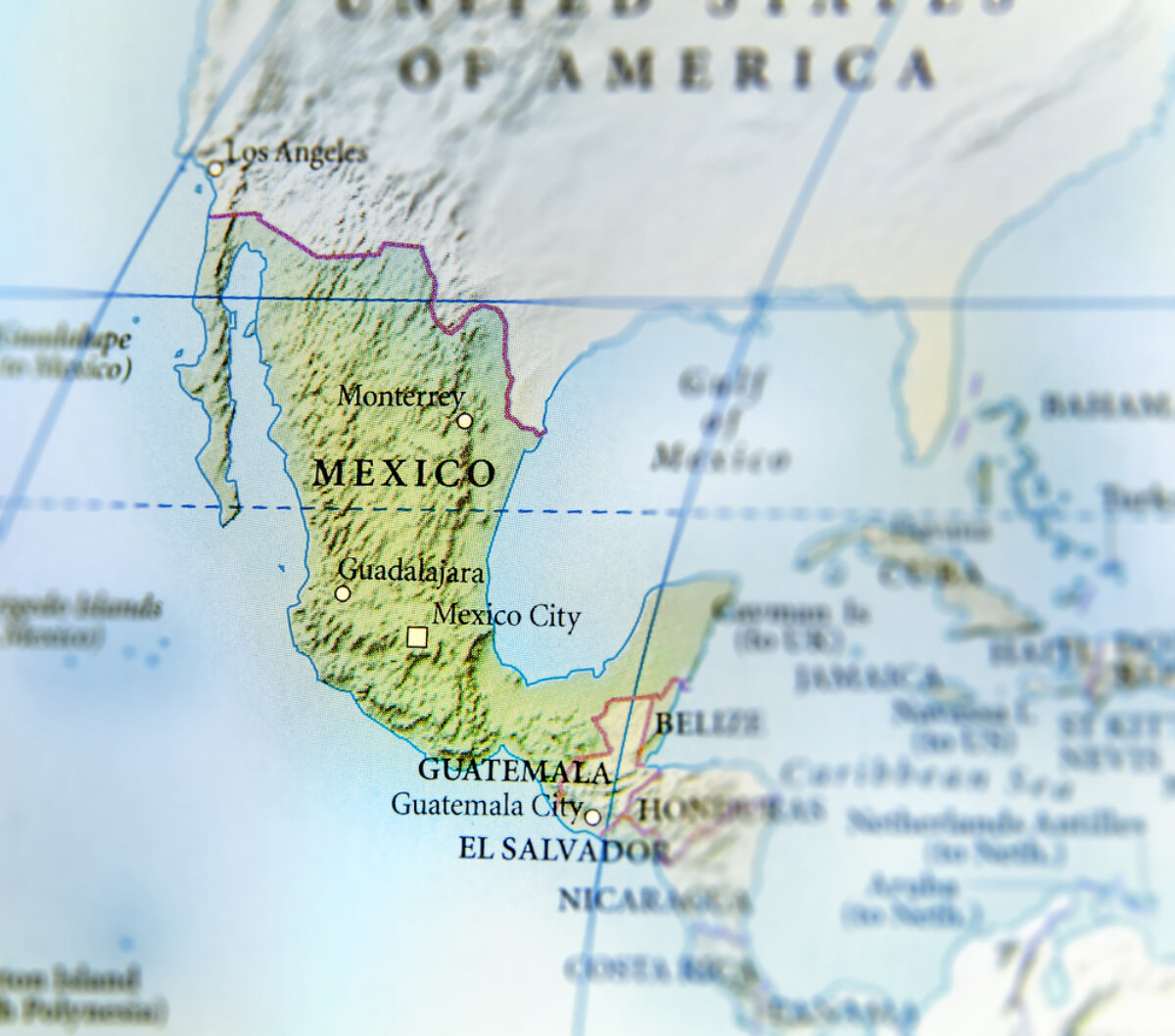
The death of Nemesio Oseguera Cervantes, known as "El Mencho," has shifted the Jalisco New Generation Cartel (CJNG) from a monolithic expansionist entity into a fragmented theater of succession. This leadership vacuum does not merely impact regional homicide rates; it recalibrates the entire risk profile for the 2026 FIFA World Cup, specifically for matches scheduled in Guadalajara and Mexico City. Security for an international mega-event relies on a predictable "peace of the capos." When that hierarchy dissolves, the probability of "hot zones" overlapping with "fan zones" increases due to the breakdown of territorial discipline and the rise of decentralized extortion.
The CJNG Hegemony and the Mechanics of Stability
To understand the current volatility, one must define the operational structure of the CJNG. Unlike the older, more federation-style Sinaloa Cartel, the CJNG functioned as a paramilitary corporate entity with a highly centralized command-and-control node centered on El Mencho.
- The Command Node: Centralized decision-making regarding "allowable" levels of public violence.
- The Logistics Arms: Sub-groups responsible for revenue (fentanyl, fuel theft, extortion).
- The Enforcement Wings: High-visibility units like the "Grupo Élite" used for territorial signaling.
The removal of the Command Node initiates a phenomenon known as "atomization." Without a singular authority to adjudicate internal disputes, mid-level commanders—or "plazas"—begin to compete for autonomy. This competition manifests as increased kinetic violence in urban centers, as seen in the recent skirmishes across Jalisco and Michoacán. For FIFA and international travelers, the concern is not that cartels will target the tournament directly—an act that would invite overwhelming federal and international military response—but rather that fans will be caught in the crossfire of "cleaning" operations where rival factions attempt to consolidate territory before the world's eyes arrive.
The Security-Development Paradox
The Mexican government faces a structural bottleneck: the more it militarizes the surroundings of the Estadio Akron (Guadalajara) and the Estadio Azteca (Mexico City), the more it risks pushing criminal activity into the "interstitial spaces" of the city. These are the transit corridors, hotel districts, and secondary nightlife hubs where the majority of tourist spending occurs.
The Security-Development Paradox dictates that while the "Hard Perimeter" of the stadium is nearly impenetrable, the "Soft Perimeter" of the city grows more vulnerable. Successors to El Mencho may use these high-visibility periods to embarrass the incumbent government or to signal dominance to rivals. This isn't about the match; it’s about the optics of control.
Quantification of Risk Factors
To assess the viability of 2026 match hosting, we must evaluate three primary variables that determine the "Atmospheric Safety" of a host city:
- Fragmentation Index: The number of independent armed cells operating within a 50-mile radius of the venue. A higher number indicates a higher probability of spontaneous, uncoordinated violence.
- Diversification of Revenue: Cartels that have moved from drug trafficking into "predatory" crimes (extortion of the service industry, kidnapping, "taxing" transport) pose a direct threat to the World Cup ecosystem.
- State Capacity Elasticity: The ability of the Mexican National Guard to sustain high-alert deployments without leaving "security vacuums" in the suburbs where violence could spike in retaliation.
The Geography of Succession in Guadalajara
Guadalajara is the spiritual and administrative home of the CJNG. The death of its leader triggers a "Succession War" that typically follows a three-phase progression.
Phase 1: Internal Purge. Loyalists to the original family line (The Cuinis) compete against the ambitious military commanders of the Grupo Élite. This violence is localized and often clandestine.
Phase 2: Territorial Encroachment. External rivals, such as the Sinaloa Cartel’s "Mayo" Zambada faction or the remnants of the Santa Rosa de Lima Cartel, perceive weakness and launch incursions into Jalisco territory.
Phase 3: Tactical Posturing. To deter the state from intervening in their internal war, factions may utilize "narcobloqueos" (burning vehicles to block major arteries).
The risk to the World Cup lies in Phase 3. A narcobloqueo on the Periférico Manuel Gómez Morín—the primary artery leading to the Estadio Akron—would not only paralyze the event but would also create a logistical nightmare for the extraction of high-profile athletes and dignitaries.
Redefining the "Safe" Narrative
Standard travel advisories often fail because they treat risk as a static metric. In a post-Mencho landscape, risk is fluid. The "Green Zone" strategy—creating a bubble of safety for athletes—is relatively simple to execute. The failure point is the "Grey Zone," which encompasses the millions of fans who will not have private security.
The logistical framework of the 2026 World Cup involves unprecedented cross-border cooperation. However, the presence of US security agencies (FBI, DEA) on Mexican soil during the tournament creates a "Sovereignty Friction." If a cartel faction chooses to escalate violence to protest US involvement in the succession fallout, the World Cup becomes the ultimate leverage point.
Infrastructure and Vulnerability
The infrastructure required for a World Cup—high-speed internet, improved roads, luxury hospitality—is the same infrastructure used by cartels to facilitate logistics.
- Connectivity: 5G expansion around stadiums assists cartel communication and drone surveillance.
- Transportation: New highways connecting Mexico City, Guadalajara, and Monterrey are dual-use corridors for both fans and illicit cargo.
- Hospitality: The influx of foreign currency through tourism provides a massive target for money laundering and extortion.
In the absence of El Mencho’s centralized "taxation" system, smaller, more desperate factions may resort to aggressive "retail-level" extortion of the very hotels and restaurants FIFA relies upon. This creates a supply chain risk where businesses may be forced to close or operate under duress during the peak of the tournament.
The Biological Successor vs. The Operational Successor
Speculation often centers on El Mencho’s children or his immediate circle. However, in modern criminal insurgency, the "Operational Successor" is often a nameless bureaucrat who manages the finances. The real threat to the World Cup is the rise of a "Warlord" successor—someone who values territorial brand over financial stability.
A warlord leader is more likely to engage in "Spectacle Violence"—public displays of force meant to intimidate. For a global event, even a single high-visibility incident of spectacle violence (such as a drone strike or a public execution) within the host city would force FIFA to consider a venue change, similar to the historical relocation of the 1986 World Cup from Colombia to Mexico.
Strategic Mitigations for 2026
The Mexican government must pivot from a "Containment" strategy to a "Neutralization of Opportunity" strategy. This involves three tactical shifts:
- Financial Asphyxiation: Targeting the local laundering cells in Guadalajara that will be most active during the succession scramble. If the factions cannot pay their foot soldiers, the kinetic violence decreases.
- Intelligence Interoperability: Creating a real-time data bridge between Mexican state police and FIFA’s private security consultants to identify "heat maps" of cartel movement weeks before the opening match.
- The "Social Shield": Engaging with the local business syndicates in Jalisco to provide them with direct lines of communication to federal authorities, bypassing potentially corrupted municipal police.
The success of the 2026 World Cup in Mexico is no longer a question of stadium readiness or turf quality. It is a question of whether the Mexican state can fill the void left by El Mencho faster than the next generation of cartels can fragment it. The tournament will be held in a country undergoing a fundamental restructuring of its criminal underworld. Security planning that assumes a "status quo" is already obsolete.
Operational focus must now turn to the "Tactical Inter-zone"—the space between the airport, the hotel, and the stadium. If the state cannot guarantee the safe passage of the "common fan" through these zones, the tournament’s legacy will not be one of sporting achievement, but of a catastrophic failure in urban security management. The window to stabilize these corridors is closing as the succession war accelerates. Agencies must prioritize the identification of the "New Guard" within the CJNG and establish whether they are rational economic actors or ideological insurgents. The answer to that question will define the safety of the world’s most-watched sporting event.