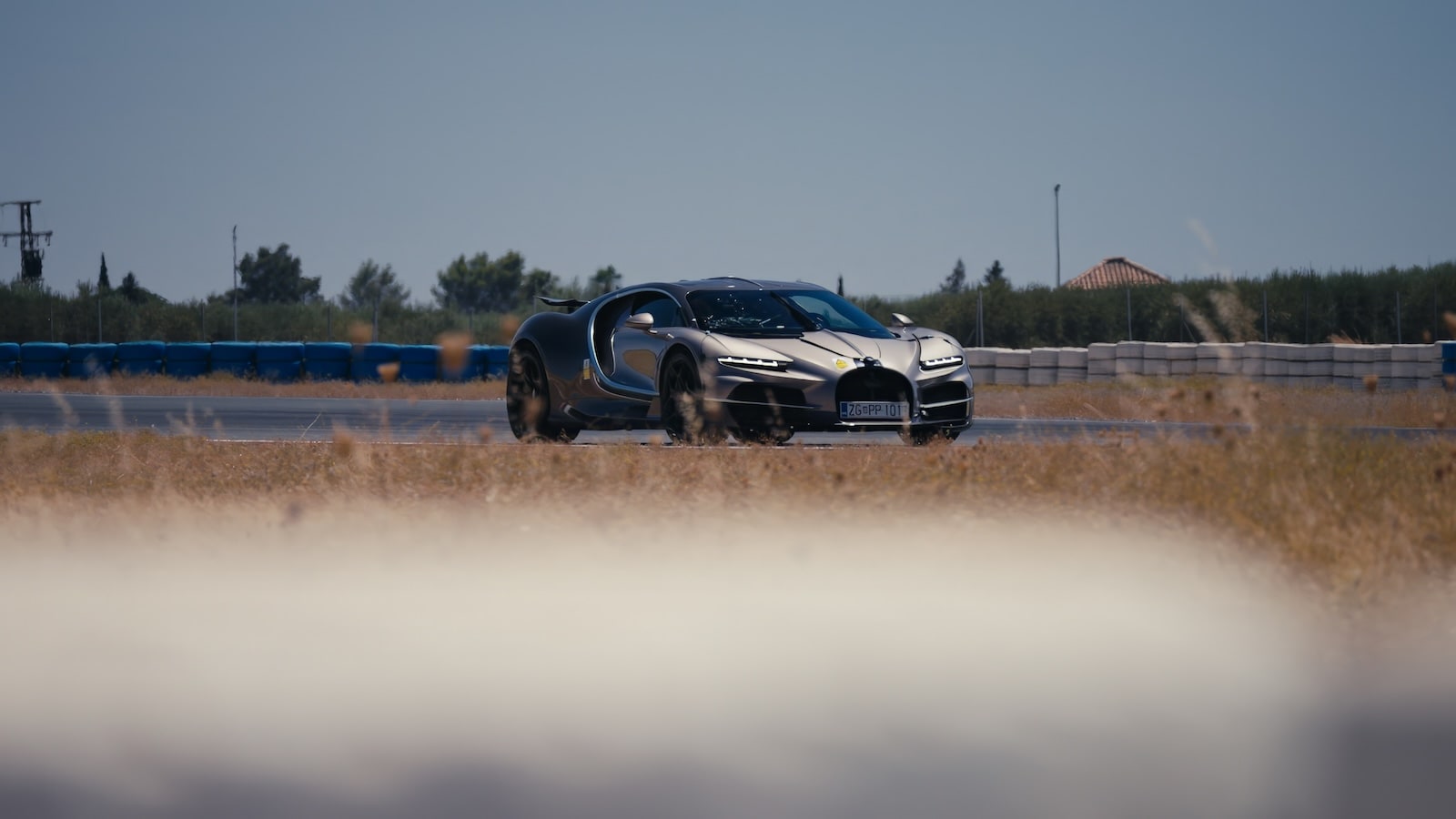
Most people look at a four-million-dollar hypercar and assume its biggest enemy is a speed bump or a careless valet. They're wrong. The real threats are frozen battery chemistry and boiling coolant.
When Bugatti builds a successor to the Chiron, it doesn't just polish a few carbon fiber panels and call it a day. The company took the Bugatti Tourbillon from the sub-zero frozen lakes of northern Sweden straight into the scorching, dry heat of southern Spain. Why? Because physics doesn't care how much an owner paid for a badge.
If you've ever spent time around high-voltage automotive engineering, you know that extreme temperatures expose every weak weld, lazy seal, and optimistic software algorithm. The Tourbillon isn't running the Chiron's familiar quad-turbo W16 anymore. It carries a brand-new, naturally aspirated 8.3-liter V16 paired with three electric motors and a 25 kWh battery pack. That completely changes the thermal rulebook.
The Brutal Reality of -30°C Testing in Sweden
Sub-zero testing isn't about taking pretty snow photos for press releases. Up in northern Sweden, near the Arctic Circle, temperatures regularly drop to -30°C and lower. At that temperature, rubber bushings turn into hard plastic. Conventional lubricants thicken into molasses.
For the Tourbillon, the cold creates a massive headache for its hybrid powertrain. Lithium-ion cells hate freezing weather. When a battery gets cold-soaked overnight at -30°C, internal resistance spikes dramatically. If you ask that battery to dump hundreds of kilowatts into three electric motors right away, you risk permanent cell degradation or sudden voltage drops.
Bugatti's engineers use Swedish winters to calibrate the thermal management system before the car ever reaches a customer's garage. They test how fast the battery heaters can bring that 800-volt architecture up to its happy place without draining the pack dry.
Then there's the V16 itself. Cold-starting a massive sixteen-cylinder engine with tight racing tolerances requires precise fuel enrichment and oil pressure control. Engineers leave prototypes sitting outside overnight, hook up dozens of telemetry sensors, and hit the starter button at dawn. They're listening for odd mechanical ticks, watching oil viscosity curves, and checking if every single gasket holds tight when metal contracts.
Grip is almost nonexistent on packed snow and polished ice. That's actually a gift for calibration teams. Low-traction surfaces let engineers fine-tune torque vectoring and traction control at relatively safe speeds. With two electric motors driving the front axle and a third assisting the V16 at the rear, the Tourbillon's software has to decide where every Newton-meter of torque goes in milliseconds. On Swedish ice, a clumsy software handoff between the electric motors and the gasoline engine sends the car spinning into a snowbank.
Cooking the Powertrain at Over 40°C in Spain
Once the frozen lakes thaw, the test fleet packs up and heads south. Spain offers the exact opposite torture test. Ambient temperatures routinely push past 40°C, and asphalt surface temperatures climb even higher.
Heat is the ultimate killer of hybrid hypercars. You're trying to cool two completely different systems that hate sharing the same thermal space. The naturally aspirated V16 spins up to 9,000 rpm and generates tremendous exhaust and under-hood heat. Meanwhile, the battery pack and inverters need to stay cool enough to prevent thermal throttling.
If the battery gets too hot, the car cuts electric power. Suddenly, your 1,800-horsepower hybrid is down several hundred horses, and the owner feels a sluggish throttle response. Nobody paying multi-million-dollar prices accepts thermal derating during a spirited mountain drive.
In southern Spain, Bugatti engineers run sustained high-load climbs up steep mountain passes with the air conditioning blasting at full capacity. They also simulate nightmare traffic scenarios. Imagine crawling at walking pace in 42°C heat with zero ram-air flowing through the front radiators. Fans scream at maximum rpm. Coolant pumps work overtime.
Under these conditions, engineers inspect everything from heat shields around the exhaust headers to the glue holding interior leather trim onto the dashboard. If an adhesive softens at 45°C cabin temperatures, it fails the test. Aerodynamic cooling ducts get tweaked based on real-world temperature readings from the brakes, transaxle, and battery cooling plates.
Why a Naturally Aspirated V16 Changes the Testing Game
You might wonder why Bugatti bothered with a V16 when turbocharging worked so well on the Veyron and Chiron. Emotion and throttle response are the obvious answers, yet from an engineering standpoint, ditching turbos changes how heat moves through the chassis.
Turbocharged engines create concentrated pockets of extreme heat around the exhaust manifolds and turbine housings. A naturally aspirated V16 spreads its thermal load across a much longer engine block. That block is nearly a meter long. Packaging that beast alongside three electric motors, an eight-speed dual-clutch transmission, and a central T-shaped battery spine requires obsessive airflow management.
During the Spain tests, engineers pay close attention to heat soak after the engine shuts off. When you drive hard in 40°C weather and park the car, coolant stops circulating unless electric after-run pumps keep moving fluid. Without proper after-run cooling, residual heat from the V16 can bake nearby wiring harnesses and electronic control modules.
Here's what the validation team actually measures during these extreme runs:
- Battery cell temperature spread across all modules under repeated full-throttle acceleration runs.
- Inverter and e-motor stator temperatures during sustained uphill climbs where electric torque fills in the V16's low-end power curve.
- Cabin HVAC efficiency, ensuring the climate control compressor doesn't steal too much cooling capacity from the high-voltage battery chiller.
- NVH (Noise, Vibration, and Harshness) shifts as chassis seals expand in Spanish heat or shrink in Swedish frost.
What Most People Miss About Prototype Validation
Car enthusiasts love reading about top speed runs on closed tracks. Those headlines sell magazines. Honestly, top speed testing is straightforward compared to environmental durability testing. A top speed run lasts a few minutes on smooth tarmac in controlled weather.
Driving thousands of kilometers through blizzards and heatwaves exposes cumulative wear that a wind tunnel or computer simulation simply cannot predict. Computer models are great at estimating airflow and structural loads. They're terrible at predicting what happens when fine Spanish dust mixes with morning condensation inside a suspension joint, or when freezing slush packs into an active rear wing mechanism in Sweden.
Bugatti uses these extremes to break parts on purpose before the first production car leaves Molsheim. Every sensor fault, squeaky bushing, or slow infotainment screen in -30°C weather gets logged, analyzed, and redesigned.
If you're following the Tourbillon's development toward customer deliveries, watch for the details that emerge from these test phases rather than just the headline horsepower numbers. Pay attention to how Bugatti talks about battery repeatability, cold-start refinement, and cooling system packaging. Those unglamorous engineering wins are what separate a genuine hypercar from an expensive garage queen that overheats in summer traffic or throws warning lights on a crisp winter morning.