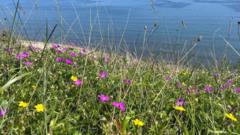
Environmental press releases love a clean narrative, and the recent announcements celebrating completed coastal grassland restoration projects are no exception. The official story is predictable: a rare ecosystem is saved, native perennial bunchgrasses are back, and the local biodiversity is thriving. But as anyone who has covered environmental policy for decades knows, ecological engineering is rarely that simple. The reality of coastal grassland restoration is a messy, expensive battle against time, climate shifts, and systemic funding failures. Completing the initial planting is not the end of a conservation triumph; it is merely the opening salvo in a perpetual, high-stakes maintenance war that most public budgets are completely unprepared to fight.
To understand why these projects face such an uphill battle, one must look at what coastal grasslands actually are. They are not static fields of pretty greenery. They are highly dynamic, disturbance-dependent ecosystems that historically relied on two forces to survive: regular wildfire and intensive grazing by native megafauna.
When modern development carved up the coastline, it eliminated those natural forces. Today, simply scattering seeds and pulling out invasive iceplant or mustard weeds will not bring a grassland back to life. Without a permanent commitment to aggressive, long-term intervention, these restored sites naturally revert to invasive scrubland within three to five years. The celebratory ribbon-cutting ceremonies occur at the peak of a project's visual appeal, long before the true test of ecological permanence even begins.
The Illusion of Completion
The word "completed" is dangerous when applied to an ecosystem. In public works or corporate construction, completion means the bridge is built or the software is deployed. In ecology, the term is marketing.
Most coastal grassland initiatives operate on short-term grant cycles, typically spanning two to five years. Funding covers the heavy lifting: initial soil preparation, non-native species eradication, seed collection, and the first critical rounds of watering. Once that money is spent, the non-profit or state agency files a final report, declares victory, and moves on to the next grant application.
What happens next is a quiet, documented decline. Invasive seed banks in the soil are incredibly resilient. Seeds from aggressive Mediterranean grasses or European weeds can lie dormant for a decade, waiting for the exact moment human intervention stops.
Consider a hypothetical scenario where a conservation group restores ten acres of coastal bluff. They hand-pull every weed, plant thousands of native plugs, and install a temporary drip irrigation system. By year three, the site looks pristine. The grant ends, the staff departs, and the irrigation is removed. In year four, an unusually wet winter hits. The dormant weed seeds in the soil germinate en masse. Because the native grasses are still establishing their deep root systems, the fast-growing invasives choke out the sunlight and steal the soil nutrients. By year six, the site looks exactly as it did before the million-dollar restoration began.
This is the cycle nobody wants to talk about. True restoration requires a shift from project-based funding to permanent operational funding. Without dedicated land stewards who are paid to patrol the same acreage year after year, initial restoration expenditures are essentially burning cash for temporary public relations points.
The Missing Tools of Ecosystem Management
To keep a coastal grassland healthy, you have to mimic the historical pressures that shaped it. That means introducing fire and teeth. Neither of these tools fits easily into modern coastal real estate realities.
The Bureaucratic Barrier to Prescribed Fire
Controlled burning is the single most effective tool for maintaining native grasslands. Fire clears out dead thatch, vaporizes invasive weed seeds, and cracks open the hard seed coats of native plants that require heat to germinate. Indigenous communities understood this and managed these coastlines with fire for millennia.
Today, executing a prescribed burn on a coastal bluff is a bureaucratic nightmare.
- Air Quality Restrictions: Coastal zones are often adjacent to major population centers, meaning smoke management permits are heavily restricted.
- Liability and Insurance: The financial risk of a controlled burn escaping into multi-million dollar coastal properties keeps public agencies from pulling the trigger.
- Narrow Weather Windows: Climate change has shrunk the number of days where temperature, wind speed, and humidity align perfectly for a safe burn.
Without fire, thatch builds up. This layer of dead organic matter suffocates new native growth and creates a perfect monoculture environment for invasive annual grasses, which thrive in thick litter.
The Grazing Dilemma
If you cannot burn, you must graze. Introducing livestock like cattle, goats, or sheep can mimic the impacts of elk or deer populations that once roamed the coast. But managed grazing is an art form, not a blunt instrument.
+-----------------------------------+-----------------------------------+
| Proper Conservation Grazing       | Poorly Managed Grazing            |
+-----------------------------------+-----------------------------------+
| High-density, short-duration      | Continuous, unmonitored grazing   |
| grazing that targets invasives    | that leads to soil compaction     |
| before they go to seed.           | and erosion on fragile bluffs.    |
+-----------------------------------+-----------------------------------+
| Carefully timed to avoid eating   | Animals eat the native perennials |
| native bunchgrasses during their  | down to the root, permanently     |
| vulnerable flowering phases.      | destroying the population.        |
+-----------------------------------+-----------------------------------+
Finding livestock operators willing to transport animals to small, fragmented coastal plots for short periods is incredibly difficult. It is logistically complex and financially unviable for most commercial ranchers. As a result, many restoration projects rely on manual weeding by volunteers or underpaid crews. It is a noble effort, but it is like trying to empty the ocean with a teaspoon.
The Genetic Identity Crisis
There is another, deeper problem buried in the soil of these restoration projects: the origin of the seeds themselves.
When a restoration project requires tens of thousands of native grass seeds, project managers often have to buy them from commercial native seed suppliers. These suppliers scale up their operations by growing native plants in agricultural valleys, far away from the harsh coastal environment. Over generations of cultivation, these plants lose the specific genetic adaptations required to survive on a wind-swept, salt-sprayed coastal cliff.
When these interior-grown varieties are planted back on the coast, they often lack the resilience of the local wild populations. They might look identical to the naked eye, but their physiology is different. They require more water, tolerate less salt, and succumb more easily to coastal droughts.
True ecological restoration demands local providenced seeds—seeds collected directly from the surviving wild remnants within the same microclimate. Collecting these seeds by hand is tedious, slow, and expensive. It does not scale to meet the demands of large-scale public works projects or corporate mitigation mandates. When speed and budget dictate the timeline, genetic integrity is almost always the first compromise made.
Climate Disruption Changes the Rules
We are trying to restore historical ecosystems using a climate blueprint that no longer exists.
Coastal grasslands depend heavily on coastal fog to survive the dry summer months. Fog provides a critical moisture subsidy, dripping from the leaves of plants directly into the soil when rainfall is nonexistent. Data over the last several decades shows a measurable decline in coastal fog hours along major coastlines.
At the same time, atmospheric rivers and prolonged droughts are swinging the weather pendulum between violent extremes. A restored grassland might survive a standard dry summer, but it cannot withstand a three-year multi-state drought followed by a winter of historic downpours that erode the fragile topsoil right off the bluffs.
We must confront a uncomfortable truth. Some areas we are trying to restore to historical baselines are no longer climatically suitable for those specific species. Forcing a 19th-century ecosystem into a 21st-century climate reality is an exercise in futility. Conservationists are beginning to debate whether they should practice assisted migration—introducing climate-resilient native species from further south to take the place of local species that can no longer take the heat. It is a controversial strategy that splits the scientific community, but staying stubbornly committed to historical purity guarantees failure.
Moving Beyond the Ribbon-Cutting
The fundamental flaw in our current approach to conservation is our obsession with the finish line. We treat land management like a construction project with a hard deadline. It needs to be managed like public infrastructure—like water treatment plants or highways that require permanent, structural funding for maintenance and repair.
If a public agency cannot secure a permanent funding mechanism for maintenance, they should not fund the initial restoration.
It is far better to successfully protect and maintain five acres of high-quality, genetically diverse coastal grassland over thirty years than it is to plant five hundred acres and abandon them to the weeds after three. We must stop measuring environmental success by the number of acres planted or the number of press releases issued. The only metric that matters is the health of the land ten, twenty, and fifty years after the cameras have gone home.