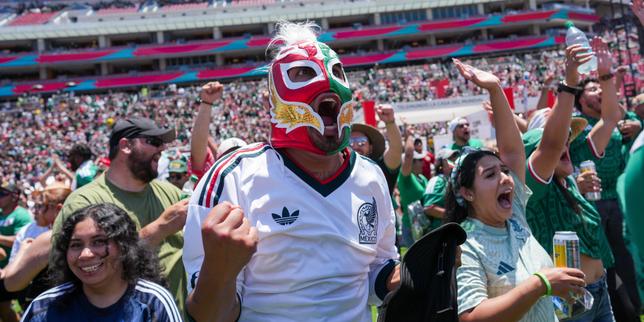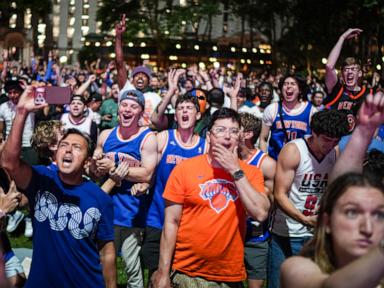
New York City bar owners are facing an unprecedented operational crisis as a deep postseason run by the Knicks collides directly with the opening matches of the FIFA World Cup. This dual booking creates a high-stakes turf war over screens, audio feeds, and floor space. Establishments that usually rely on predictable seasonal crowds now have to choose between two fiercely loyal, big-spending fanbases. It is a logistical nightmare masquerading as a financial windfall, forcing operators to ration their square footage and risk alienating core regulars. The decision of which game gets the sound system determines survival this month.
The Sound Problem
You can split a television screen, but you cannot split a room’s audio. When two massive sporting events happen simultaneously, the bar owner's primary challenge is not visual infrastructure. It is acoustic real estate.
A packed room watching a crucial fourth quarter at Madison Square Garden requires the PA system to deliver every whistle and commentary track. At the exact same moment, a World Cup group-stage match involving a high-interest national team demands the same auditory dominance. Trying to play both audio feeds simultaneously results in a chaotic wall of noise that drives customers out the door.
To survive, operators are forced to draw hard physical lines down the center of their establishments. Some have invested thousands of dollars in localized directional speakers, trying to beam the basketball audio to the front booths while keeping the soccer commentary focused on the back bar. This fix is rarely perfect. The sound bleeds. When the Knicks hit a three-pointer, the eruption of noise disrupts the tension of a penalty kick across the room.
The financial stakes behind these audio decisions are unforgiving. A fan who cannot hear the game is a fan who leaves at halftime. Operators are tracking the average spend per head to decide who gets the sound. Basketball fans tend to consume heavy pub food and draft beer over a concentrated two-and-a-half-hour window. International soccer fans often occupy stools for longer stretches, pacing their consumption of imported bottles and spirits.
The Battle for the Stool
Space in Manhattan and Brooklyn taverns is notoriously tight. The physical footprint of a standard neighborhood joint cannot magically expand to accommodate two distinct subcultures that rarely mix.
The Real Estate Calculation
Consider a hypothetical mid-sized sports bar in Astoria with a legal capacity of 120 people. Under normal circumstances, a June World Cup match would fill every square inch of that room. The morning and afternoon crowds would cycle out, leaving the evening open for baseball or standard summer trade.
Now, look at the friction created when those timelines overlap:
| Metric | Knicks Postseason Fanbase | World Cup Group Stage Fanbase |
|---|---|---|
| Average Stay Duration | 2.5 hours | 3 to 4 hours (including pre-match) |
| Peak Table Turnover Rate | High (post-game exodus) | Low (group watching multi-match days) |
| Ordering Behavior | Pitchers, wings, high-volume fast casual | Individual pints, spirits, steady grazing |
| Space Requirement | High density around main screens | High density near specific group zones |
When these two groups arrive at the same time, the tavern owner faces an immediate space crunch. Soccer fans are notorious for arriving two hours before kickoff to secure specific vantage points, effectively locking out the basketball crowd that shows up thirty minutes before tip-off.
The Regulars Problem
Every successful New York venue relies on a bedrock of neighborhood regulars who sustain the business during the lean months of February and August. The current dual-sport surge threatens to displace these reliable earners.
When an influx of transient fans takes over a venue for a major tournament, the local guy who buys three IPAs every single Thursday night gets pushed to the curb. Operators are hyper-aware that the World Cup ends and the Knicks eventually enter the offseason. If the local regulars find a new spot because they were crowded out by a sea of replica jerseys, the bar loses its long-term financial foundation.
Engineering the Split Screen
The physical manipulation of the venue requires more than just pointing a remote control at a wall of monitors. It requires a complete overhaul of traditional hospitality layouts.
Establishments are actively partitioning their floor plans. Velvet ropes, temporary barriers, and strategically placed high-top tables are being deployed to create distinct zones. One side of the room operates as a basketball arena; the other functions as a European football stadium.
This spatial segregation requires staff who can manage crowd psychology. Bartenders are no longer just pouring drinks; they are acting as peacekeepers and traffic cops. The tension in a room where one half is mourning a missed free throw while the other half is celebrating a goal can turn hostile instantly. Security staff are being positioned not just at the front door, but at the invisible border lines inside the room to prevent verbal sparring from escalating into physical altercations.
The back-of-house operations face an identical strain. Kitchens designed to handle a steady flow of orders are hit with massive, synchronized spikes in demand.
The Knicks timeout coincides with halftime of the evening soccer match. Suddenly, seventy people simultaneously decide to order burgers and mozzarella sticks. Ticket times in the kitchen skyrocket. When food takes forty-five minutes to arrive because the line cooks are overwhelmed by two distinct sports crowds hitting peak hunger at the exact same moment, customer satisfaction plummets, tips dry up, and staff morale breaks.
The Margin Illusion
The soaring revenue numbers reported during these sports overlaps often obscure a tighter, uglier fiscal reality. Higher volume does not automatically translate to clean profit when the costs of executing that volume rise alongside it.
The Overhead Spike
To manage the sheer volume of bodies, bar owners are carrying massive labor surpluses. They are scheduling extra security, double-shifts for floor staff, and dedicated bar-backs just to keep up with the glassware rotation.
At the same time, distributors hike prices on high-demand kegs and spirits during major international tournaments. The cost of goods sold creeps upward precisely when the venue needs to maximize its margins.
The Premium Tax
Venues are also paying exorbitant commercial licensing fees to broadcast these events legally. Direct-to-consumer streaming subscriptions do not cover public exhibition.
Bars pay thousands of dollars per month based on their fire-code occupancy to access premium sports packages. When multiple networks hold the rights to different concurrent games, the venue must subscribe to every single service, cutting deeply into the revenue generated by the extra bodies crammed into the room.
The Death of the Generalist Sports Bar
This logistical crisis is accelerating a broader trend across the metropolitan hospitality industry. The era of the all-purpose sports bar that tries to please every fan simultaneously is ending.
The current environment rewards strict specialization. Operators who try to compromise by playing the Knicks on 60% of their screens and the World Cup on 40%, while mixing the audio or running no sound at all, end up pleasing nobody. The basketball fans leave because they cannot hear the commentary. The soccer fans leave because the main projector is dedicated to the hoop game.
The venues finding success are the ones making hard, exclusionary choices. They declare themselves a "Knicks Bar Only" or a "World Cup Hub," forcing the competing fanbase to look elsewhere. It requires walking away from immediate money at the door, but it preserves the identity and sanity of the business.
The operators who refuse to choose are left scrambling in the middle, burning out their staff, angering their regulars, and watching their profit margins evaporate in a cloud of noise and logistical friction. Survival in this environment is not about capturing every dollar; it is about knowing which dollars to let walk down the street.