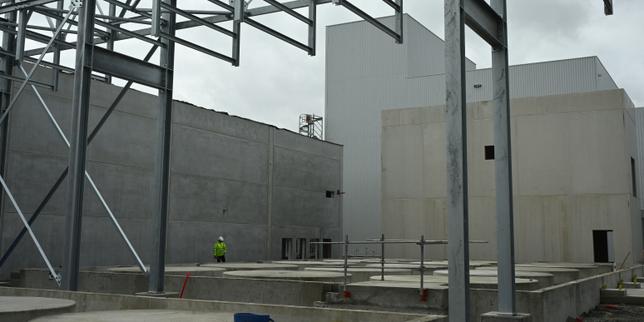
The European Union has committed financial backing to forty-six fresh critical raw materials initiatives, earmarking six specific industrial sites within France to fracture Beijing's near-total monopoly on permanent magnets and rare earth elements.
Money alone does not alter geology, nor does it compress the agonizing decade-long timeline required to transition a raw mineral deposit into an operational refinery. Don't miss our recent article on this related article.
For years, industrial policy in Western capitals treated raw material supply chains as an administrative footnote. Trade was assumed to flow smoothly along the path of least resistance, dictated entirely by comparative advantage and low production costs. Beijing calculated differently. Long before European technocrats realized that modern defense systems, wind turbines, and electric vehicles depend entirely on heavy rare earths like dysprosium and neodymium, Chinese state capital systematically consolidated the entire global architecture of extraction, separation, and metallurgy.
The strategy was simple, ruthless, and remarkably effective. By shouldering the immense environmental degradation and toxic wastewater runoff associated with separating monazite and bastnäsite ores, China captured over ninety percent of global rare earth magnet production. Western markets enjoyed cheap goods while outsourcing the dirty industrial reality. Now, the bill has arrived, and the currency is industrial sovereignty. If you want more about the background here, Al Jazeera provides an excellent breakdown.
Brussels attempts to reverse this vulnerability through the Critical Raw Materials Act, aiming to ensure that by 2030, the continent extracts ten percent of its consumption, recycles fifteen percent, and processes forty percent locally. The forty-six newly designated projects represent the kinetic phase of this policy. Yet, translating political ambition into operational reality exposes deep structural fractures across European industrial geography.
The Mirage of Fast-Track Permitting
Bureaucracy remains the primary obstacle to mineral independence. European officials promise accelerated administrative greenlights for strategic projects, designating them as matters of overriding public interest. Realism suggests otherwise. Environmental protection laws, strict local zoning codes, and rigorous public consultations are not easily bypassed in democratic societies.
Consider the logistical hurdles facing extraction sites inside France. Projects spanning from lithium exploration in the Massif Central to rare earth processing proposals in central regions face immediate, fierce opposition from local residents and ecological coalitions. The paradox is acute. Citizens demand the green transition, electric mobility, and strategic autonomy from authoritarian regimes, yet nobody wants an active industrial processing facility, tailings dam, or chemical refinery built within sight of their village.
When a company announces a domestic mining or refining initiative, the immediate aftermath involves multi-year legal challenges, appeals over water table contamination, and protracted debates regarding air quality. Beijing operates without these domestic friction points. Local populations have zero legal recourse to halt state-mandated industrial zones. This structural divergence grants Chinese state-backed conglomerates an insurmountable velocity advantage. While a European project spends five years locked in environmental litigation and municipal disputes, a counterpart in Inner Mongolia moves from blueprint to active smelting in eighteen months.
Processing Expertise Cannot Be Imported Overnight
Securing the raw rock from the ground is only the first hurdle. The real bottleneck lies in separation and metallurgy. Rare earth elements are chemically stubborn, bound tightly together in geological formations alongside radioactive thorium and uranium. Separating neodymium from praseodymium requires hundreds of sequential solvent extraction stages using concentrated acids and organic solvents.
Europe lost this institutional knowledge decades ago. Generations of chemical engineers educated in Western universities gravitated toward software, finance, and consumer technology, abandoning heavy industrial metallurgy. The technical workforce capable of running complex, high-purity separation circuits has largely aged out or migrated to Asian operations.
Building a mine without domestic refining capacity simply means exporting raw dirt abroad for processing, replicating the exact colonial-style extraction model Europe claims to reject. To break this cycle, the newly backed initiatives must build downstream refining infrastructure. This requires specialized chemical plants, massive electricity supplies, and rigorous waste management protocols. Each of these requirements faces severe headwinds across the continent, particularly in light of persistent energy price volatility.
Energy intensity is the silent killer of Western industrial projects. Heavy refining and magnet manufacturing devour massive quantities of reliable, low-cost electricity. Since European energy markets decoupled from cheap Russian natural gas and accelerated intermittent renewable integration, industrial power tariffs have spiked significantly above those in China or the United States. Operating a chemical separation plant in France or Germany carries a structural cost penalty that subsidies alone cannot permanently erase. If the power required to refine critical minerals costs three times more in Europe than it does in Asia, the resulting magnets will be economically uncompetitive from the day they leave the factory floor.
The Geopolitical Counter-Strategy
Beijing is acutely aware of Western efforts to diversify supply chains and possesses formidable countermeasures. China does not merely export finished rare earth magnets; it guards the intellectual property, proprietary machinery, and chemical recipes that make large-scale separation economically viable. Furthermore, Beijing has demonstrated its willingness to weaponize supply restrictions, instituting strict export controls on gallium, germanium, graphite, and key processing technologies.
When European automakers and wind turbine manufacturers attempt to source materials from newly funded domestic projects, they will discover a commercial reality defined by razor-thin margins. Chinese producers can temporarily flood global markets with below-cost rare earths to crush nascent Western competitors before they achieve economies of scale. Without aggressive border adjustments, tariffs, or mandated local content rules for defense and energy infrastructure, domestic processing plants risk bankruptcy long before turning a profit.
Subsidies act as life support, but they do not create a self-sustaining market. To succeed, the European Union must transition from temporary grant-funding to long-term market guarantees. This means defense contractors and major industrial original equipment manufacturers must legally commit to purchasing higher-priced European rare earth magnets, absorbing the cost difference as an insurance premium against supply chain weaponization.
The forty-six projects championed by Brussels represent a necessary awakening, but they are merely the opening salvo in a protracted industrial conflict. Rebuilding a severed supply chain requires a generational commitment of capital, political will, and societal tolerance for heavy industry on home soil. If Europe flinches at the environmental debates, balks at the energy costs, or retreats when market prices fluctuate, the continent will remain permanently tethered to Beijing's industrial lifecycle, trading energy dependence on Moscow for raw material subordination to the East.