The European Union has officially cleared Panama and Vietnam from its blacklist of non-cooperative jurisdictions for tax purposes. Behind closed doors in Brussels, technocrats point to legislative reforms and commitments to international transparency standards as the justification for the shift. Yet seasoned observers tracking cross-border financial flows recognize a familiar pattern. Economic pressure, diplomatic maneuvering, and the pragmatic limits of extraterritorial compliance often override strict adherence to regulatory purity.
Removing these jurisdictions from the high-risk roster alters the compliance calculus for multinational corporations, international banking institutions, and institutional investors operating across multiple continents. Compliance departments that previously treated transactions involving these nations with extreme caution can now recalibrate their risk matrices. However, the downgrade from a tax haven blacklist does not mean financial transparency has been fully achieved or that illicit capital flows have evaporated. It merely signals that these governments met the minimum procedural benchmarks demanded by European authorities.
To understand why this delisting occurred, one must examine how the European blacklist operates. Established in the wake of successive global leaks exposing offshore corporate secrecy, the list functions as both a regulatory shield and a diplomatic cudgel. Member states design the criteria to pressure third-party countries into adopting automated exchange of information agreements, reforming domestic corporate tax codes, and eliminating preferential tax regimes that undermine European tax bases. When a government passes the required statutes—regardless of how effectively those laws are enforced on the ground—Brussels faces immense bureaucratic pressure to remove the designation to avoid protracted trade friction.
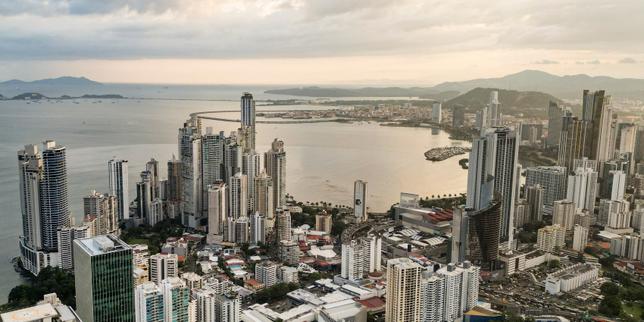
Panama occupies a unique position in the architecture of international wealth management. For decades, the canal nation served as a primary nexus for corporate incorporation, maritime registration, and discretionary trust structuring. Following the Panama Papers scandal, the country faced severe reputational damage and mounting threats of unilateral defensive measures from individual European capitals. In response, Panamanian legislators enacted a series of laws aimed at forcing the identification of ultimate beneficial owners for legal entities registered within its borders.
Yet, investigative reporters and anti-corruption advocates consistently emphasize the vast chasm between legislative enactment and operational reality. Passing a statute that mandates transparency is straightforward. Enforcing that statute against entrenched local elites, powerful law firms, and international intermediaries is an entirely different challenge. Regulatory agencies in developing economies frequently suffer from underfunding, political interference, and structural inertia. When the European Union evaluates whether a jurisdiction has made sufficient progress, investigators rely heavily on paper compliance—documentation showing that frameworks exist, rather than audits proving those frameworks actually disrupt illicit financial channels.
Vietnam presents a different narrative, rooted less in historic offshore wealth management and more in the rapid integration of Southeast Asian manufacturing and trade hubs into global supply chains. As foreign direct investment surged into the country, international tax authorities grew concerned about corporate tax avoidance strategies, transfer pricing discrepancies, and the transparency of banking transactions. Being placed on a European watch list or blacklist carries severe collateral damage. It triggers mandatory enhanced due diligence requirements for European banks dealing with Vietnamese counterparties, increasing transaction costs, slowing trade financing, and creating diplomatic friction that can derail bilateral trade agreements.
The Vietnamese government understood these stakes. To secure removal from the blacklist, Hanoi accelerated reforms related to international tax cooperation, joined multilateral administrative assistance frameworks, and updated domestic regulations governing financial reporting. European trade partners, eager to maintain open commercial pathways and secure strategic supply chain diversification away from competing regional giants, had a strong incentive to accept these reforms at face value.
This dynamic highlights the inherent tension at the heart of international tax governance. Compliance is rarely an objective, black-and-white metric. It is a negotiation between sovereign states where economic weight, diplomatic leverage, and geopolitical strategy constantly intersect. Smaller developing nations often find themselves subjected to rigorous scrutiny and sweeping criteria dictated by wealthy Western blocs, while larger economic powers negotiate exemptions or extensions behind closed doors.
For financial institutions, the delisting of Panama and Vietnam simplifies compliance workflows, but it does not eliminate risk. Compliance officers know that regulatory designations change faster than ground-level behavior. Shell companies, opaque nominee arrangements, and complex layering techniques adapt rapidly to shifting regulatory landscapes. When one jurisdiction tightens its rules or exits a blacklist, capital and questionable corporate structures frequently migrate to adjacent territories that have managed to stay below the regulatory radar.
The broader international architecture designed to curb tax evasion and aggressive avoidance remains fragmented. Initiatives like the OECD's Base Erosion and Profit Shifting framework have forced greater transparency among participating nations, but enforcement remains decentralized. Multinational enterprises continue to exploit legislative loopholes between different national tax codes, shifting profits to low-tax or zero-tax jurisdictions legally.
When Brussels announces that a country has graduated from its blacklist, it represents a milestone in bureaucratic diplomacy rather than the eradication of financial opacity. Panama and Vietnam have signaled willingness to play by international transparency rules, and European authorities have accepted those commitments to normalize economic relations. Whether these reforms fundamentally alter the flow of illicit wealth or merely push corporate secrecy deeper into the shadows remains the central unanswered question for regulators and investigative analysts alike.