Every time Brussels announces an in-depth antitrust probe into a consumer goods giant, the financial press writes the exact same story.
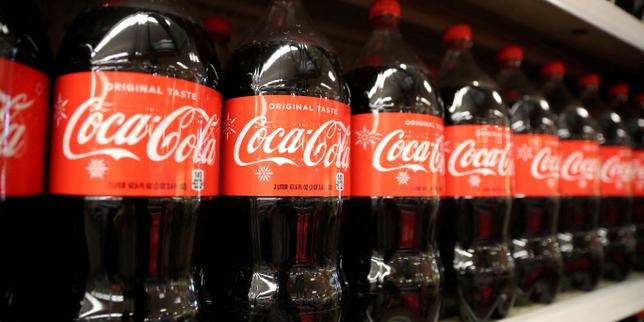
David versus Goliath. The noble European Commission stepping in to protect helpless retailers and thirsty shoppers from an evil corporate monopoly. In this week’s edition of that tired script, the villain is Coca-Cola Europacific Partners (CCEP)—the massive bottling conglomerate that puts Coke, Fanta, and Sprite onto shelves across Western Europe—now staring down the barrel of an EU investigation over alleged anticompetitive rebate schemes and tying practices.
The lazy consensus is already etched in stone. Regulators are heroically dismantling a price-fixing cartel, and soon enough, the free market will bloom with cheap craft sodas and lower grocery bills.
That narrative is pure fiction.
If you have ever sat across a mahogany table negotiating shelf space with a pan-European grocery buyer, you know the truth. Brussels isn't rescuing small beverage makers from CCEP. The European Commission is actually fighting a turf war on behalf of massive retail conglomerates who want to pocket CCEP's margins for themselves—and if the regulators win, the person paying more at the checkout counter will be you.
The Myth of the Helpless Supermarket
Mainstream coverage frames CCEP’s commercial agreements as predatory traps sprung on defenseless shopkeepers. The specific accusations revolve around conditional rebates—discounts granted to retailers if they hit certain volume targets—and "tying," where access to a blockbuster product like classic Coca-Cola is linked to carrying slower-moving brands like Fuze Tea or Monster Energy.
To an antitrust lawyer sitting in a glass tower in Brussels, that looks like textbook market foreclosure under Article 102 of the Treaty on the Functioning of the European Union.
To anyone who actually moves pallets of liquid for a living, it looks like basic survival against the real bullies of the European food chain: hypermarket buying alliances.
In Europe, grocery retail is staggeringly concentrated. Supermarkets do not sit around passively waiting for bottlers to dictate terms. Massive buying groups—alliances like Eurelec, AgeCore, and Epic Partners—pool the purchasing power of giants like Carrefour, Edeka, and Intermarché to squeeze suppliers dry. They demand listing fees just to put a bottle on a shelf. They threaten to delist entire product lines overnight if a supplier refuses to eat the cost of inflation.
I have watched mid-sized beverage brands go bankrupt trying to satisfy the margin demands of European grocery buyers. When a bottler like CCEP uses portfolio rebates to lock in shelf space across multiple drink categories, they aren't bullying a corner store. They are building a defensive wall against retail buyers who would otherwise replace half the beverage aisle with their own high-margin private-label colas.
How Portfolio Rebates Actually Subsidize Your Grocery Bill
Let’s look at the mechanics of what happens when an antitrust regulator bans conditional rebates and portfolio tying.
In economics, this is known as the single-monopoly profit theorem, a concept pioneered by Chicago School economists like Aaron Director and later refined by Robert Bork, alongside modern European industrial organization scholars like Jean Tirole. While modern EU competition policy often rejects pure Chicago School orthodoxy in favor of preserving market structure, the underlying math of wholesale pricing remains stubbornly undefeated.
Here is the math the headlines ignore.
When CCEP sells a bundle—offering a retailer a steep discount on flagship Coca-Cola if they also dedicate eye-level shelf space to Aquarius or Costa Coffee—that discount isn't an arbitrary gift. It is a volume-driven efficiency subsidy. High-speed bottling lines, regional warehousing, and heavy-truck logistics run on razor-thin unit economics. Guaranteeing predictable volume across ten different SKUs lowers CCEP’s cost per liter. They pass a massive chunk of those savings back to the retailer through retroactive rebates.
Now, imagine a scenario where the EU forces CCEP to unbundle everything. Every SKU must be priced completely independently. No volume-tier kickbacks. No cross-brand incentives.
Does CCEP suddenly slash the price of Coca-Cola to compete with a local craft lemonade? Never.
Instead, CCEP raises the base wholesale price of its core flagship colas to protect its operating margin, because it can no longer rely on guaranteed volume across its broader portfolio to amortize its distribution costs. Meanwhile, the retailer—no longer incentivized by CCEP’s rebates—hands that newly freed shelf space over to its own store-brand sodas, which carry a 40% gross margin for the supermarket compared to the 15% margin they make on branded Coke.
You don't get a vibrant ecosystem of artisanal craft sodas. You get more expensive Coca-Cola sitting next to cheap store-brand knockoffs, while the supermarket pockets the difference.
What Everyone Gets Wrong About Bottler Power
To understand why this EU investigation is fundamentally misguided, you have to stop confusing The Coca-Cola Company with Coca-Cola Europacific Partners. Almost every mainstream news report blurs them into a single omnipotent entity. They are not the same business, and their incentives frequently collide.
- The Coca-Cola Company (Atlanta): An asset-light intellectual property and concentrate business. They own the brands, invent the formulas, run the global marketing, and sell syrup concentrate at astronomical margins.
- Coca-Cola Europacific Partners (Uxbridge): A capital-intensive manufacturing, logistics, and merchandising machine. They buy the concentrate, build the bottling plants, pay for the aluminum and PET resin, maintain millions of glass-door coolers in cafes and gas stations, and manage tens of thousands of delivery trucks.
Bottlers live and die by drop size—the total number of cases unloaded every time a truck stops at a loading dock.
If a CCEP delivery truck stops at a supermarket or a wholesale depot and only drops off pallets of regular Coca-Cola, the fuel, driver wages, and vehicle depreciation eat the profit alive. For the economics of direct-store-delivery and regional warehousing to work, that truck needs to be packed with high-margin stills, energy drinks, iced teas, and mixers.
That is the operational reality behind "tying" and full-line forcing. It isn't a sinister plot to suffocate a two-person kombucha startup in Lyon or Madrid. It is an attempt to make the physics of moving heavy water across congested European highways financially viable.
The "Free Cooler" Trap Nobody Wants to Fix
If Brussels genuinely wanted to examine how CCEP locks competitors out of the market, they wouldn't be obsessing over supermarket rebate spreadsheets. They would look at the on-premise channel—the millions of independent cafes, bars, kebab shops, and convenience stores across Europe.
In those venues, CCEP plays a completely different game, and it is vastly more effective than any wholesale discount. They provide free branded refrigerators.
In the beverage trade, cold availability is everything. Roughly 70% of impulse single-serve drink purchases are consumed within an hour of buying. If a drink isn't cold, it doesn't sell.
For decades, bottlers have placed free coolers in small shops under strict exclusivity clauses: We give you this €1,500 commercial fridge for free, we service it when it breaks, and in exchange, 80% to 100% of the shelves inside belong to our brands.
EU regulators already fought this battle twenty years ago in the landmark 2005 Coca-Cola commitment decision, forcing the company to reserve 20% of cooler space for rival brands where the retailer had no other chilled storage. Ask any independent beverage founder in Paris, Berlin, or Brussels how well that 20% rule works in practice.
It doesn't. Shopkeepers routinely ignore it because they don't want to risk losing free maintenance or preferential delivery schedules from their primary bottler. Yet Brussels keeps launching multi-year forensic audits into complex B2B rebate formulas used with massive supermarket chains that already employ armies of ruthless procurement lawyers.
Why? Because going after structural exclusivity in fragmented mom-and-pop shops requires impossible enforcement, whereas fining a public company hundreds of millions of euros over wholesale contract clauses generates spectacular headlines and fills EU budget coffers.
Stop Asking If CCEP Is a Monopoly
If you are a retail buyer, a rival beverage executive, or an investor watching this unfold, you are asking the wrong question if you wonder whether CCEP will be found guilty of abusing a dominant position.
Under EU competition standards—which focus heavily on the "special responsibility" of dominant firms not to distort market structure, regardless of whether consumers actually suffer higher prices—CCEP is almost certainly going to face massive concessions or a nine-figure fine. The legal threshold in Brussels is stacked against any supplier holding more than a 40% market share.
The real question you should be asking is: What happens to category profitability the day CCEP’s commercial contracts are rewritten by lawyers?
For Challenger Beverage Brands
Do not celebrate this investigation. If you think a regulatory slap on CCEP’s wrist means Carrefour or Tesco is suddenly going to hand you prime eye-level shelf space at a generous margin, you are delusional.
When big bottlers pull back their trade spend and conditional rebates, retail buyers have a massive hole in their commercial income. They immediately turn to smaller suppliers to plug that gap by demanding higher promotional funding, steeper slotting allowances, and aggressive price-offs. You won't face less pressure from CCEP; you will face twice as much extortion from the retail buyer.
For Independent Retailers and HoReCa Operators
Audit your cooler agreements and wholesale invoices right now, before the regulatory fallout forces bottlers to standardize their rate cards. When bottlers are forced by regulators to eliminate bespoke volume rebates, they almost always eliminate the sweetheart off-invoice discounts they quietly gave to savvy independent operators, replacing them with rigid, transparent list prices that favor only the largest national chains.
For Investors Watching CCEP
Look past the headline risk of an EU antitrust fine. Historically, when European regulators force dominant consumer staples giants to abandon complex rebate structures, the companies initially take a brief volume hit, then quietly expand their operating margins over the next 24 months. Why? Because they stop giving away free margin to greedy retail buyers to defend low-performing secondary SKUs, focusing instead on pure pricing power across their core brands.
The Uncomfortable Truth About Regulation
There is a massive blind spot in how we talk about antitrust enforcement in consumer packaged goods, and I will admit the flaw in my own argument right here: unchecked dominant bottlers do make it brutally expensive for genuine innovation to reach scale. When a conglomerate controls the trucks, the coolers, and the rebate pools, a revolutionary new functional beverage has almost zero chance of reaching mass distribution without selling out to the very giant blocking its path.
Breaking up commercial exclusivity theoretically opens the door for new entrants.
In reality, however, the European grocery sector is an oligopoly fighting a duopoly. Retail buying alliances and multinational consumer goods giants are locked in a perpetual tug-of-war over who gets to capture the margin on a €1.50 can of soda.
Brussels just walked into the middle of a knife fight between two billionaire cartels, handed a bigger blade to the supermarkets, and convinced the public it was an act of charity.
Next time you walk down the beverage aisle and notice that a bottle of Coke costs thirty cents more while the supermarket's own private-label cola sits right next to it at half the price, remember who won the antitrust case. It wasn't you.