The tea shop on the Thai side of the Moei River smells of condensed milk, wet earth, and cheap tobacco. If you sit at the corner table, you can look across the brown, slow-moving water and see the hills of Myanmar. For years, those hills looked empty, but they were heavy with a silence that traveled across the border like smoke. It was the silence of a country locked inside itself.
Lately, though, the air feels different. The boats moving across the narrow river carry more than just black-market fuel and sacks of rice. They carry traders with newer phones, officials with smoother briefcases, and whispers of a shift that a year ago seemed impossible.
Myanmar is blinking into the light. After years of brutal internal conflict and crushing diplomatic isolation following the 2021 military coup, the country is tentatively stepping back onto the regional stage. The Association of Southeast Asian Nations, or ASEAN, is driving this quiet return. The bloc is moving away from its policy of public shunning toward a pragmatism born of exhaustion and geographic reality.
To understand why this matters, you have to look past the sterile language of diplomatic communiqués. Think of an old house in the middle of a tight-knit neighborhood. If that house catches fire, or if the people inside lock the doors and turn it into a fortress for criminals, the neighbors cannot simply pretend the property does not exist. They share a fence line. The smoke blows into their yards. Eventually, they have to knock on the door.
For neighbors like Thailand, Laos, and India, the reality of a collapsed state on their borders became too expensive to ignore. Millions of displaced people, a rampant transnational scam industry operating in lawless border enclaves, and a surging drug trade meant that isolation was not working. The firewall had failed.
Consider the reality for a truck driver named Win, a hypothetical composite of the merchants currently navigating the Asian Highway 1. For three years, Win’s world shrank to the distance between his steering wheel and the next armed checkpoint. Moving a cargo of onions or electronics from Yangon to the Thai border meant paying off three different militias, dodging drone strikes, and praying the road had not been cratered by an improvised explosive device.
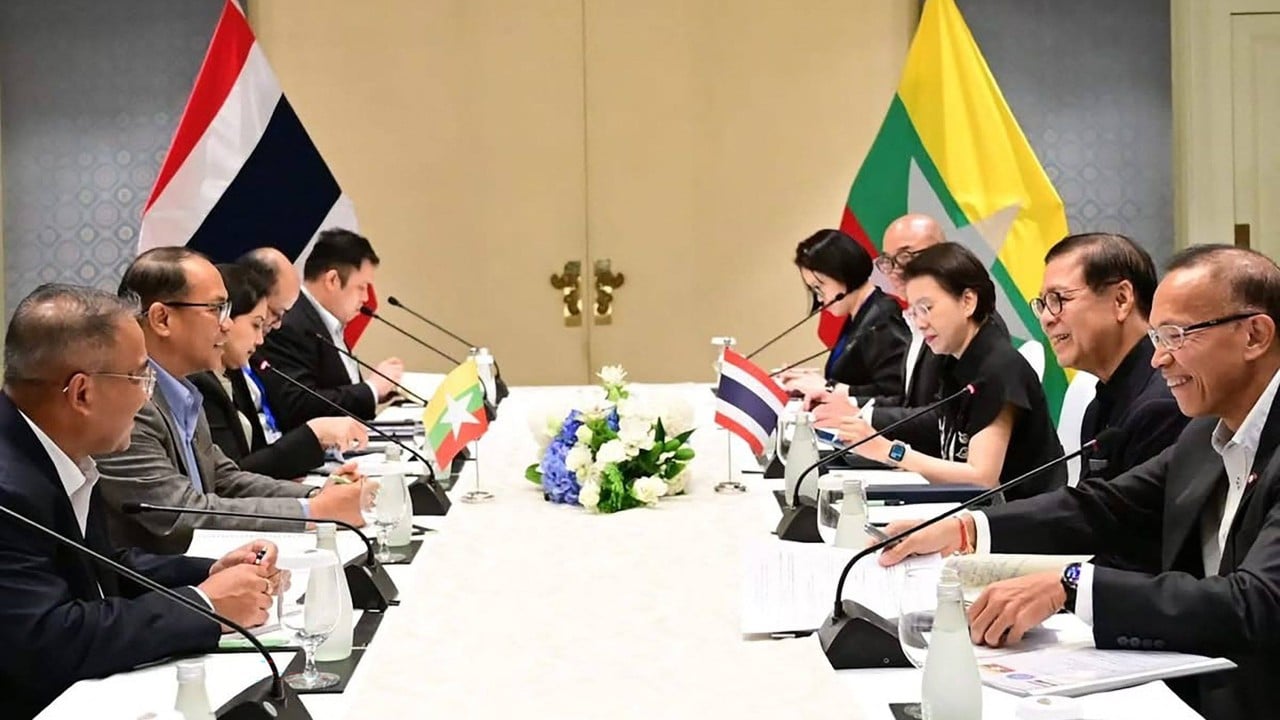
Last month, Win noticed something new. The regional gridlock started to loosen. It was not a sudden peace treaty or a grand declaration of democracy. Rather, it was a series of small, bureaucratic decisions. Regional summits that once banned Myanmar’s generals began inviting senior civil servants back to the table. Joint task forces on border security began meeting again.
This is how isolation ends. Not with a bang, but with a handshake over a clip-board about customs regulations.
The debate over this shift is deeply polarizing, and it is easy to see why. For the democracy activists who fled into the jungle or the safe houses of Chiang Mai, ASEAN’s new willingness to engage with the military regime feels like a betrayal. It looks like a concession to brute force. They argue that talking to the generals legitimizes a government that has spent years terrorizing its own population.
But the counterargument from regional diplomats is rooted in a cold, unyielding geography. Western nations can afford to impose sweeping sanctions and cut off ties because they sit thousands of miles away. They do not share a two-thousand-kilometer border with a country spiraling into chaos. Southeast Asian leaders watched the Western strategy of total isolation leave Myanmar’s economy in ruins while failing to dislodge the military from power. Even worse, it pushed the country deeper into the orbit of superpower rivalries, turning a regional neighbor into a potential proxy battleground.
The turning point came when ASEAN realized that the choice was not between supporting democracy or supporting the military. The choice was between engagement or total regional contagion.
The strategy currently unfolding is an exercise in managed friction. By bringing Myanmar back into technical committees and economic working groups, ASEAN is trying to build a bridge for aid distribution and secure lines of communication. They are betting that a regime that is talking to its neighbors is slightly more predictable than one backed into a corner with nothing left to lose.
It is a messy, compromised approach. It offers no clean victories and no moral clarity. Anyone who looks at the situation and claims to have an easy answer is selling a fantasy. If you engage, you risk normalizing tyranny. If you isolate, you guarantee the suffering of fifty-four million people who are trapped inside an economic graveyard.
Back at the riverbank, the afternoon sun hits the tin roofs of the border warehouses. A crane lowers a shipping container onto a flatbed truck. The driver checks his paperwork, fires up the engine, and gears up for the crossing.
The road ahead of him is still broken, dangerous, and uncertain. The country he is entering is nowhere near whole. But the gates are unlocking, the engines are running, and the silence across the water has finally broken.


