The dirt road connecting the Democratic Republic of Congo to western Uganda does not look like a geopolitical fault line. It looks like red dust, crushed banana leaves, and the exhaust fumes of overloaded motorbike taxis known as boda-bodas. People cross it every day with bundles of cassava balanced on their heads, children clinging to their hips, and family news to share across a border drawn by colonial rulers who never set foot in the Rwenzori Mountains.
But viruses do not read maps. They do not respect sovereignty. They care only for warmth, for moisture, and for the next human heart to claim.
When the Bundibugyo strain of Ebola began its quiet march across this invisible line, it didn’t arrive with a siren or a sudden quarantine. It arrived in the bloodstream of a traveler whose fever felt, at least initially, like the malaria everyone here contracts three times a year. By the time the World Health Organization issued its warning, the virus had already exploited the oldest vulnerability in human history: our desire to care for the sick and bury our dead with dignity.
This is not a story about statistics, though the numbers are terrifying. It is a story about what happens when an apex predator of the microscopic world collides with a healthcare system running on empty.
The Ghost in the Bloodstream
To understand the crisis unfolding in the dust of Bundibugyo, you have to understand that Ebola is not a single entity. It is a family of ghosts.
Most people are familiar with the Zaire strain—the infamous killer responsible for the devastating West African outbreak a decade ago and multiple flare-ups in the DRC. Because Zaire is the most common variant, science has built weapons against it. We have highly effective vaccines. We have specialized monoclonal antibody treatments. When Zaire rears its head, international response teams can deploy a known playbook.
Bundibugyo is different.
First identified in this very region of Uganda in 2007, it is rarer, quieter, and deeply deceptive. It kills roughly 30% to 40% of the people it infects. While that mortality rate is lower than Zaire’s brutal 60% to 90% toll, Bundibugyo’s danger lies in its stealth. Imagine a hypothetical patient named Kasese. He is a farmer. When Kasese gets sick, he doesn't immediately bleed from his eyes or ears—that is the Hollywood version of Ebola, a rare extremity. Instead, Kasese experiences a mild fever, a dry throat, and a profound, bone-deep fatigue.
He assumes it is a bad bout of flu. His wife bathes his forehead with a damp cloth. His brother holds his hand to comfort him.
In doing so, they invite the ghost inside.
Because Bundibugyo mimics less lethal tropical ailments in its early stages, it slips past triage desks unnoticed. It sits in crowded waiting rooms. It rides on the back of motorbikes. And worst of all, the specialized vaccines sitting in stockpiles in Geneva and Kinshasa are utterly powerless against it. They were designed for Zaire. Against Bundibugyo, they are as useless as a key in the wrong lock.
We are fighting a twenty-first-century pathogen with nineteenth-century tools: isolation, hope, and plastic sheets.
The Anatomy of an Empty Supply Closet
Walk into a clinic twenty kilometers from the Ugandan border, and the abstract concept of "resource gaps" becomes agonizingly physical.
It smells of bleach and old sweat. The floor is concrete, pitted and scrubbed so many times the aggregate stone shows through. There is an electricity grid, but it fails three or four times a day, turning the vaccine refrigerators into expensive metal boxes that slowly warm up in the equatorial heat.
The World Health Organization’s warning wasn’t just an alarm about a virus; it was an indictment of a supply chain. When a hemorrhagic fever strikes, the primary line of defense isn't a complex drug. It is personal protective equipment. PPE.
Consider the math of survival for a single nurse working an eight-hour shift in an Ebola isolation ward. To remain safe, that nurse needs a full bodysuit, double gloves, a mask, goggles, and a waterproof apron. Every time they leave the ward to use the restroom, drink water, or rest, that entire suit must be stripped off, chemically destroyed, and replaced. One nurse can easily burn through five to six suits a day.
Multiply that by thirty patients. Multiply that by weeks of outbreak.
The reality on the ground is that these clinics often have only a few dozen suits in reserve. Doctors are forced to make calculations no human being should ever have to make. Do they wear a suit longer than medically advised, risking their own lives as sweat pools inside their boots? Or do they limit the number of times they check on a dying child to conserve the plastic that keeps them alive?
"The shortage creates a terrible friction between duty and survival," a local clinical officer once told me, his hands shaking slightly as he recounted an earlier outbreak. "You see someone suffocating, someone who needs their bed cleaned, but you look at the shelf and realize you are on your last pair of heavy-duty gloves. You hesitate. And that hesitation breaks your heart."
This is the invisible stake of the resource gap. It transforms medical professionals from healers into gamblers, wagering their own lives against the ticking clock of an international delivery system that always seems to arrive three weeks too late.
The Geography of Trust
There is a temptation among Western onlookers to view these outbreaks as purely medical problems solvable by logistics. Just fly in the suits. Just truck in the chlorine. Just build the tents.
But the real problem lies elsewhere. It lies in the delicate, easily shattered architecture of human trust.
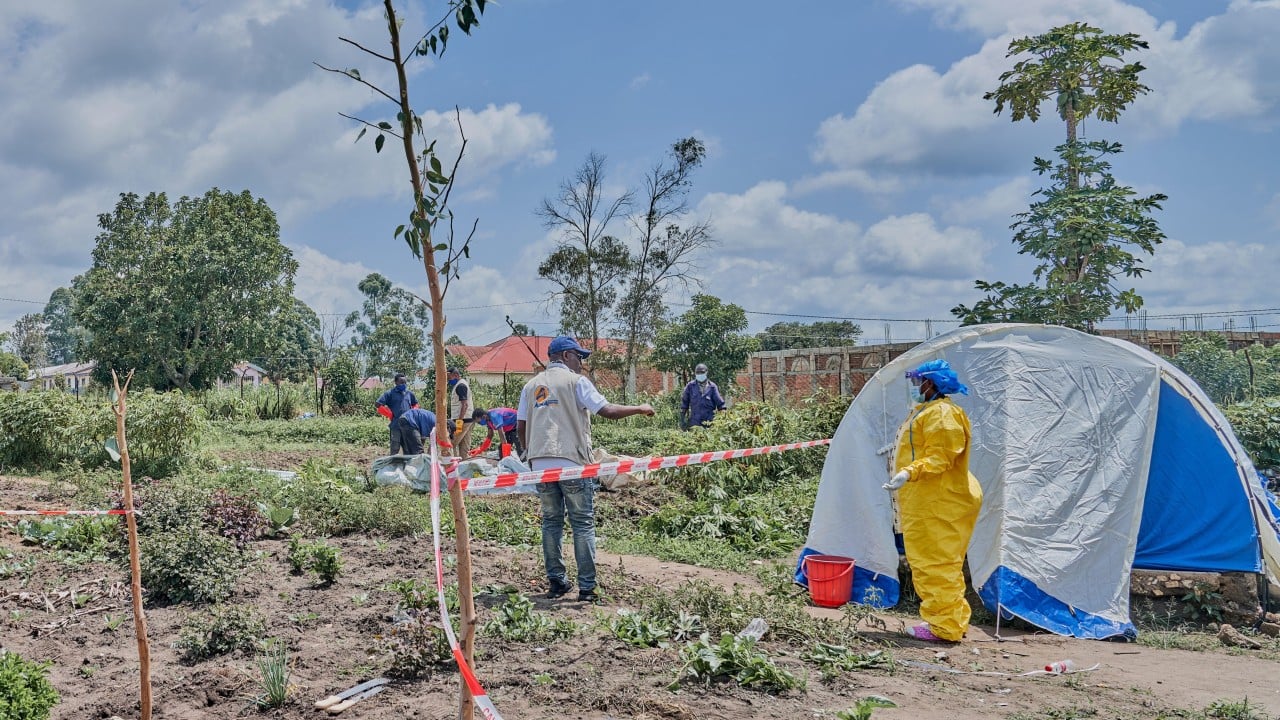
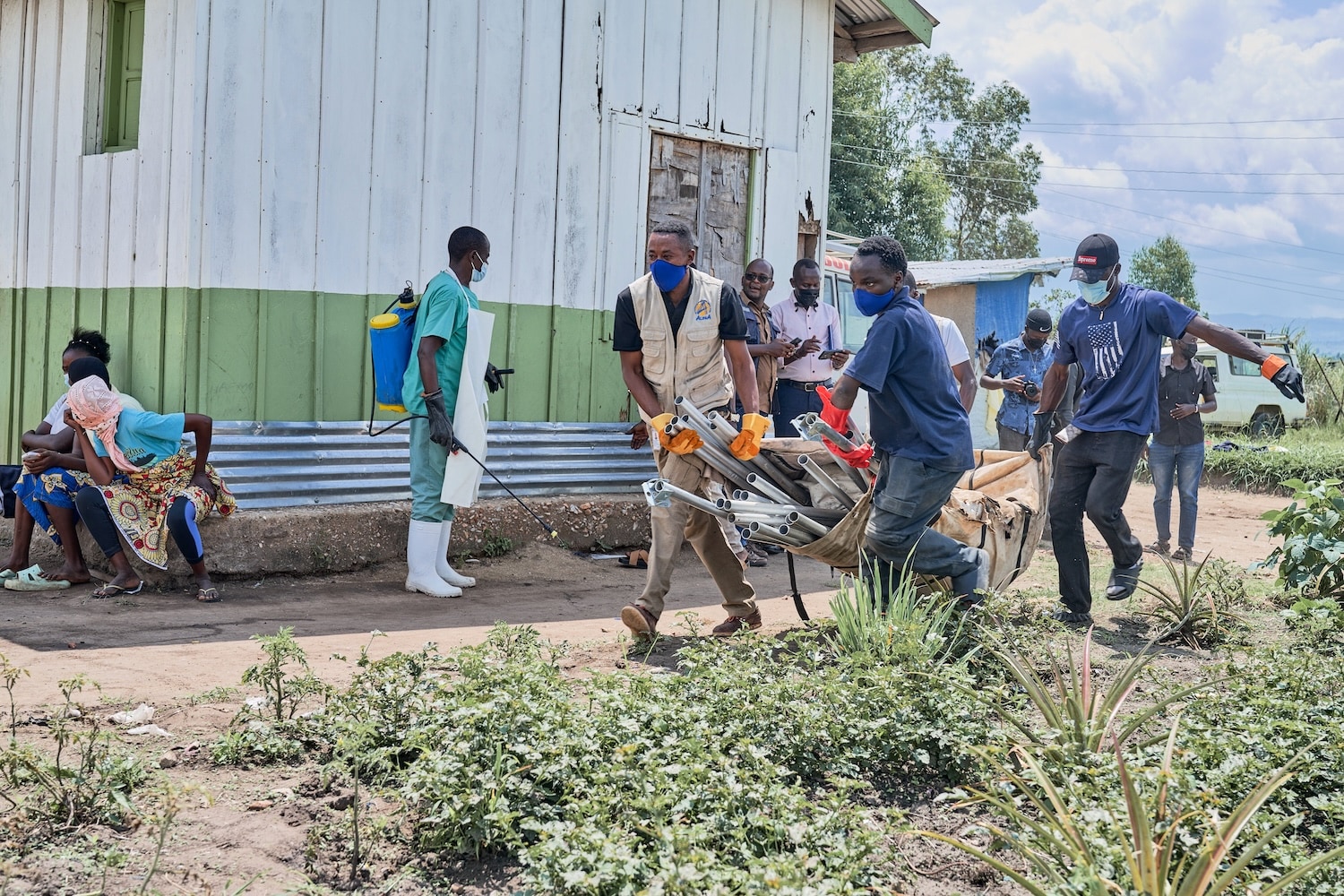
When an Ebola response team arrives in a rural border village, they look like aliens. They wear white Tyvek suits that obscure their faces. They speak through masks that muffle their voices. They carry spray tanks filled with burning chemicals, and they take away loved ones who never return. If a patient dies inside an isolation unit, their body is wrapped in thick plastic and buried by strangers in unmarked graves to prevent the highly infectious corpses from spreading the disease during traditional washing rituals.
To a grieving family, this does not look like healthcare. It looks like state-sanctioned violence.
It is easy to judge from the comfort of a modern city, but put yourself in the shoes of a mother whose son has just been taken behind a black plastic tarp. She cannot see him. She cannot touch him. She is told he is dead, but she cannot perform the burial rites that her ancestors have used for centuries to ensure his soul finds peace.
If the community does not trust the response, they stop reporting the sick. They hide their feverish daughters in the forest. They bury their fathers at midnight, secretly, washing the bodies in the dark, weeping over the skin that is shedding billions of viral particles into the soil and onto their hands.
The virus thrives in the shadows of distrust. When resources are low, community outreach is the first budget line to be cut. There are no funds for the local radio broadcasts, no fuel for the trucks to bring elders to see the inside of the treatment centers, no stipends for the community leaders who can translate scientific necessity into cultural respect.
Without that dialogue, the best medical equipment in the world is just expensive trash.
The Road to Kampala
The danger of the Bundibugyo outbreak is its proximity to the highway.
From the western border towns, public transport buses leave every morning for Kampala, the capital city of Uganda. Millions of people live in Kampala, packed into vibrant, chaotic neighborhoods where social distancing is a financial impossibility. If a single person infected with the Bundibugyo strain boards one of those buses, the localized flare-up transforms into a national catastrophe within six hours.
The border health screenings are supposed to prevent this. They consist of a plastic bucket filled with chlorinated water for handwashing and a health worker holding a digital infrared thermometer to the forehead of every traveler.
But these thermometers are temperamental. They fail in the direct sun. They misread if a traveler has been walking fast under the midday heat, or conversely, they miss a fever if someone has taken two paracetamol tablets before reaching the checkpoint to ensure they can get through to sell their produce at the market.
The health workers at these checkpoints are exhausted. They have been standing in the dust for hours, earning a meager wage that is often delayed by bureaucratic logjams in the capital. They are staring down an invisible killer with nothing but a plastic thermometer and a clipboard.
We like to think of global health security as a massive, high-tech shield protecting the modern world from ancient plagues. It isn't. It is an underpaid twenty-two-year-old nurse standing by a dusty road in Bundibugyo, trying to read a fading digital screen while three hundred angry passengers yell at her to let the bus pass.
The Price of Waiting
The world operates on a cycle of panic and neglect when it comes to hemorrhagic fevers.
When an outbreak hits the headlines, millions of dollars are pledged. Pundits talk about global health architecture on television. Emergency meetings are convened in Geneva. But by the time the bureaucratic machinery grinds into motion and the funds are cleared, the outbreak has either burned through the population or been contained by the sheer heroism of local medical staff who paid for it with their lives.
Then, the news cycle moves on. The funding dries up. The isolation tents are packed away or left to rot in the tropical rain. The staff are laid off.
And the virus retreats into the jungle, into its reservoir hosts—likely fruit bats sleeping in the hollows of old trees along the Congo River—where it mutates, waits, and bides its time until the next breach in our defenses.
The World Health Organization’s warning is not an isolated weather report. It is a description of a predictable tragedy. We knew the Bundibugyo strain existed. We knew the border was porous. We knew the local clinics had empty shelves. Yet, we chose to wait for the emergency before acting.
The true cost of this neglect is paid in the currency of human potential. It is paid by the children who lose their mothers, the villages that lose their teachers, and the medical system that loses its most courageous leaders.
As night falls over the Rwenzori Mountains, the border posts remain open. The boda-bodas continue to roar through the dark, their headlights cutting beams through the red dust. Somewhere in that darkness, a man is shivering under a blanket, his throat raw, his family gathering close around him to offer the comfort that might kill them all.