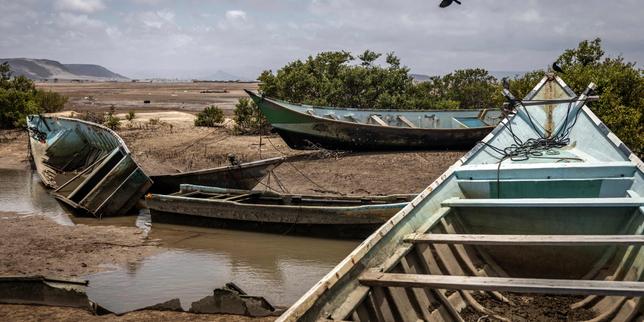
Another wooden hull shatters in the Gulf of Aden, another hundred bodies wash up on the jagged volcanic shores near Djibouti, and the media machine rolls out its standard, frictionless script. The headlines scream about ruthless human traffickers, criminal syndicates, and the desperate folly of migrants playing Russian roulette with the sea. Politicians offer staged condolences, promise tighter naval patrols, and vow to smash the trafficking networks.
It is a comfortable narrative. It places the blame neatly on the shoulders of shadowy villains operating in the lawless corridors of the Horn of Africa, while absolving the architects of global border architecture from any responsibility.
The lazy consensus says that if we just crack down harder on the boats, the tragedy stops. That logic is not just wrong; it is actively lethal.
Every time a state tightens legal transit channels without addressing the structural pressures driving human movement, it does not stop the flow. It merely hands a monopoly to the most violent, reckless criminal elements available. Smugglers do not create demand. They supply a desperate market engineered by restrictive visa regimes and economic walls built by wealthy nations. Treating this as a criminal justice problem is like trying to stop a flood by shooting the water.
The Economics Of Supply And Constraint
To understand why 109 human beings chose an unseaworthy wooden skiff off the coast of Djibouti, you have to look past the moral panic and examine basic market mechanics. When you erect high walls around legitimate pathways while leaving the underlying push factors intact—famine, state collapse, civil war, and total economic disenfranchisement across East Africa—you do not eliminate movement. You simply criminalize it.
Consider the risk profile. A young man fleeing rural Ethiopia or drought-ravaged regions of Somalia faces near-certain destitution, extortion, or forced conscription at home. To him, paying a smuggler's fee isn't a leisure choice or a vacation gone wrong. It is a calculated, rational gamble against stacked odds. When governments deploy naval interdictions and coastal patrols without providing alternative legal avenues, they drive the price of smuggling up and force operators to use increasingly hazardous routes and vessels.
The more resources poured into border militarization, the higher the profit margins for traffickers. The more dangerous the crossing, the more desperate the operational tactics. The survivors of these voyages are not anomalies; they are the collateral damage of a containment strategy that treats human migration as a policing inconvenience rather than a permanent structural reality.
The Geography Of Desperation
Djibouti occupies a uniquely cruel bottleneck in global migration. Wedged between the Red Sea and the Gulf of Aden, it is the primary transit corridor for young Africans attempting the Eastern Route toward the Arabian Peninsula, specifically Saudi Arabia and Yemen. It is a narrow strip of arid earth where extreme heat meets brutal geopolitical indifference.
When people talk about migration crises in Europe across the Mediterranean, they miss the parallel catastrophe unfolding quietly in East Africa. The route through Djibouti and across the Bab-el-Mandeb strait into war-torn Yemen is arguably one of the most perilous migration corridors on earth. Yet, international coverage treats it as a distant tragedy, an inevitable background noise of the Global South.
Local authorities in Djibouti are caught in an impossible squeeze. Dependent on foreign aid and security partnerships with Western and Gulf powers, they are pressed to police their borders aggressively. At the same time, their own local economies rely heavily on the informal trade and transit cash brought by migration flows. This hypocrisy creates a shadow economy where extortion is institutionalized. Border guards, local fixers, and coastal gangs operate in an ecosystem where human misery is the most liquid asset available.
Dismantling The Deterrence Myth
The core fallacy underpinning modern migration policy is the belief in absolute deterrence. The premise goes like this: if you make the journey horrific enough, word will get back, and people will stop trying.
Decades of sociological and economic data completely dismantle this assumption. Deterrence only works when individuals have viable alternatives at home. If your alternative is staying in a village where structural violence or starvation guarantees a slow death, a 10 percent chance of drowning in the Gulf of Aden looks like a rational lottery ticket.
We have seen this script play out globally. Fences do not stop movement; they reroute it through deadlier terrain. Increased naval patrols do not save lives; they push boats further out into open, unmonitored waters. Every restriction imposed by destination countries acts as a force multiplier for smugglers, who adapt by packing more people into less stable hulls, launching at night without navigation gear, and abandoning passengers miles off hostile shores to avoid navy interception.
If policymakers genuinely wanted to dismantle smuggling rings, they would do the exact opposite of what they are doing. They would flood the region with legal, safe, and regulated processing channels. They would issue work visas that decouple human mobility from criminal exploitation. The moment a migrant can board a commercial ferry or a regulated flight for a fraction of the cost of a smuggler's skiff, the multi-billion-dollar human trafficking industry collapses overnight.
The Cost Of Looking Away
Blaming traffickers is a cheap substitute for moral courage. It allows politicians to express righteous indignation while maintaining policies that ensure the next shipwreck is already inevitable.
Until the international community stops treating human mobility as an invasion to be repelled and starts treating it as an economic and demographic reality to be managed, the bodies will keep washing up on the Djiboutian coast. The wood will rot, the motors will fail, and the profiteers will count their cash.
The tragedy isn't that the boats are sailing. The tragedy is that we designed the ocean they are forced to cross.