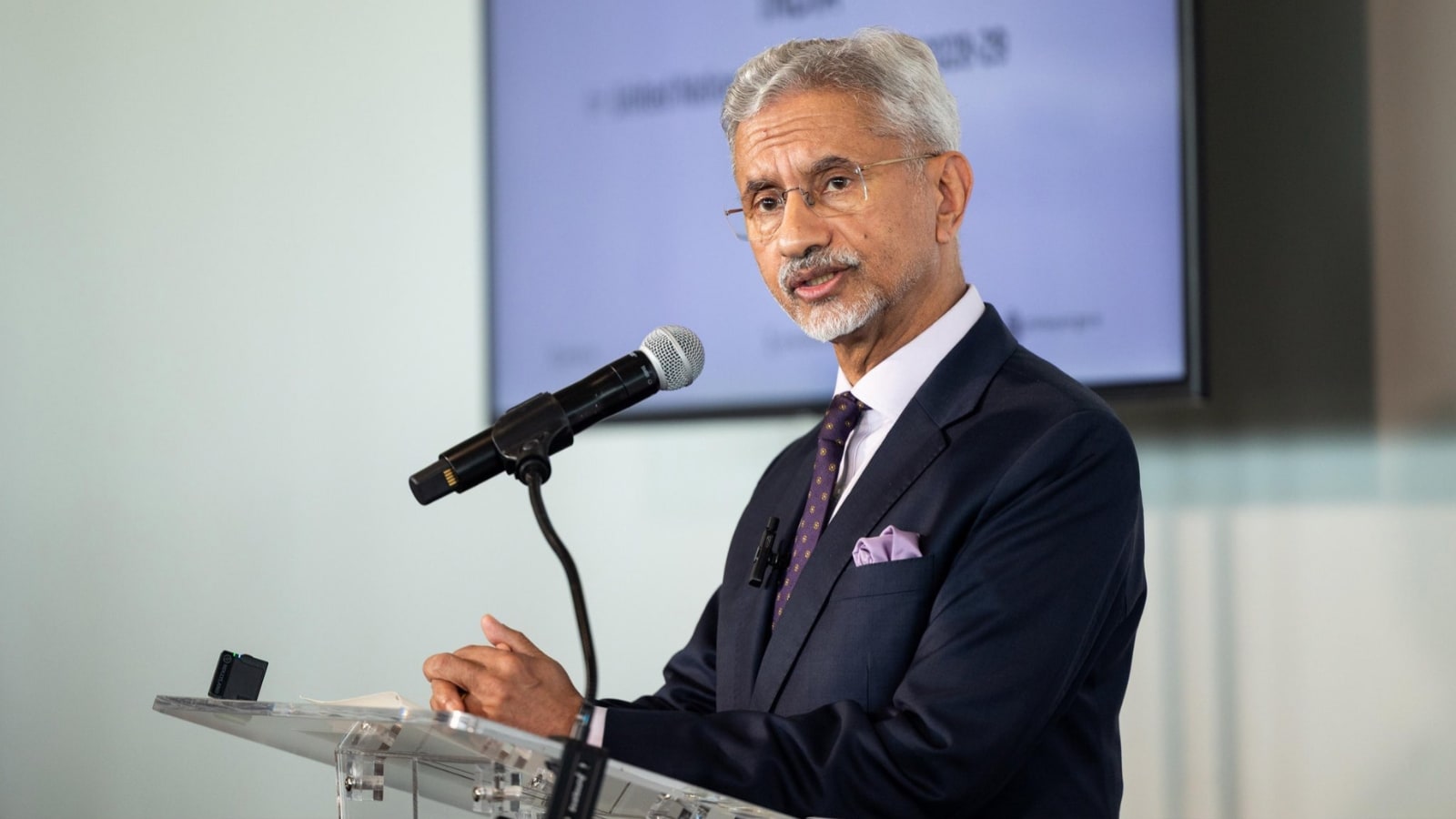
External observers often misread New Delhi as a passive bystander in European security. They view non-alignment through the lens of transaction, assuming a simple calculation of discounted crude oil and defense spares. That view misses the architecture of modern diplomatic statecraft. When External Affairs Minister S. Jaishankar remarked that New Delhi has moved well beyond mere advocacy regarding the war in Eastern Europe, he was not engaging in rhetorical inflation. He was signaling a structural shift in how a rising non-Western power exerts leverage in a deadlocked international crisis.
The traditional playbook for peace mediation belongs to Western capitals and multilateral institutions that often carry historical baggage or direct security entanglements. New Delhi occupies a different category. It maintains deep, uninterrupted state channels with Moscow while simultaneously expanding intelligence, technological, and economic ties with Washington, Brussels, and Kyiv. This positioning allows Indian diplomats to function as a bridge where formal channels have completely frozen.
Understanding this evolution requires examining the mechanics of quiet diplomacy. Public posturing at the United Nations General Assembly provides political cover, but real diplomatic traction happens in secure rooms in foreign ministries where red lines are tested without media glare. New Delhi is not drafting formal peace treaties or hosting high-profile summits with blue carpets. Instead, its engagement focuses on humanitarian corridors, maritime security considerations in the Black Sea grain transit routes, and testing reciprocal willingness for preliminary de-escalation steps between combatants who refuse to speak directly.
The geopolitical constraints on these efforts are immense. Moscow views India as an indispensable economic partner, particularly as Western sanctions force Russian trade eastward. At the same time, Kyiv recognizes that New Delhi holds rare sway in the Kremlin, making Indian backchannels a vital conduit for messaging that cannot be transmitted via traditional Western intermediaries. When Prime Minister Narendra Modi traveled to Moscow and subsequently to Kyiv, western analysts frequently mischaracterized the visits as diplomatic balancing acts. In reality, they were fact-finding missions designed to assess the absolute limits of Ukrainian territorial demands and Russian security red lines.
Economic survival underpins every diplomatic maneuver. The reconfiguration of global energy supply chains has tied New Delhi to Russian commodity flows, yet Indian financial institutions remain acutely sensitive to secondary sanctions from Western regulators. This tightrope walk forces a pragmatic approach. New Delhi cannot afford a complete rupture with Western financial architecture, nor can it abandon its strategic autonomy or its decades-old defense relationship with Moscow. Consequently, peace efforts are framed not merely as a moral duty to end civilian suffering, but as an urgent necessity to stabilize global fertilizer prices, energy markets, and supply chain logistics that directly impact the Global South.
Critics argue that quiet messaging without public pressure amounts to complicity. That argument misunderstands diplomatic leverage. Public grandstanding hardens negotiating positions and forces leaders into corners from which they cannot retreat without losing domestic political capital. By operating behind the scenes, New Delhi preserves the trust of both sides. Moscow accepts Indian interventions because they do not come packaged with moral lectures; Kyiv tolerates them because every backchannel represents a potential lifeline away from total national exhaustion.
The broader implications for global governance are profound. For decades, crisis mediation was an exclusive monopoly of Western powers or permanent members of the UN Security Council acting through consensus. The war in Ukraine has exposed the paralysis of multilateral institutions. In their place, major middle powers like India are pioneering a transactional, networked diplomacy. They intervene not to impose a universal values framework, but to manage the immediate spillover effects of conflict on inflation, energy security, and regional stability.
As the conflict grinds through another year of brutal attrition, the prospect of a comprehensive diplomatic settlement remains distant. Neither side has exhausted its military capacity to the point of unconditional compromise. Yet the groundwork for eventual negotiations is being laid quietly by capitals that refuse to take sides while remaining deeply invested in the outcome. New Delhi's evolution from a vocal advocate of peace to an active, discreet facilitator demonstrates that the center of gravity in international diplomacy is shifting away from traditional Western capitals toward independent Eurasian and Southern anchors. The real story is not that India is trying to mediate the Ukraine conflict; it is that the architecture of twenty-first-century conflict resolution requires powers that can talk to everyone while belonging to no single bloc.