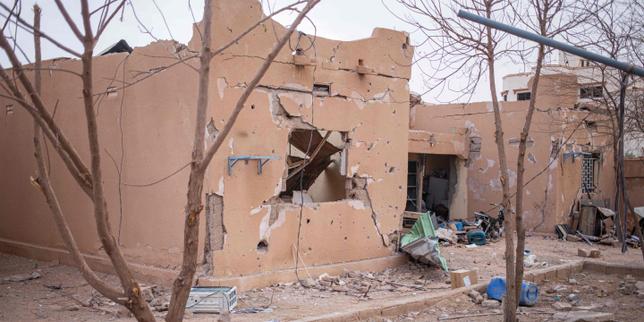
The Malian military's triumphant return to the strategic northern stronghold of Kidal marked a major turning point in the country's long-running internal conflict, yet it simultaneously exposed the severe structural limitations of Bamako's security strategy. For a transitional government that staked its entire political legitimacy on reclaiming national sovereignty from separatist movements and foreign security actors alike, capturing the desert capital was a mandatory triumph.
Yet beneath the state-sanctioned celebrations in Bamako lies a much more complicated operational reality. Decades of shifting alliances, ethnic friction, and deep-seated grievances across the Azawad region cannot be erased simply by hoisting a flag over an abandoned administrative fort.
The Anatomy of a Strategic Retreat
When columns of the Forces Armées Maliennes (FAMa), reinforced by Russian paramilitary contractors, rolled into Kidal, they entered a ghost town. The Coalition of Azawad Movements (CSP), which had held the city for years, chose a tactical withdrawal rather than an annihilating urban defense. Military analysts immediately recognized this maneuver for what it was: a preservation of force rather than a routing of an army.
Kidal has always functioned as more than just a collection of concrete buildings in the Adrar des Ifoghas mountains. It is the beating heart of Tuareg political identity and a perpetual thorn in the side of centralized power. For over a decade, the central government in Bamako was entirely locked out of the sector, first under the watch of French Operation Barkhane forces and later during the tenure of United Nations peacekeepers belonging to MINUSMA.
When those international actors were forced out by the military junta, the operational vacuum left only two real contenders for dominance: the state military backed by external mercenaries, and the entrenched regional insurgents. Taking the city back required immense logistical support, heavy drone utilization, and nocturnal infiltration tactics executed by battle-hardened contractors. But occupying a hostile urban center is fundamentally different from securing a vast, porous desert frontier.
The Mercenary Calculus
The most glaring variable in the recapture of Kidal is the reliance on Russian personnel, formerly tied to the Wagner network and later operating under structural rebrandings like Africa Corps. The junta in Bamako made a calculated pivot away from Western partnerships, betting its survival on a transactional security model.
This model delivers short-term tactical momentum. Heavy armor, aerial surveillance, and aggressive sweep operations can dislodge entrenched rebels from urban perimeters. However, military history demonstrates that conventional firepower alone cannot solve an insurgency rooted in local grievances and marginalization.
Consider a hypothetical counterinsurgency scenario: an army secures a regional capital using overwhelming external force, cutting supply lines and forcing insurgent factions into the surrounding hills. Without local intelligence networks, community policing, and a credible political framework to reintegrate alienated populations, the occupying force becomes an isolated garrison. Every patrol route turns into a potential ambush zone. Every supply convoy requires heavy armored escort. The state controls the tarmac of the city center, while hostile actors control the economic and social arteries of the countryside.
Information Warfare and the Battle for Perception
In modern asymmetric warfare, the narrative surrounding a territory matters just as much as the geographic coordinates. The junta needed Kidal to prove an absolute point: that military force under sovereign direction could achieve what years of diplomatic stagnation and foreign mediation failed to deliver.
State-run media channels broadcasted endless loops of armored vehicles navigating the arid streets, framing the operation as the final death blow to separatism. Yet insurgent networks utilized the retreat to recast the battle as a strategic dispersal. By avoiding a ruinous conventional bloodbath in the alleyways of Kidal, the separatist coalition preserved its core cadres to wage protracted guerrilla warfare across the northern expanses.
This dynamic highlights a dangerous structural trap for military governments in the Sahel. When a regime stakes its entire political survival on unbroken battlefield victories, any tactical setback or defensive retreat becomes an existential threat to the leadership in the capital. The information space leaves no room for gray areas or protracted stalemate.
The Human Cost and Regional Spillover
Beyond the geopolitical posturing lies the immediate humanitarian crisis. Each escalation of hostilities sends waves of vulnerable civilians fleeing toward the Algerian border, straining already fragile regional economies and international aid organizations. Families caught in the crossfire face a recurring nightmare of displacement, food insecurity, and the breakdown of basic healthcare infrastructure.
Neighboring states watch these developments with mounting anxiety. The instability in northern Mali is not contained within national borders. Transnational militant networks exploit the friction between Bamako and northern communities to expand their operational reach across the wider West African littoral. When state security forces concentrate their resources on high-profile urban symbols like Kidal, peripheral rural zones often experience a security vacuum that opportunistic armed groups fill with frightening speed.
Solving the structural crisis in Mali requires moving beyond the illusion of permanent military subjugation. Administrative recovery without political reconciliation remains a temporary illusion. Until the central authorities address the historical grievances of northern populations and build an inclusive governance model that transcends reliance on foreign contractors, every captured city will remain heavily contested ground waiting for the next shift in the wind.


