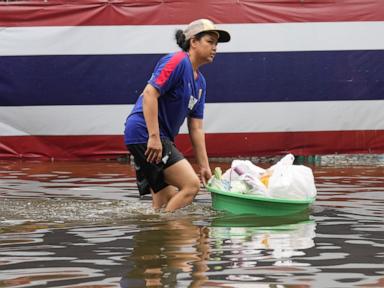
Every monsoon season, global media outlets dust off the same tired playbook. Drone shots of temples half-submerged in muddy brown water, panicked tourist interviews, and solemn anchors warning that the City of Angels is slowly drowning beneath the waves of global warming. It is a neat, emotionally charged narrative. It fits the apocalyptic template nicely.
It is also fundamentally, dangerously wrong.
The lazy consensus blames nature. Melting ice caps, rising sea levels, and angry monsoon skies make for compelling television, but they let the true architects of this crisis off the hook. Bangkok is not succumbing to rising seas alone. It is sinking because of a half-century man-made groundwater extraction binge, a masterclass in urban planning hubris, and a concrete-heavy development model that turned a natural delta into a sealed concrete bathtub.
I have walked these flooded alleys while municipal officials blamed the tide. I have watched billions of dollars in Dutch-style drainage proposals get funneled into bureaucratic black holes while the actual foundations of the city turn to Swiss cheese. When you look past the sensationalist headlines about climate doom, you find a starker reality: Bangkok's primary enemy is not the Gulf of Thailand. It is human short-sightedness wrapped in municipal concrete.
The Groundwater Suicide Pact
To understand why Bangkok floods while neighboring regions manage the same monsoons, you have to look down, not up. For decades, the city grew explosively without municipal water infrastructure to match. The solution was simple, cheap, and catastrophic: drill deep wells and suck out the ancient aquifers beneath the clay.
For thirty years, industrial zones and residential developers treated the underground water table like an endless milkshake. The result was radical subsidence. Parts of the city dropped by more than ten centimeters per year. While sea levels creep up by millimeters annually, Bangkok dropped by meters.
When you pump water out of a soft, clay-rich delta, the sediment compacts. Once that clay collapses, it never reinflates. The sponge loses its structure permanently. The government finally woke up in the late 2000s and slapped heavy restrictions on groundwater pumping in critical zones, slowing the drop. But the damage was already done. The city sits lower relative to sea level than it did in 1980, entirely divorced from any polar ice cap melt.
Blaming climate change for floods that occur because you drained the subterranean support structure is like removing the foundation from a skyscraper and then blaming the wind when it lists to one side.
The Concrete Bathtub Paradox
Look at how Bangkok handles stormwater. Historically, the Chao Phraya River delta was a vast, breathing network of wetlands, canals, and flood plains known locally as khlongs. These waterways absorbed monsoon surges, distributed the volume across vast agricultural green spaces, and let the water breathe before sliding out to the sea.
Then came the modern development boom.
Real estate developers paved over the natural retention basins. They built sprawling mega-malls, gated suburban communities, and high-rise condominiums on top of critical flood absorption zones. Canals were narrowed, paved over, or choked with garbage because municipal maintenance budgets favored flashy overhead tollways over underground drainage clearing.
Water needs somewhere to go. When you pave over the sponge, rain has two choices: evaporate or pool. Because Bangkok is essentially a flat, low-lying bowl surrounded by inadequate drainage channels, it pools.
Urban planners love to talk about resilience and smart cities, but Bangkok’s current approach is reactive engineering at its worst. They build higher river walls, trapping water inside the city center once an intense downpour breaches the perimeter. It creates an internal moat. Water pours in from the sky, hits the concrete, has nowhere to drain because the canals are blocked or backed up by high tides, and stays there.
The Myth of the Structural Fix
Whenever the floods hit hard, local authorities trot out mega-project proposals. Multi-billion-dollar flood walls, massive diversion tunnels, and Dutch engineering syndicates promising high-tech salvation.
These projects are political theater. They provide great photo-ops for politicians in rubber boots pointing at pumping stations, but they ignore basic hydrology. You cannot out-build subsidence with sheer concrete thickness. Every wall you build raises the riverbed higher relative to the surrounding land, turning the city center into a depression even more vulnerable to internal rainfall accumulation.
Furthermore, corruption and bureaucratic inertia ensure that maintenance is an afterthought. A fifty-million-dollar pumping station is useless when the local drainage pipe leading to it is clogged with construction debris and grease from street food vendors, or when the operator forgets to turn the pump on because they are waiting for cross-departmental authorization.
What Actually Needs to Happen
If Bangkok wants to survive the next century, it has to abandon the fantasy of keeping every square inch dry through brute-force engineering. The solutions are unglamorous, politically painful, and completely contrary to current real estate incentives.
First, stop building on the remaining flood plains. Period. The city needs to buy back land along key drainage corridors and turn them back into wetlands and retention parks. Bangkok needs to relearn how to be the Venice of the East—a city that lives with water rather than wages an unwinnable war against it.
Second, overhaul drainage governance from the neighborhood level up. Megaprojects make headlines, but clean, unblocked secondary drainage pipes save neighborhoods. Decentralize flood management and give local districts the budget and autonomy to clear canals without waiting for central government sign-off.
Third, embrace managed retreat. Certain low-lying, chronically flooded industrial and residential zones cannot be saved cost-effectively. Continuing to pour public funds into protecting sinking land is throwing good money after bad water.
The water is coming. It has always come. The monsoon is a predictable annual visitor. The only thing that has changed is our arrogant insistence that we can pave over nature without paying the bill. Stop blaming the clouds. Start fixing the foundation.