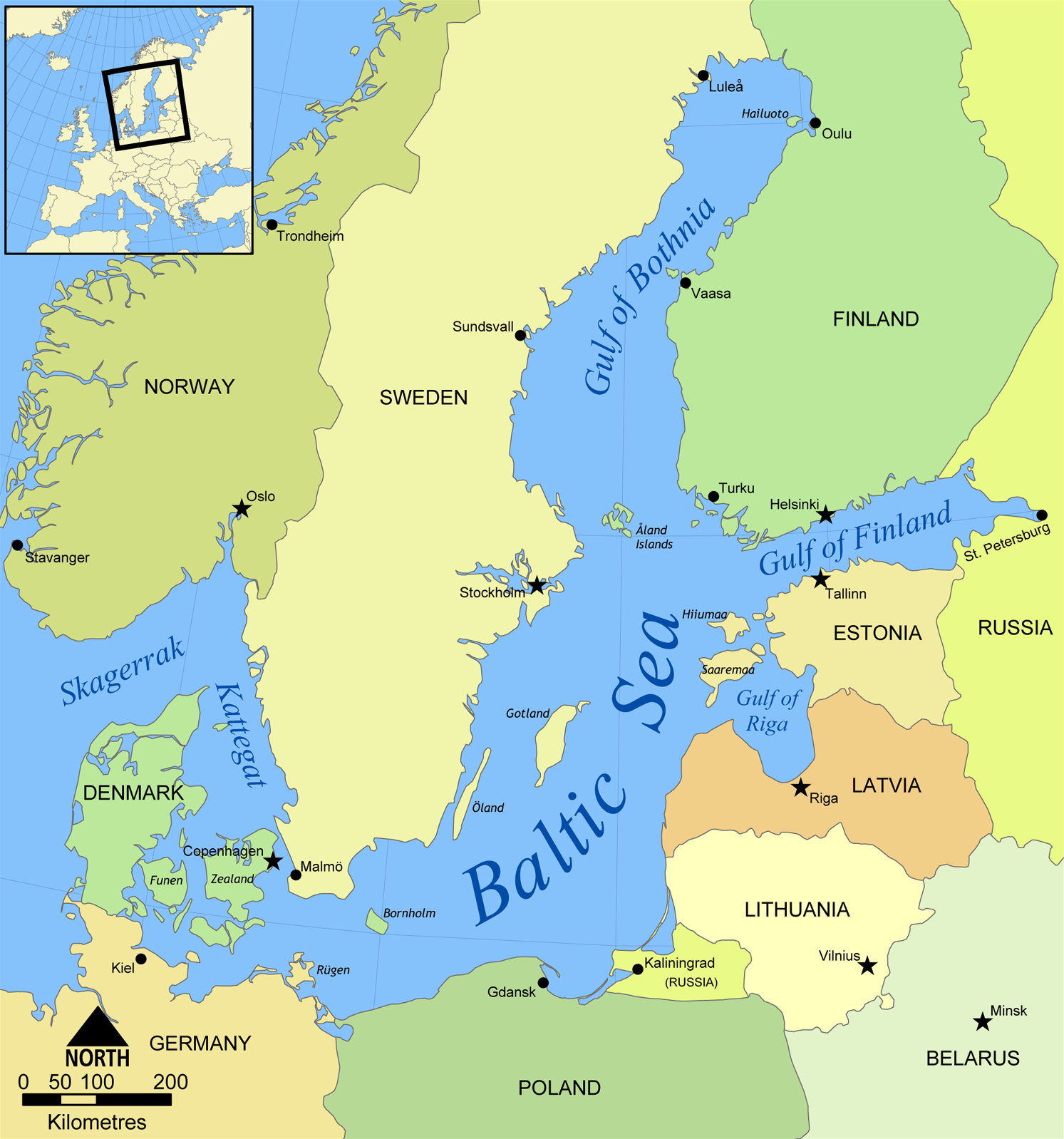
When Finnish maritime sensors registered a kinetic strike on a Russian naval vessel in the Baltic theater just as President Volodymyr Zelenskyy sat down with senior United States envoys, the timing looked like diplomatic theater. It was not. Finland's coastal hydrophone arrays and seismic networks routinely detect underwater detonations across the Gulf of Finland, turning a historically closed Russian maritime corridor into a transparent acoustic basin. That acoustic transparency collided directly with high-stakes diplomacy, handing Kyiv verified intelligence at the exact table where Washington was pressing for terms.
The competitor coverage treats this convergence as a mere coincidence of headlines. A warship gets hit, a sensor pings, and a meeting happens. That framing misses the mechanics of modern maritime surveillance and the cold calculus of wartime diplomacy. To understand what actually transpired in the cold waters bordering NATO's newest northern flank, you have to look at the physics of the Baltic Sea, the posture of the Finnish Defense Forces, and the ruthless use of battlefield telemetry as diplomatic currency.
How Finnish Sensors Hear Across the Gulf of Finland
The Baltic Sea is shallow, brackish, and acoustically noisy. At an average depth of just 55 meters, sound waves do not travel in clean, predictable straight lines as they do in the deep Atlantic. Instead, acoustic energy bounces violently between the seabed and the surface, refracting through sharp layers of differing salinity and temperature. For decades, Soviet and later Russian naval commanders relied on this chaotic acoustic environment to mask submarine movements and surface operations out of Kronstadt and Baltiysk.
Finland spent seventy years learning how to read that noise.
Operating from granite islands and submerged coastal shelves along the northern shore of the Gulf of Finland, the Finnish Navy and its intelligence directorate maintain a dense, passive hydrophone network paired with shore-based seismic arrays. Unlike active sonar, which broadcasts a ping and reveals the listener's position, passive acoustic intelligence simply waits. When high explosives detonate against a steel hull, the shockwave fractures into two distinct signatures. One travels through the water column at roughly 1,450 meters per second. The other couples directly into the granite bedrock beneath the sea, racing toward Finnish seismometers at over 5,000 meters per second.
By measuring the millisecond gap between the seismic arrival and the waterborne acoustic arrival, Finnish analysts can triangulate the exact coordinates of an explosion within seconds. They can also estimate the charge weight by analyzing the bubble pulse frequency—the rhythmic expansion and collapse of gas generated by an underwater or waterline blast. A mine detonation produces a different spectral fingerprint than an unmanned surface vessel packed with shaped charges, and both look entirely different from an internal ammunition cook-off.
The Architecture of Baltic Surveillance
Since Finland formally joined NATO in April 2023, that localized coastal defense apparatus has plugged directly into allied intelligence sharing architectures. The Gulf of Finland narrows to less than 40 nautical miles between Helsinki and Tallinn, Estonia. Every Russian Baltic Fleet vessel transiting between St. Petersburg and the open Baltic must pass through this choke point under the unblinking gaze of Finnish synthetic aperture radar, electro-optical towers, and seabed acoustic cables.
When a Russian warship takes damage in these waters, Moscow loses the ability to deny the event before its own damage-control teams have even assessed the hull. In previous decades, the Kremlin could claim a galley fire, a storm casualty, or an engineering failure, stalling Western intelligence for days while satellite imagery waited for cloud cover to clear. Cloud cover means nothing to a hydrophone bolted to the Baltic seabed.
The Diplomatic Geometry of Zelenskyy and US Envoys
While Finnish analysts were running spectral checks on the acoustic transient, Volodymyr Zelenskyy was sitting across from United States envoys in a diplomatic environment defined by acute skepticism and fatigue. Whenever American officials travel to meet Ukrainian leadership during prolonged phases of attrition, the underlying agenda revolves around sustainability, risk management, and exit ramps. Envoys carry talking points drafted in Washington that emphasize escalation control, resource constraints, and the steep cost of prolonged conflict.
Kyiv understands that rhetoric never moves those needles. Only verified operational reach does.
In modern negotiations, intelligence is not merely background briefing material; it is a physical asset placed on the table. When Ukrainian forces demonstrate the capacity to project kinetic force far beyond the Black Sea—striking or threatening Russian naval assets in the Baltic or northern maritime corridors—they fundamentally alter the threat assessment sitting in the envoy's briefing binder. Suddenly, the war is no longer a localized territorial dispute confined to the Donbas steppe and the Crimean peninsula. It is a multi-theater maritime problem capable of reaching the doorstep of Russia's second-largest city.
Consider the psychology of the negotiating room. A diplomat sent to urge restraint relies on the premise that the weaker party has run out of asymmetric options. By executing—or credibly demonstrating—a strike against a Russian naval hull in a supposedly secure northern basin, Kyiv forces the American delegation to recalculate Russia's vulnerability. And because the verification came from a third-party NATO ally like Finland rather than a Ukrainian military press release, Washington cannot dismiss the event as wartime propaganda.
Why the Russian Baltic Fleet Is Suddenly Exposed
For years, military planners viewed the Russian Baltic Fleet as a secondary force compared to the Northern Fleet's nuclear submarines or the Black Sea Fleet's frontline amphibious brigades. That complacency evaporated as the Black Sea Fleet suffered catastrophic losses to Ukrainian naval drones and long-range cruise missiles, forcing Moscow to pull surviving hulls back from Sevastopol to Novorossiysk.
As the Black Sea grew lethal for Russian surface combatants, the Baltic Fleet assumed a dual burden. First, it serves as the primary training pipeline and logistical hub for naval personnel and hull repairs. Second, it guards the maritime approaches to Kaliningrad, Russia's heavily militarized exclave wedged between Poland and Lithuania.
Yet the Baltic Fleet operates under severe geographical handicaps:
- Zero strategic depth: Unlike the Pacific or Northern Fleets, Baltic vessels have nowhere to disperse. Every port is within range of NATO coastal batteries, air forces, and long-range strike systems.
- Predictable transit lanes: Commercial shipping lanes crowd the central Baltic, forcing warships into narrow, predictable corridors to avoid collisions with civilian tankers and container vessels.
- Shallow-water vulnerability: Submarines and surface ships cannot dive deep to evade acoustic detection or bottom-mounted sensor grids.
If a hypothetical strike team—whether operating via covert maritime insertion, long-range unmanned aerial systems, or sea-launched drones—targets a Baltic Fleet corvette or intelligence-gathering ship, the physical damage to one vessel is almost secondary. The true operational blow is the forced diversion of Russian defensive assets. Moscow must immediately pull air-defense batteries, electronic warfare units, and patrol craft away from other sectors to guard piers in Kronstadt and Baltiysk.
The Counter-Argument What Skeptics Get Wrong About Maritime Escalation
Whenever news breaks of a strike on a Russian asset in northern waters, a predictable chorus of foreign policy realists warns of horizontal escalation. Their argument rests on a straightforward premise: cornering a nuclear-armed state in its home waters invites unpredictable retaliation against NATO infrastructure, particularly undersea fiber-optic cables and gas pipelines.
That concern is grounded in real vulnerabilities. The Baltic seabed carries critical power interconnects like Estlink and major telecommunications trunk lines linking Scandinavia to continental Europe. Russia's Main Directorate of Deep-Sea Research, known as GUGI, operates specialized auxiliary vessels specifically designed to map and tamper with seabed infrastructure.
However, the escalation-avoidance argument overlooks a crucial reality of deterrence. Russia does not refrain from sabotaging Baltic infrastructure out of goodwill or diplomatic courtesy; it refrains when the cost of attribution and retaliation outweighs the tactical gain. When Finland detects an explosion and immediately shares the telemetry with NATO allies, it strips away the gray-zone ambiguity Moscow relies upon.
Furthermore, treating the Baltic Sea as a Russian sanctuary while Ukrainian cities absorb nightly missile barrages creates an asymmetric sanctuary problem. If Moscow believes its northern fleets and ports are immune from kinetic consequences, it can indefinitely rotate crews, refurbish electronics, and manufacture naval components without friction. Removing that sanctuary imposes a real, measurable tax on the Russian war machine.
The Gray Zone of Attribution
We must also acknowledge what remains murky in these incidents. Acoustic detection confirms an explosion, its location, and its approximate yield. It does not automatically stamp a flag on the munition.
In high-tension maritime zones, intelligence agencies routinely encounter overlapping possibilities. A blast detected by Finnish hydrophones could be the work of Ukrainian special operations forces executing a daring long-range raid. It could be internal sabotage by disaffected Russian naval personnel—a phenomenon with historical precedent in the Baltic Fleet, dating back to the 1975 mutiny aboard the frigate Storozhevoy. It could even be a catastrophic training accident involving live ordnance, which Moscow tries to bury under a veil of operational secrecy.
For Finland, maintaining disciplined silence on attribution while confirming the physical event is a masterclass in strategic communication. Helsinki avoids being dragged into direct belligerency while demonstrating to both Moscow and Washington that nothing moves unseen or unheard in its neighborhood.
How Maritime Intelligence Reshapes Alliance Leverage
The convergence of Finnish acoustic detection and US-Ukrainian diplomacy illustrates a permanent shift in how modern wars are fought and negotiated. Historically, battlefield intelligence took weeks to filter up to political leaders, often arriving too late to influence active diplomatic summits. Today, sensor networks compress that cycle to minutes.
When US envoys meet with Ukrainian officials, they are no longer debating abstract maps or optimistic intelligence estimates from six months prior. They are operating inside a live telemetry loop. Every radar track over the Black Sea, every satellite pass over Crimea, and every acoustic transient picked up off the Finnish coast feeds directly into the leverage each side holds at the table.
For Washington, this creates a difficult dilemma. American policymakers want control over the tempo and geographic scope of the conflict. Yet the diffusion of long-range strike capabilities—combined with the hyper-transparency provided by allies like Finland—means smaller nations can generate strategic facts on the water before Washington can issue a diplomatic warning.
For Kyiv, the lesson is unmistakable. Diplomatic survival depends on continuously expanding the geographic and operational dilemmas facing Moscow. Every time Russia assumes a theater is static, breaking that assumption forces both adversaries and hesitant allies to recalibrate.
And beneath the cold, brackish surface of the Gulf of Finland, the hydrophones keep listening, turning every vibration in the granite seabed into the raw material of statecraft.