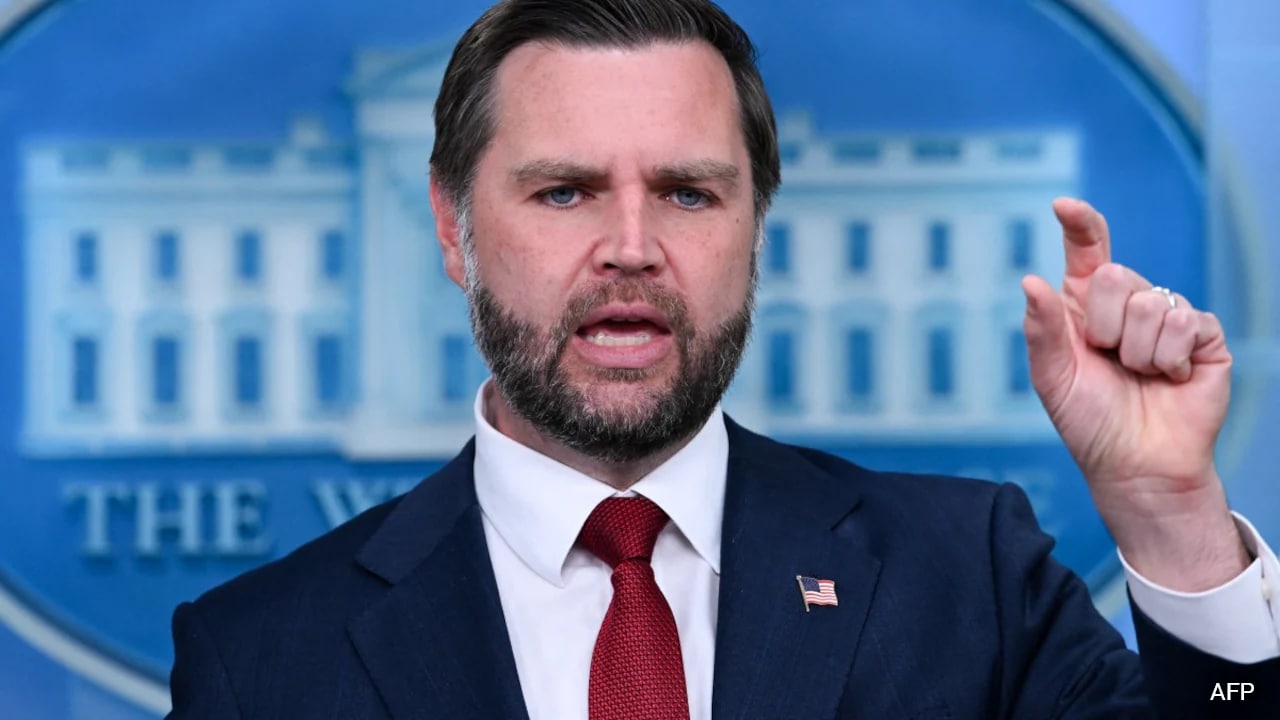
The tech elite want you to panic. They spend half their time warning humanity about rogue machine intelligence that will turn the planet into paperclips, and the other half running to Washington begging for strict oversight. Politicians like JD Vance recently hit back with a blunt piece of reality: if you are building Frankenstein, stop.
The lazy consensus in tech circles accepts this theater at face value. We treat artificial intelligence safety as an ethical crisis of conscience where brilliant creators accidentally birth monsters they cannot control. That framing is complete nonsense.
Look past the sci-fi metaphors. Big tech labs are not terrified of their own creations; they are terrified of open-source competition. When massive corporate monopolies lobby for heavy-handed state regulation, they are not protecting humanity. They are pulling up the drawbridge.
The Regulatory Capture Playbook
I have watched venture-backed startups burn tens of millions of dollars trying to comply with arbitrary compliance frameworks before they even ship code. Compliance is expensive. Bureaucracy has a fixed cost that large enterprises absorb out of a petty cash drawer, but it completely crushes a bootstrap garage operation in Boise or Austin.
When a multi-trillion-dollar laboratory demands strict licensing requirements, safety boards, and government-mandated audits, they are weaponizing the state against open-source developers. If you need a federal stamp of approval and a legal compliance team to train a foundational model, garage innovators are instantly locked out of the market.
Calling for government guardrails while simultaneously pushing the boundaries of raw compute is a brilliant PR stunt. It allows labs to market themselves as responsible stewards of human destiny while building a regulatory moat that ensures zero new entrants can challenge their oligopoly.
The Flawed Premise of Voluntary Halts
Imagine a scenario where three dominant labs agree to pause training runs for six months to evaluate safety protocols. What actually happens? Capital does not freeze. Compute does not sleep. Foreign adversaries and nimble competitors in jurisdictions outside Western legal reach accelerate their clusters.
The idea that you can put a global pause button on algorithmic scaling ignores basic market incentives. Intelligence is the ultimate economic currency of this century. Telling private entities to voluntarily slow down because their internal philosophers are having an existential crisis is like asking oil companies to stop drilling because emissions are messy. If you want a different outcome, change the economic incentives. Stop treating safety as an administrative checklist and start treating it as an engineering constraint.
Real Engineering Versus Safety Theater
True safety in systems architecture is not achieved by hiring ethicists to write whitepapers or begging Congress to pass three-thousand-page bills written by corporate lobbyists. It is achieved through rigorous verification, sandboxing, and adversarial red-teaming built directly into the development cycle from day one.
If an enterprise builds an autonomous agent that can execute arbitrary code or manipulate financial transactions without deterministic circuit breakers, that is an engineering failure, not an act of God. Blaming the abstract concept of artificial intelligence for poor system design is a coward's way out.
We do not need federal bureaucrats deciding which transformer architecture gets a license. We need strict liability laws. If a company deploys a model that causes direct, measurable economic or physical harm, hold them legally liable for the fallout. Pierce the corporate veil of algorithmic abstraction. Make the board and the executives financially and criminally responsible for the chaos their software unleashes.
Once you attach heavy personal and corporate liability to bad deployments, the corporate desire to rush half-baked, hallucinatory systems into production evaporates overnight. They will test their models properly because the downside risk becomes existential for the balance sheet, not just the PR department.
Stop asking the state to codify a corporate monopoly under the guise of keeping humanity safe.
Vance: AI Companies 'Begging' for Regulation Feels Like 'a Trojan Horse'
This clip captures the core skepticism surrounding why major technology players are actively lobbying for government boundaries that conveniently cement their market dominance.