Urban and suburban retail corridors are littered with vacant commercial properties, representing dead capital for municipalities and lost tax yields for local economies. At the same time, food insecurity persists in high-deprivation areas, driven by macroeconomic inflation and compressed household purchasing power. The conversion of abandoned commercial footprints into social supermarkets—exemplified by recent municipal and corporate interventions converting disused real estate into multi-tier community assets—presents an intersection of commercial real estate recovery and localized social infrastructure. This operational model moves past traditional charitable models by applying supply chain efficiencies to surplus distribution.
Analyzing this transformation requires evaluating three distinct operational pillars: real estate capital expenditure absorption, surplus supply chain logistics, and internal revenue cross-subsidization. Understanding how these mechanics interact explains why modern social supermarkets succeed where conventional charity outlets often stagnate.
The Real Estate Mechanics of Vacant Asset Regeneration
When a commercial retail space or municipal building sits vacant, it incurs holding costs, including business rates, security overhead, and structural depreciation. Repurposing these assets requires a multi-party capital expenditure model. Private sector commercial partners, local government planning bodies, and social enterprises share the initial transformation costs.
The physical layout of these converted properties is typically partitioned into three functional operational zones:
- The retail sales floor, dedicated to discounted provisions.
- The developmental advisory wing, focused on skills acquisition and welfare navigation.
- The communal hospitality zone, engineered for social integration and nutritional demonstration.
This architectural segmentation ensures that square footage yields both direct economic output and indirect social value. Rather than functioning as a standard retail storefront optimized for margin maximization per square foot, the space operates as a high-density utility hub. Fixed overhead costs are defrayed through corporate social responsibility grants and municipal regeneration funds, insulating the operation from commercial real estate volatility.
Supply Chain Dynamics and Surplus Valorization
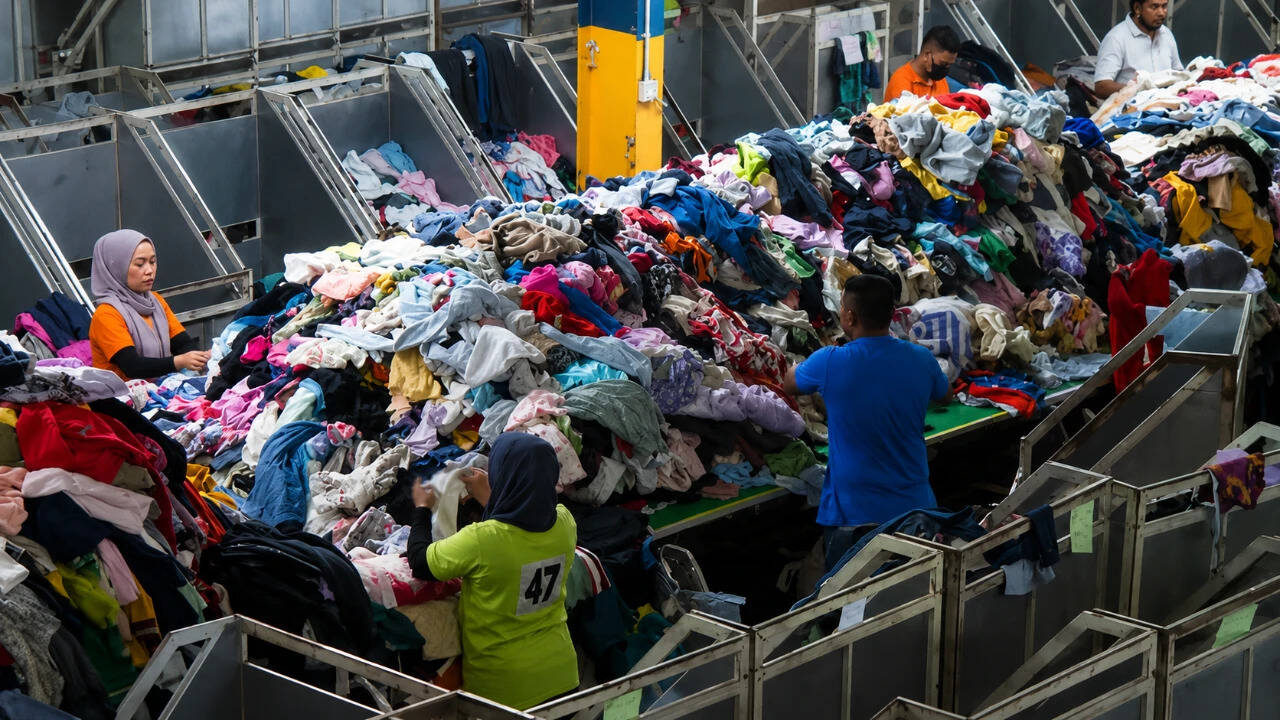
Traditional grocery retail relies on predictable inventory replenishment, standardized supplier margins, and just-in-time logistics. Conversely, the social supermarket model operates on reverse logistics and supply chain waste mitigation. Fast-moving consumer goods manufacturers and major supermarket chains generate surplus inventory due to forecasting errors, seasonal overstock, packaging adjustments, or short shelf-life thresholds.
Instead of incurring disposal fees or contributing to organic waste streams, suppliers channel these goods into specialized distribution networks. The economic mechanism relies on capturing residual value from products that would otherwise yield zero return or negative disposal costs.
[Manufacturer/Supermarket Surplus]
       │
       ▼
[Logistics Consolidation]
       │
       ▼
[Tiered Retail Distribution (e.g., 20p Essentials)]
       │
       ▼
[Revenue Reinvestment into Community Hubs]
This pipeline protects consumer dignity by maintaining a transactional retail environment. Members pay nominal amounts for core staples—such as foundational produce priced at minimal price points like twenty pence—rather than receiving unconditional handouts. This transaction preserves personal agency and establishes a predictable baseline of inventory turnover.
The Cross-Subsidization Financial Model
The operational sustainability of a social supermarket depends on internal revenue routing. Retail margins, though heavily discounted for qualifying local members, generate cash flow. Unlike commercial retailers where net margins are extracted by shareholders or reinvested into corporate expansion, the surplus revenue generated on the sales floor is captured and redirected.
This capital flows directly into adjacent developmental services. These services include structured programs addressing debt management, professional upskilling, and nutritional literacy. By co-locating retail access with social intervention services, the model lowers administrative overhead. Participants do not need to travel to disparate municipal offices or charitable organizations; the point of purchase doubles as the point of access for holistic support.
The economic feedback loop operates continuously: discounted retail attracts foot traffic, foot traffic generates transactional revenue, and revenue funds human capital development programs. These programs subsequently increase the long-term economic self-sufficiency of the local demographic, mitigating chronic dependency.
Structural Bottlenecks and Operational Limitations
Despite the structural soundness of retail-to-social-supermarket conversions, several operational vulnerabilities constrain scalability.
First, inventory flow is inherently volatile. Because the model relies on commercial surplus, product availability fluctuates based on upstream manufacturing efficiencies and supply chain accuracy. When industrial waste decreases, retail inventory drops, requiring secondary procurement strategies to maintain shelves stocked with essential items like hygiene products and infant nutrition.
Second, eligibility governance introduces administrative friction. To ensure resources target populations experiencing severe deprivation, operators enforce localized criteria, often requiring proof of means-tested benefit enrollment. Managing these verification processes demands administrative labor, risking friction at the point of entry unless digital onboarding systems are streamlined.
Third, geographic concentration remains dependent on corporate sponsorship. The upfront capital required to regenerate a dilapidated commercial asset necessitates aligned philanthropic partners. Without a commercial anchor tenant or multi-year municipal backing, independent social enterprises struggle to absorb the initial structural retrofit costs required to bring older commercial buildings up to contemporary building and safety codes.
Deploy municipal real estate zoning overlays that fast-track commercial-to-community adaptive reuse permits, pairing vacant urban retail footprints directly with regional manufacturing surplus networks to permanently stabilize inventory pipelines.