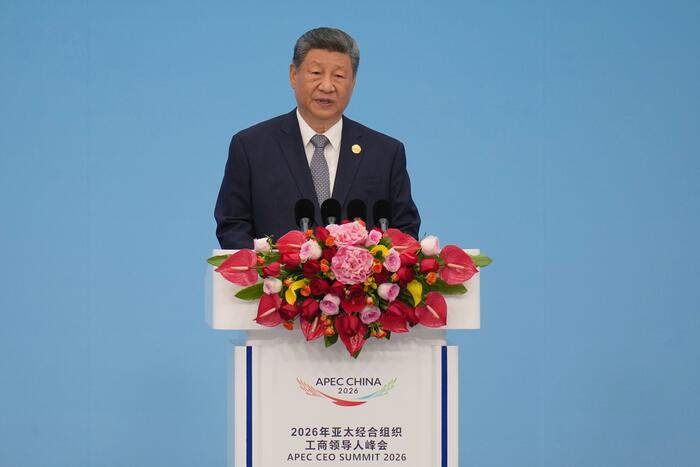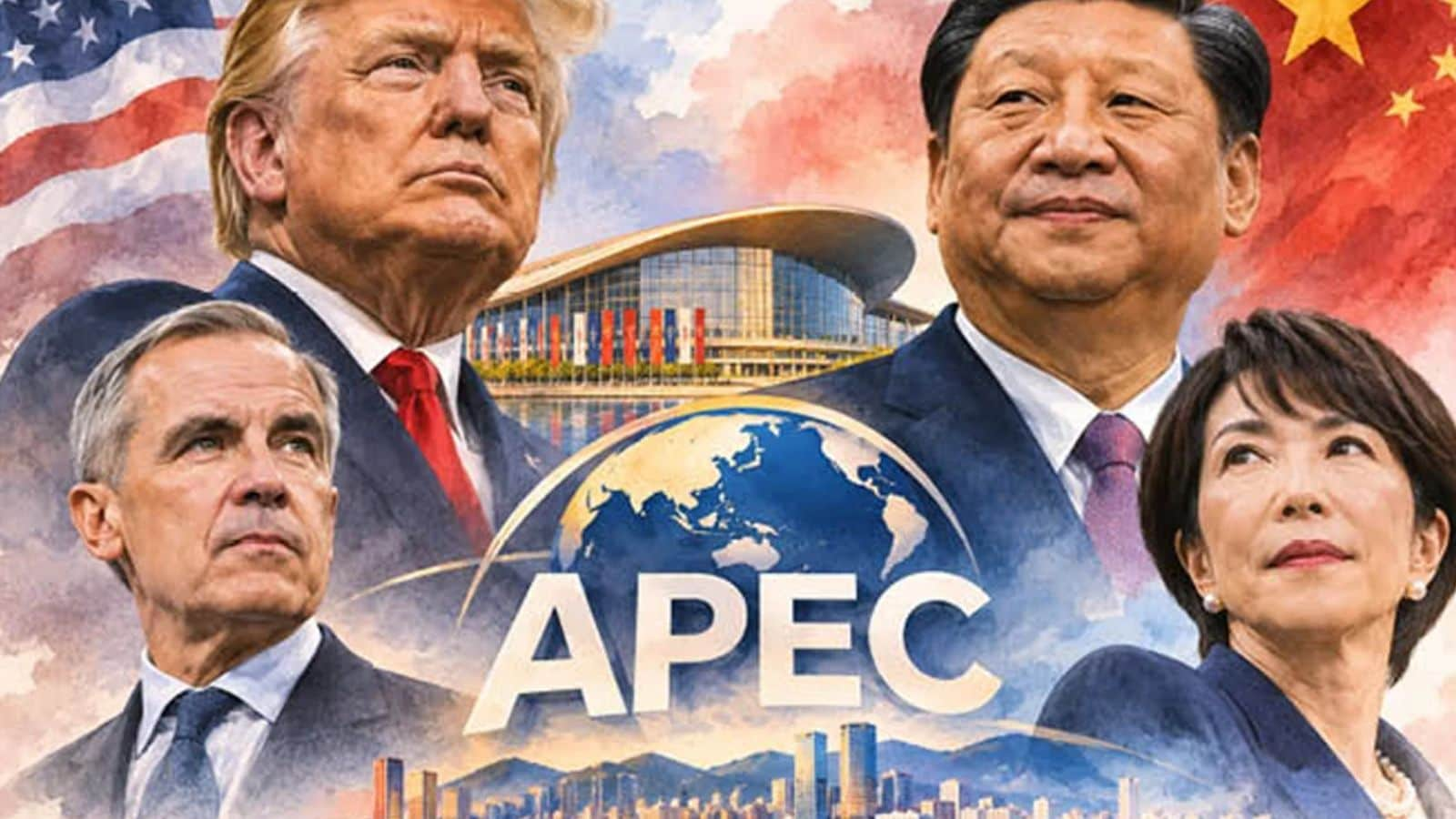
Mainstream coverage of the 2026 Asia-Pacific Economic Cooperation summit reads like a sports broadcast. Pundits obsess over the handshake angles between Donald Trump and Xi Jinping, treat China-Japan friction as an imminent naval crisis, and frame Canada’s diplomatic overtures as a neat "trade reset."
That framing misses the actual story.
The lazy consensus assumes that multilateral summits still dictate the rules of global commerce. They do not. APEC 2026—hosted in Shenzhen, China—is a high-production stage play designed to project control over economic forces that outgrew diplomatic communiqués years ago. While cameras track motorcades and analysts parse joint statements for subtle shifts in adjectives, multinational procurement teams and sovereign wealth funds are executing capital allocations based on structural realities that no summit handshake can reverse.
To understand what is actually happening in the Pacific Rim right now, you have to stop watching the podium and start tracking the shipping manifests, tariff schedules, and semiconductor capital expenditure budgets.
The Trump-Xi Handshake Illusion
Every press corps preview of APEC 2026 treats a bilateral sit-down between Donald Trump and Xi Jinping as the main event. The prevailing narrative suggests that a single meeting could either trigger a catastrophic tariff spiral or unlock a grand bargain that stabilizes trans-Pacific trade.
Both outcomes are fantasies.
I have sat in boardrooms with chief supply chain officers who spent tens of millions of dollars between 2018 and 2025 trying to time geopolitical thaw cycles. Every single company that paused its diversification strategy waiting for a diplomatic breakthrough got burned. Why? Because the structural decoupling between Washington and Beijing is no longer driven by executive whim; it is codified into bipartisan industrial policy, export control regimes, and national security statutes on both sides of the Pacific.
Consider the mechanics of modern trade restrictions:
- Entity Lists and Export Controls: Restrictions managed by the U.S. Bureau of Industry and Security (BIS) operate on technical thresholds—compute density, lithography wavelengths, and dual-use material specs—that career bureaucrats enforce regardless of summit optics.
- China’s Dual Circulation Strategy: Beijing’s domestic industrial policy explicitly prioritizes indigenous substitution in core technologies, from aerospace to legacy semiconductors. Xi Jinping cannot trade away self-reliance for temporary tariff relief without undermining his own domestic economic mandate.
- Rules of Origin Enforcement: Customs authorities across North America and Asia now audit sub-tier component provenance. Slapping a "Made in Vietnam" or "Made in Mexico" label on Chinese sub-assemblies no longer clears customs without scrutiny.
When Trump and Xi meet on the sidelines in Shenzhen, expect transactional rhetoric. You might see localized concessions—agricultural purchase commitments from Beijing in exchange for narrow tariff exclusions or delayed enforcement dates from Washington. Market algorithms will spike on the headlines. Two weeks later, the underlying cost of capital for cross-border manufacturing will remain unchanged.
If your business strategy depends on two heads of state signing a piece of paper at APEC to lower your landed costs, you do not have a strategy. You have a gamble.
Why China-Japan Tensions Are Misread as Pure Geopolitics
Standard diplomatic commentary frames friction between Tokyo and Beijing around historical grievances, territorial disputes in the East China Sea, and defense posture alignment with Washington. Those flashpoints are real, but treating them as the primary driver of the bilateral relationship ignores the brutal industrial competition happening underneath.
Japan and China are locked in a zero-sum battle over the middle and upper tiers of Asian manufacturing.
For decades, the division of labor was clear: Japan supplied high-precision capital equipment, specialty chemicals, and advanced components; China provided assembly scale and a massive consumer market. That complementarity is dead. Chinese manufacturers have moved rapidly up the value chain into electric vehicles, industrial robotics, shipbuilding, and precision machine tools—sectors that form the bedrock of Japan’s export economy.
Look at the real friction points driving Tokyo’s posture heading into APEC 2026:
- Automotive Displacement: Japanese automakers spent years dominating Southeast Asian markets like Thailand and Indonesia. Aggressive pricing and vertical battery integration from Chinese EV makers have eroded Japanese market share across ASEAN at a speed nobody in Tokyo predicted five years ago.
- Semiconductor Equipment Chokepoints: Japan’s alignment with export controls on advanced chipmaking tools was framed publicly around regional security, yet it directly protects incumbents like Tokyo Electron from losing technological lead times to state-backed Chinese competitors.
- Critical Mineral Leverage: Japan remains acutely vulnerable to Chinese processing dominance in rare earths and battery-grade graphite, forcing Tokyo to subsidize alternative refining capacity in Australia and Southeast Asia at a steep cost premium.
The diplomatic frostiness visible at APEC is simply the political exhaust of an industrial collision. Even if diplomats issue polite statements about "mutually beneficial strategic relations," Japanese corporate capital expenditure continues to rotate away from mainland China toward India, Southeast Asia, and the United States. The tension is structural, not cyclical.
Canada’s "Trade Reset" Is Damage Control, Not Strategy
Mainstream coverage loves a comeback narrative, which explains why Ottawa’s diplomatic engagement at APEC 2026 is routinely packaged as a "Canada trade reset" across the Indo-Pacific.
Call it what it actually is: frantic triangulation by a middle power caught between an assertive Washington and a retaliatory Beijing.
Canada’s trade architecture is overwhelmingly dependent on a single market. Roughly three-quarters of Canadian merchandise exports go to the United States. Whenever Washington threatens broad-based tariffs or demands stricter alignment on China trade policy—such as matching 100 percent tariffs on Chinese electric vehicles, steel, and aluminum—Ottawa has almost zero room to maneuver. Falling out of step with Washington risks preferential access under the United States-Mexico-Canada Agreement (USMCA), an existential threat to the Canadian economy.
Yet aligning completely with Washington triggers immediate, surgical retaliation from Beijing against Canadian agricultural and resource exports—canola, pork, potash, and lumber.
Imagine a scenario where Ottawa attempts to negotiate standalone bilateral trade relief with Beijing during APEC without clearing every detail with the U.S. Trade Representative. Within days, Washington would signal that Canada is becoming a backdoor for subsidized Chinese goods into North America, jeopardizing cross-border supply chains in Ontario and Quebec. Conversely, if Ottawa uses the APEC stage to lecture Beijing on trade practices, Canadian prairie farmers pay the price within a quarter.
A genuine "trade reset" requires leverage—control over critical chokepoints, massive domestic consumer demand, or proprietary technology that neither superpower can replace. Canada possesses valuable commodities, but commodities are fungible. What Ottawa is executing at APEC is not a strategic pivot; it is tactical survival designed to keep both Washington and Beijing from crushing Canadian exporters simultaneously.
What You Should Actually Watch at APEC 2026
If the headline bilateral meetings are mostly theater, where does real economic signal hide during the summit? Strip away the political speeches and focus on three operational indicators that actually move balance sheets.
1. The Shenzhen Location Signal
APEC’s rotating chairmanship placed the 2026 meetings in Shenzhen, China’s hardware and technology capital. That choice was deliberate. Beijing is not using APEC to showcase traditional heavy industry or state-owned banks; it is using the venue to pitch global executives on China’s dominance in green tech, artificial intelligence hardware, and autonomous supply chains. Watch which Western and Asian CEOs attend the APEC CEO Summit in person versus those who send regional vice presidents. C-suite attendance ratios tell you far more about actual corporate risk appetite than diplomatic readouts.
2. Middle-Power Minilateral Deals on the Sidelines
While reporters crowd around the U.S. and Chinese delegations, the substantive trade rulemaking happens in smaller rooms among economies like South Korea, Singapore, Australia, Vietnam, and Chile. Watch for progress on digital trade standards, cross-border data flow agreements, and green shipping corridors. These technical frameworks—often built around existing blocs like the Comprehensive and Progressive Agreement for Trans-Pacific Partnership (CPTPP) or the Digital Economy Partnership Agreement (DEPA)—create enforceable commercial rules that bypass U.S.-China gridlock entirely.
3. Currency and Capital Control Signals
Trade tariffs get the headlines, but exchange rate movements dictate profit margins. With divergent interest rate trajectories between the Federal Reserve, the Bank of Japan, and the People’s Bank of China, currency volatility across the Pacific Rim is a massive hidden tax on cross-border trade. Listen closely to finance ministers’ language regarding "excessive exchange rate volatility." When officials start repeating that specific phrase, central bank intervention or shifting capital controls usually follow within weeks.
The Questions Investors and Operators Should Ask Instead
Most coverage of APEC 2026 answers the wrong questions. Readers ask, "Will APEC 2026 end the trade war?" or "Who won the Trump-Xi meeting?" Both questions assume a binary world where diplomatic summits reset economic gravity.
Here are the questions that actually matter for operators, investors, and policy analysts—and the blunt answers nobody on cable news will give you.
| The Conventional Question | Why the Premise Is Flawed | The Real Operational Reality |
|---|---|---|
| Will APEC 2026 lower tariffs between the US and China? | Assumes tariffs are temporary bargaining chips rather than permanent revenue and industrial protection tools. | Baseline tariffs are baked into fiscal and industrial policy. Expect narrow exemptions at best, never broad repeal. |
| Can APEC stabilize China-Japan business ties? | Treats diplomatic tone as the driver of corporate investment rather than competitive market displacement. | Japanese firms are structurally reducing China exposure because domestic Chinese rivals have captured the market. |
| Does APEC make "friend-shoring" obsolete? | Implies supply chains moved out of China solely due to political rhetoric rather than rising labor costs and regulatory risk. | Supply chains moved to Vietnam, India, and Mexico for cost and resilience; sunken capex will not return to China. |
| Is APEC still relevant to global trade? | Measures relevance by binding treaties signed at the summit rather than informal regulatory coordination. | APEC’s value lies in customs harmonization and technical standards, not headline-grabbing trade deals. |
The Downside of Ignoring Diplomatic Theater Entirely
Dismissing APEC as pure theater carries its own risk. Even seasoned supply chain executives can overcorrect by assuming geopolitics is completely detached from day-to-day operations.
Summits create artificial deadlines. Bureaucracies hate showing up to a host city empty-handed, which means ministries rush to finalize regulatory approvals, agricultural import licenses, or antitrust reviews in the three weeks leading up to the leaders' week. If your company has a merger stuck in regulatory limbo or an export license sitting on a ministry desk, the pre-APEC window is often the single best moment of the year to push it across the finish line.
Furthermore, while diplomatic breakthroughs rarely lower structural barriers, diplomatic blowups can trigger immediate, punitive shocks. A poorly scripted press conference or an unscheduled maritime incident during summit week can freeze customs clearance for perishable goods or trigger sudden regulatory inspections for foreign firms operating on the mainland. Ignoring the political calendar leaves you blind to short-term operational tail risks.
How to Position Around APEC 2026
Stop treating international summits like earnings calls that dictate your annual strategy. If you manage capital, supply chains, or cross-border operations in the Asia-Pacific region, use the noise around APEC 2026 to execute three concrete moves:
- Stress-Test Tier-2 and Tier-3 Suppliers: Do not stop at asking where your direct supplier is located. Map where their raw materials, active ingredients, or sub-components originate. If your "Vietnam-sourced" product relies on 80 percent Chinese input value, you are still exposed to transshipment tariffs regardless of how friendly the summit photos look.
- Price Permanent Friction Into Margins: Stop modeling tariff relief or geopolitical normalization as your base case. Underwrite new contracts assuming current tariff schedules, export controls, and compliance audit costs are permanent fixtures of trans-Pacific trade. If a deal only works when tariffs drop, walk away.
- Exploit Pre-Summit Regulatory Windows: Use the diplomatic calendar tactically. Push pending licensing, customs classifications, and local joint-venture approvals through government agencies before the leaders arrive, when officials are incentivized to clear backlogs and project stability.
APEC 2026 will generate thousands of articles analyzing body language, seating charts, and carefully hedged communiqués. Let competitors waste time decoding the theater. Follow the capital expenditure, audit your sub-tier supply chain, and price the friction directly into your margins.