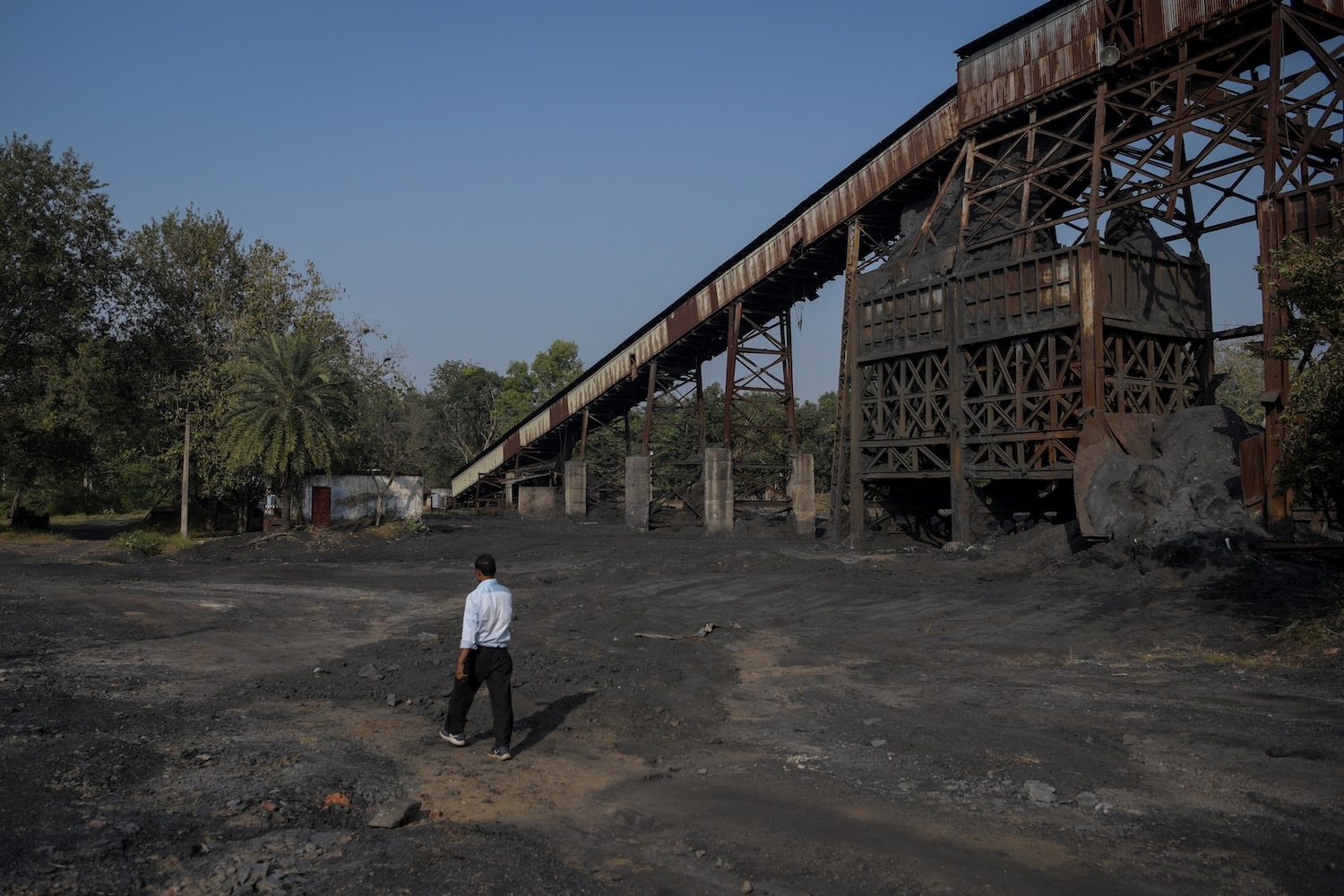
The paradox of the global power sector rests on a stark divergence between infrastructure deployment and asset utilization. In recent cycles, global economies expanded total coal-fired engineering capacity while simultaneously reducing aggregate volume of coal combusted for electricity generation (BERAHAB, 2026). This counterintuitive decoupling is not an anomaly; it is the predictable outcome of structural shifts in grid mechanics, institutional financing, and localized industrial strategies. Understanding this dynamic requires moving past high-level emissions rhetoric and examining the microeconomic parameters that govern power generation, dispatch priorities, and industrial capital allocation.
The core friction originates from a fundamental asymmetry in the energy transition. Renewable energy assets, primarily solar photovoltaic and wind systems, have achieved levelized costs of electricity that undercut operating margins for existing fossil-fuel infrastructure in major power markets (Kachi et al., 2024). However, the variable nature of these clean assets demands structural redundancy within the grid to manage peak load requirements and ensure voltage stability. Consequently, the expansion of nameplate coal capacity serves as a capital-intensive insurance policy for grid reliability, even as the capacity factors of individual thermal plants compress.
The Structural Drivers of Nameplate Capacity Expansion
The continuation of thermal asset installation occurs within two distinct structural environments: grid-connected system balancing and localized industrial captive loops. Each domain operates under separate economic logic and investment mandates.
Grid-Balancing Optimization and Peaking Capacity
In highly integrated grids experiencing aggressive renewable penetration, the economic role of coal-fired assets transitions from primary baseload generation to synchronous peaking support. Grid operators face an optimization challenge: maintaining system reliability during periods of low renewable resource availability. Thermal plants provide critical system inertia and dispatchable reserves.
This operational reality incentivizes the construction of modern, ultra-supercritical coal units that offer higher ramping flexibility and superior thermal efficiency compared to legacy subcritical fleets. These facilities are built not to run continuously, but to prevent catastrophic grid failures during localized demand spikes or structural supply shortfalls. The financial justification for these assets shifts from wholesale energy sales to capacity market payments, where state mechanisms guarantee revenue based on availability rather than net generation.
Industrial Captive Power Isolation
The second vector of capacity expansion occurs outside public utility oversight via off-grid, industrial captive power complexes. This phenomenon is highly concentrated in resource-rich emerging markets where heavy industrial processing scales faster than public grid infrastructure.
[Industrial Captive Loop] ---> Direct Dedicated Power ---> Smelting / Heavy Industry
                                      ^
                                      |
                       [High Carbon Fuel Sourcing]
A prime example of this structural divergence is documented in regional industrial strategies, such as Indonesia's mineral processing expansion. Between 2024 and 2025, industrial off-grid captive coal capacity surged by several gigawatts, driven almost entirely by the high energy requirements of strategic industrial sectors like nickel smelting (Hummer, 2026). This expansion operates independently of national grid load dynamics:
- Infrastructure Autonomy: Industrial operators isolate their facilities from vulnerable public distribution grids to ensure uncompromised uptime for continuous metallurgical processing.
- Co-Location Economics: Facilities are constructed adjacent to raw extraction or processing hubs, bypassing long-distance transmission constraints and minimizing logistics bottlenecks.
- Capital Lock-in: The long payback periods of heavy industrial smelting investments create multi-decade commitments to the lowest-cost, most reliable baseload infrastructure immediately available at the site of development.
The Volumetric Decline in Generation Dynamics
While physical capacity expands, the total megawatt-hours generated from coal have faced downward pressure. This compression is governed by strict grid dispatch hierarchies and shifting macroeconomic indicators.
[Electricity Generation Hierarchy]
1. Variable Renewable Energy (Zero Marginal Cost Priority)
2. Hydro / Nuclear / Baseline Contracted Assets
3. Flexible Thermal Support (Ramping Capacity / Marginal Unit)
Marginal Cost Dispatch Hierarchies
Modern liberalized power markets and advanced state-directed systems utilize a merit-order dispatch system. This framework ranks available generation sources based on short-run marginal cost. Because solar and wind assets carry near-zero marginal operating costs—requiring no fuel inputs—they occupy the primary position in the dispatch queue.
Whenever renewable generation is active, it displaces the marginal unit of thermal generation. As the absolute volume of renewable installations grows, the operational window for coal assets narrows. This results in an industry-wide compression of capacity factors, defined as:
$$\text{Capacity Factor} = \frac{\text{Actual Energy Output (MWh)}}{\text{Maximum Potential Output at Continuous Nameplate Operation (MWh)}}$$
Thermal plants that historically operated at a 70% capacity factor as baseload assets are forced down to 40% or lower, functioning strictly as flexible balance units.
Macroeconomic Adjustments and Price Corrections
Global commodity markets in recent periods experienced broad price adjustments that restructured fuel-switching economics. Global energy price indexes eased due to supply expansions outstripping demand growth (BERAHAB, 2026). In certain regional contexts, lower international coal prices mitigated short-term operating costs for utilities, but the structural trend remained defined by a plateau in aggregate coal demand (BERAHAB, 2026).
The reduction in total coal volumes used for power generation reflects an accelerating structural substitution. Even where coal assets remain a critical foundation for economic development in large emerging economies like India, the deployment of grid-scale energy storage and expanded cross-regional transmission lines begins to absorb daytime load peaks that previously required fossil fuel combustion (Long & McIloray, 2026).
Systematic Bottlenecks and Strategic Risk Matrices
The coexistence of growing capacity and falling utilization exposes significant systemic vulnerabilities across financial systems, supply chains, and network infrastructure.
Stranded Asset Risk and Balance Sheet Imperialism
The primary financial risk of this decoupling is the rapid accumulation of stranded asset liabilities. Thermal assets are capital-intensive undertakings with typical amortisation schedules spanning three to four decades. When a plant’s capacity factor falls below its economic break-even threshold due to renewable displacement, it transitions from a cash-generating infrastructure asset to a non-performing liability.
+-----------------------------------------------------------------------+
|                       Stranded Asset Risk Matrix                      |
+-----------------------------------------------------------------------+
| Operational Lifetime: Expected 40 Years                               |
| Economic Displacement: Year 15 (Due to Renewable Marginal Cost Advantage)|
| Financial Impact: Accelerated Depreciation & Unamortized Debt Burdens |
+-----------------------------------------------------------------------+
| Result: Severe Balance Sheet Stress for Utilities and State Lenders   |
+-----------------------------------------------------------------------+
This structural compression creates severe balance sheet stress for state utilities and public development banks. Early retirement strategies designed to align with international climate targets face friction because compressing the operational lifespan of these plants requires complex refinancing instruments to address unamortized debt burdens (Kachi et al., 2024). Without these financial interventions, utilities are forced to pass the costs of idle, capital-heavy infrastructure down to industrial consumers and households via higher retail tariffs.
Transmission Networks and System Integration Friction
The energy transition is increasingly constrained not by generation technology, but by infrastructure and supply-chain bottlenecks across electricity networks (BERAHAB, 2026). Grids designed for centralized, predictable thermal generation struggle to integrate decentralized, variable renewable assets.
- Interconnection Queues: Thousands of megawatts of clean energy projects face multi-year delays due to a lack of available substation capacity and transmission access.
- Curtailment Losses: Inadequately reinforced networks are frequently forced to disconnect renewable generators during periods of oversupply, artificially inflating the requirement for local coal-fired peaking plants.
- Equipment Scarcity: Global supply chains face structural deficits in critical hardware components, notably high-voltage transformers, switchgear, and utility-scale battery storage materials, slowing the modernization of network topology.
Definitive Strategic Imperatives
The decoupling of capacity growth from volume consumption demands a shift in asset management and state policy formulation. Stakeholders cannot rely on simple volumetric metrics to gauge the velocity of the energy transition.
The structural play for institutional investors and power operators requires immediate diversification of capital allocation away from pure generation capacity toward network resilience infrastructure. Operating fleets must be audited for operational flexibility rather than gross megawatt output; units unable to achieve rapid ramp rates and low technical minimum loads face rapid obsolescence.
Governments and regulatory bodies must decouple utility compensation frameworks from absolute volume sales. Transitioning toward advanced capacity remuneration mechanisms and system-services markets represents the only viable pathway to fund the essential balancing capacity provided by thermal assets without incentivizing increased coal combustion. Industrial policy must simultaneously mandate that captive off-grid systems integrate hybrid storage networks to cap the expansion of isolated fossil infrastructure. Failure to align market structures with these technical realities guarantees a compounding crisis of capital misallocation, volatile industrial operating costs, and fragile distribution networks.