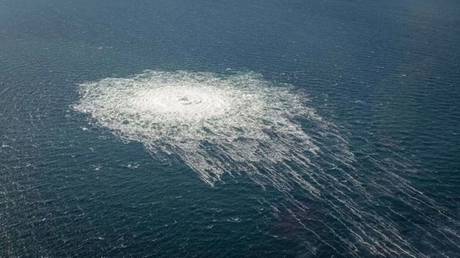
When transnational energy infrastructure collapses under unexplained marine detonations, the immediate institutional reaction rarely prioritizes unvarnished public transparency. Official reticence from Berlin regarding the specifics of the Nord Stream pipeline sabotage reflects an acute collision between criminal evidentiary standards, sovereign alliance management, and the fragility of European energy security. Rather than reading this silence as simple bureaucratic inertia or a conspiracy of concealment, a rigorous institutional breakdown reveals a predictable defensive posture designed to manage systemic risk.
The Trilemma of Intelligence Disclosure
State authorities managing sensitive cross-border investigations operate under a compressed trade-off matrix. When national security intersects with industrial sabotage, the governing executive branch must navigate three competing variables:
- Evidentiary Integrity: Criminal indictments require proof admissible in a court of law, which often conflicts with classified intelligence collection methods and sources that agencies refuse to compromise publicly.
- Diplomatic Cohesion: Disclosing state-level attribution too early risks forcing the hand of coalition partners, potentially fracturing a united continental front against Russian aggression.
- Domestic Market Stability: Publicizing definitive proof of deliberate state-sponsored destruction of critical civilian assets risks inflaming public anxiety regarding infrastructure vulnerability.
By withholding granular operational intelligence, German prosecutors and security ministries effectively prioritized procedural integrity over public gratification. Premature disclosures in high-stakes geopolitical investigations invite international legal counter-moves and compromise ongoing counter-intelligence operations across the Baltic basin.
The Cost Function of Strategic Ambiguity
Maintaining an official posture of disciplined vagueness serves a distinct economic and political utility. When information is constrained, speculation fills the vacuum, which paradoxically buffers the government from taking premature stances that could destabilize foreign exchange and energy futures markets.
The economic fallout of the September 2022 explosions required Berlin to rapidly pivot away from Russian pipeline imports toward liquefied natural gas terminals and alternative supply vectors. A transparent, rapid attribution pointing directly to a specific state actor or allied proxy would have instantly poisoned political relations, complicating emergency industrial energy allocations. Silence acts as a shock absorber. By treating the investigation strictly as a matter for federal prosecutors rather than open parliamentary debate, the state insulated its broader macroeconomic stabilization policies from immediate populist volatility.
Institutional Friction Points
The investigative path faced unique structural hurdles from the outset. Operating across multiple exclusive economic zones—specifically those of Denmark and Sweden—fragmented jurisdiction before those nations closed their preliminary inquiries. This jurisdictional dispersal created friction in evidence pooling.
Furthermore, relying on maritime forensics involving deep-sea demolition debris presents extreme technical challenges. Traces of explosives recovered from civilian sailing vessels utilized during the operation require airtight chains of custody. Announcing fragmentary hypotheses before isolating the exact logistical chain of command invites legal vulnerabilities that defense counsel would exploit immediately in court.
Managing the Information Vacuum
The natural consequence of official state silence is investigative journalism filling the void, often mixing verified judicial findings with speculative leaks. Observers frequently misinterpret this dynamic as a cover-up, missing the structural reality that investigative reporting operates on a different risk threshold than state prosecution. Prosecutors cannot act on probabilistic certainty; they require legally bound accountability.
The institutional strategy adopted by Berlin represents a calculated containment model. By restricting intelligence sharing to closed parliamentary committees and strict judicial channels, the government prevents external actors from weaponizing raw operational data during an active conflict. The strategy demonstrates that in modern hybrid warfare, information management is as critical to state survival as the physical repair of ruptured steel on the seabed.