Ink on paper. Pixels glowing against a dark room. Numbers do not bleed, yet we treat them as if they carry weight. Twenty-five million. A massive, towering block of digits meant to stop the heart before the mind has time to ask a single question.
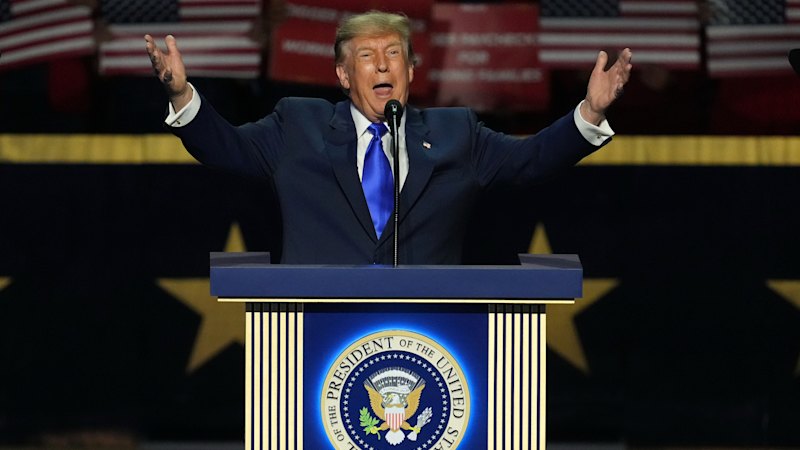
We live in an age of architectural panic. Every evening, the screen lights up with grand totals, sweeping curves of movement across maps, and an endless parade of invisible multitudes marching toward a border. The figures are designed to overwhelm. They arrive wrapped in sirens and underlined in red.
Consider what happens next: the individual disappears.
Let us step away from the macroeconomic abstractions and the podium shouting. Let us look at how a border actually functions beneath the weight of these projections.
I stood at a crossing point once, years ago, when the shift change happened. The wind carried the dry smell of creosote and old diesel. The air was heavy with anticipation, though nothing was moving. A guard leaned against the side of a white vehicle, his coffee cup cooling in his hand, staring out at a horizon that seemed to stretch into infinity. He was not thinking about macroeconomics. He was thinking about his aching lower back and the three hours remaining on his shift.
That is the reality of the front line. It is not an apocalyptic movie set. It is dust, boredom, coffee cups, and bureaucratic machinery grinding through thousands of paper files, trying to separate administrative error from genuine danger.
When politicians throw around figures like eleven thousand eight hundred and eighty-eight—a specific, clinical count of violent histories wrapped in bureaucratic shorthand—they are weaponizing fear. They are pulling a needle from a massive haystack and holding it up to the sun, asking you to believe the entire field is made of iron.
Statistics are slippery things. They require context, yet context is the first casualty of any modern debate.
To understand how millions of people move across continents, you have to look at the push. Nobody walks a thousand miles across unforgiving terrain because they are looking for a casual lifestyle change. They leave because the ground beneath them has cracked. They leave because the local economy evaporated, because extortion became a daily tax on breathing, or because a local gang decided their oldest son was old enough to hold a rifle.
Desperation is a powerful fuel. It burns through razor wire, economic sanctions, and political rhetoric with equal efficiency.
Walk through any shelter near the southern approaches, and you will not find an invading army. You will find rows of mismatched cots. You will find women washing dust out of children's clothes in plastic buckets. You will find men with calloused hands sitting quietly, staring at worn-out shoes, wondering how they are going to explain a missing passport to someone who speaks a language they barely understand.
This is not to say that systems do not matter. Borders exist for a reason. Laws are the structural framing of a society; remove them, and the roof caves in. We need order. We need verification. We need to know who is crossing into the interior, where they are going, and what their intentions are.
The danger lies in the false binary. The political theater demands that you choose between complete, lawless chaos on one side and heartless, draconian cruelty on the other. It tells you that every person arriving is either a saint seeking refuge or a hardened predator carrying a knife.
Humanity is messier than that.
Most people are simply trying to survive the century. They are gray shapes moving through an administrative labyrinth. They wait in lines that stretch for months. They fill out forms in languages they cannot read, guided by strangers who charge exorbitant fees for false hope.
At the same time, the fear is not entirely a phantom. Bad actors slip through the cracks. In any system strained to its breaking point, gaps widen. Human traffickers, opportunistic criminals, and those fleeing justice in their home countries exploit the confusion. That is the undeniable truth of a porous boundary. To pretend otherwise is foolish.
Yet, treating an entire migratory wave as a monolith of violent crime is like burning down a house because you found a spider in the kitchen.
The policy debates are broken because they are built on volume rather than precision. How do you process millions of claims without collapsing the courts? How do you vet individuals when their home governments have collapsed and paper records no longer exist? How do you balance national security with humanitarian obligation when both are screaming for your attention?
These are hard questions. They do not fit neatly into a thirty-second campaign ad. They require budgets, infrastructure, international cooperation, and years of tedious, unglamorous administrative work.
Nobody gets elected by promising better filing systems.
Instead, we get the numbers. Twenty-five million. A flood. An invasion. A tide.
Language matters. When you call human beings a tide or a flood, you stop seeing them as people with names, memories, and toothaches. You start seeing them as water that needs to be blocked, diverted, or drained away. You stop feeling the moral weight of turning someone back into the dark.
I remember a young girl sitting on a curb outside a transit station in Texas. She was holding a small plastic bag containing a single change of clothes and a juice box. Her shoes were held together with duct tape. She looked up as I walked past, her eyes wide with a mixture of exhaustion and profound confusion. She had traveled further before her tenth birthday than most of us will in a lifetime.
She was not a statistic. She was a child with dust on her knees.
The debate over border security is ultimately a mirror. It forces us to ask what kind of society we want to be. Do we build walls higher and harden our hearts to the suffering outside, convincing ourselves that the rest of the world is an enemy at the gate? Or do we build a smarter, more rigorous system that maintains the rule of law while acknowledging the inescapable reality of global human movement?
The numbers will keep coming. They will fluctuate with every drought, every coup, and every economic collapse south of the border. The politicians will keep shouting. The screens will keep glowing.
Somewhere out in the dark, a family is walking along a highway, following the glow of distant city lights, hoping against hope that tomorrow will look different from yesterday.