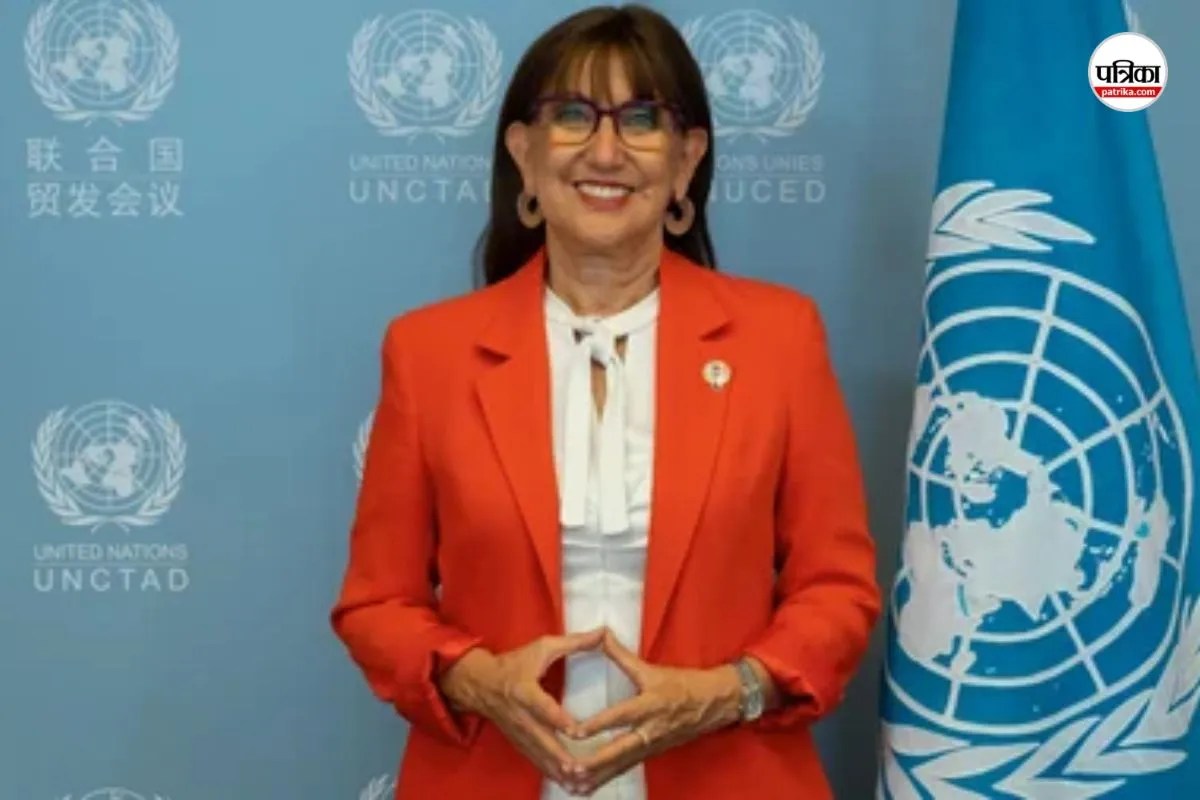
The succession architecture governing the United Nations Secretariat is fundamentally an exercise in structural friction. As the mandate of António Guterres nears expiration, the ongoing sequence of informal straw polls regarding the candidacies of figures such as Rebeca Grynspan exposes the fault lines within international diplomacy. Deconstructing this selection mechanism requires looking past media abstractions and examining the precise rules, veto dynamics, and institutional leverage points that dictate who ascends to the highest administrative office in global governance.
The Mechanics of the Straw Poll Matrix
The selection of a United Nations Secretary-General operates under Article 97 of the UN Charter, which dictates that the appointment must be made by the General Assembly upon the recommendation of the Security Council. In practice, this creates a two-tier filtering mechanism.
The Security Council utilizes informal straw polls to test candidate viability. These ballots categorize member state sentiment into three distinct operational states: encourage, discourage, and no opinion.
- The P5 Veto Constraint: The permanent members of the Security Council (China, France, Russia, the United Kingdom, and the United States) hold absolute veto power. In differentiated or color-coded ballots, a single "discourage" vote from a permanent member functions as a structural veto, terminating a candidate's practical viability regardless of total aggregate positive counts.
- The Threshold Requirement: A candidate must secure a minimum of nine affirmative votes from the fifteen Council members while avoiding any permanent member veto to transition to a formal General Assembly resolution.
The protracted timeline of the current cycle stems directly from this binary constraint. Frontrunners often secure high aggregate support among elected members while failing to achieve consensus among the P5, creating a persistent institutional stalemate.
The Cost Function of Insider Versus Outsider Profiles
Candidate positioning in multilateral elections typically relies on two archetypes: the operational insider and the sovereign outsider. Grynspan represents a textbook operational insider, having navigated various strata of the UN apparatus, including leadership roles within the United Nations Development Programme (UNDP) and UN Trade and Development (UNCTAD), alongside a background as Costa Rica's vice president.
The structural trade-offs of this profile are quantifiable:
[Institutional Insider]
  ├── Advantage: Zero ramp-up friction; immediate mastery of budgetary and administrative levers.
  ├── Advantage: Predictable negotiating posture recognized by legacy state actors.
  └── Vulnerability: Perceived institutional inertia; resistance from major powers seeking systemic disruption.

[Sovereign Outsider / State Envoy]
  ├── Advantage: External mandate signaling a clean break from legacy bureaucratic norms.
  └── Vulnerability: High operational risk; unfamiliarity with complex inter-agency budgetary dependencies.
Permanent members frequently state a preference for reform while simultaneously exercising vetoes against candidates whose insider knowledge threatens established geopolitical equilibriums. This creates a perpetual paradox: the system demands deep institutional competence to manage administrative reform, yet rejects candidates whose extensive internal track records make them efficient enough to actually execute it.
The Regional Rotation Principle and Hemispheric Leverage
Geographic distribution serves as an informal yet rigorous precedent in UN executive selections. The principle of regional rotation dictates that the office cycles through the five UN regional groups. Latin America and the Caribbean has asserted a strong claim for the current rotation cycle, backed by explicit diplomatic statements from major regional stakeholders regarding hemispheric representation.
However, regional entitlement frequently collides with strategic alignment. When a candidate originates from a region closely tied to a dominant superpower's sphere of influence, competing permanent members scrutinize their autonomous decision-making capacity. The operational risk for the Security Council is the appointment of an administrator who cannot maintain perceived neutrality across polarized geopolitical blocs. Consequently, regional momentum must be insulated from bilateral proxy friction—a threshold that proves increasingly difficult to clear as international polarization intensifies.
Strategic Forecast for Institutional Deadlock
When structural voting mechanisms fail to produce a consensus candidate within the statutory window, the organization faces administrative paralysis. The UN Charter contains no provision for an interim secretary-general, leaving the bureaucracy vulnerable to severe budgetary and operational bottlenecks.
Resolution of the current deadlock requires one of three structural shifts:
- P5 Concession: A targeted compromise where opposing permanent members mutually abstain from utilizing the veto, treating the candidate's administrative record as acceptable risk.
- Consensus Convergence: A shift in voting aggregates as lower-tier candidates withdraw, consolidating support around an alternative focal point.
- Contingency Extension: Implementation of temporary administrative stopgaps to maintain baseline operational continuity while negotiations continue past the incumbent's departure date.
The trajectory of the current selection cycle demonstrates that institutional reform cannot outrun geopolitical fragmentation. Until the permanent members decouple administrative selection from immediate tactical disputes, multilateral leadership transitions will remain structurally bound to diplomatic attrition.


