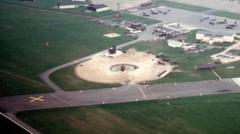
Decades of routine fire-suppression training, aircraft maintenance, and fuel storage at Royal Air Force (RAF) installations have created the highest concentrations of persistent chemical contamination recorded on British soil. Reporting on these environmental assessments typically relies on alarmist headlines rather than operational mechanics, obscuring how synthetic compounds migrate through hydrogeological systems and why standard remediation protocols fail. Understanding the severity of RAF base pollution requires isolating the specific chemical classes involved, tracing their physical transport pathways from tarmac to groundwater, and evaluating the thermodynamic and financial bottlenecks that prevent rapid cleanup.
The Three Primary Contaminant Vectors
Environmental reporting frequently compresses distinct industrial pollutants into a single narrative of toxicity. In reality, contamination at active and decommissioned RAF sites breaks down into three chemically distinct vectors, each governed by different environmental persistence profiles and regulatory thresholds.
Per- and Polyfluoroalkyl Substances (PFAS)
From the 1960s through the early 2000s, military airfields relied on Aqueous Film-Forming Foam (AFFF) to extinguish high-temperature hydrocarbon fires during crash drills and fuel spills. Traditional AFFF formulations contained high concentrations of perfluorooctane sulfonate (PFOS) and perfluorooctanoic acid (PFOA). The carbon-fluorine bond in these molecules is among the strongest in organic chemistry, rendering them virtually immune to natural biodegradation, photolysis, or hydrolysis. Once sprayed onto unlined fire-training pits, these compounds bypass surface soil retention and dissolve directly into subterranean aquifers.Chlorinated Solvents and Volatile Organic Compounds (VOCs)
Aircraft maintenance requires aggressive degreasing agents to strip carbon buildup and hydraulic fluids from turbine components. Trichloroethylene (TCE) and tetrachloroethylene (PCE) served as the standard industrial degreasers across Ministry of Defence (MoD) hangars for half a century. Unlike PFAS, which dissolve readily in water, chlorinated solvents are Dense Non-Aqueous Phase Liquids (DNAPLs). Because their specific gravity exceeds that of water, liquid TCE sinks vertically through an aquifer until it hits an impermeable clay or bedrock layer, forming hidden subterranean pools that slowly dissolve into passing groundwater over decades.Heavy Metals and Total Petroleum Hydrocarbons (TPH)
Bulk aviation fuel (Avtur) storage tanks, underground pipelines, and munitions disposal areas generate localized plumes of benzene, toluene, ethylbenzene, and xylenes (BTEX), alongside heavy metals such as lead, cadmium, and chromium. While petroleum hydrocarbons undergo gradual microbial attenuation in aerobic soils, heavy metals bind to clay particles and organic matter, creating long-term surface toxicity risks when bases are decommissioned for civilian housing or agricultural use.
Hydrogeological Transport and Exposure Mechanics
A chemical spill on an airfield does not remain static. The designation of specific RAF sites as the most contaminated locations in the United Kingdom stems from the intersection of high-volume chemical discharge and permeable local geology. Many strategic airfields in eastern and southern England sit directly atop unconfined chalk and sandstone aquifers—the exact geological formations that supply municipal drinking water and agricultural irrigation across the region.
The transport mechanism follows a predictable three-stage sequence:
- Vadose Zone Percolation: During historical firefighting exercises, thousands of liters of foam-water mixture infiltrated the unsaturated soil layer (the vadose zone) beneath unlined training pads. Because older airfields lacked closed-loop containment drainage, surfactants migrated downward with rainwater infiltration.
- Plume Advection and Dispersion: Upon reaching the water table, dissolved contaminants enter the saturated zone and move laterally with the natural hydraulic gradient. Depending on aquifer transmissivity, a PFOS or TCE plume can travel hundreds of meters per year, crossing the physical perimeter of the military installation into surrounding private land and public water catchment zones.
- Surface Water Discharge and Bioaccumulation: Where groundwater feeds into surface streams, ditches, and rivers, persistent chemicals enter the aquatic food web. PFOS binds to proteins rather than lipids, concentrating in the blood and liver tissue of fish, waterfowl, and livestock grazing on adjacent floodplains.
The Structural Failure of Legacy Containment
Standard reporting often frames this contamination as an isolated regulatory oversight. From an operational risk perspective, it represents a classic externality problem driven by asymmetric time horizons. Cold War defense doctrine prioritized immediate operational readiness and rapid fire suppression over long-term environmental liability. Containment engineering—such as impermeable concrete aprons, double-walled piping, and leachate collection sumps—was either nonexistent or designed solely to prevent acute explosive hazards rather than chronic chemical seepage.
This historical baseline creates three compounding liabilities for modern environmental regulators:
- Fragmented Site Documentation: Decades of base transfers, squadron rotations, and informal disposal practices mean that exact discharge volumes and spill coordinates are rarely documented. Environmental engineers must rely on intrusive borehole drilling and forensic soil sampling to map plume boundaries retrospectively.
- Shifting Toxicological Thresholds: Regulatory limits for drinking water have tightened by orders of magnitude as epidemiological data on endocrine disruption, immunotoxicity, and carcinogenicity matured. A site deemed compliant under 1990s environmental standards immediately falls into severe non-compliance when evaluated against modern nanogram-per-liter advisory thresholds for PFAS.
- Sovereign Immunity and Enforcement Friction: Historically, Crown immunity shielded military installations from routine civilian environmental inspections and statutory enforcement notices. While modern frameworks subject the Ministry of Defence to environmental oversight, the financial burden of remediating dozens of sprawling, multi-hundred-hectare airfields exceeds standard departmental maintenance budgets.
Remediation Bottlenecks and Thermodynamic Limits
Cleaning up a contaminated airbase is fundamentally constrained by physics and chemistry, not merely administrative will. Once a DNAPL solvent or a long-chain PFAS plume disperses across millions of cubic meters of fractured chalk aquifer, complete extraction becomes thermodynamically inefficient.
Current engineering interventions fall into two categories, both carrying severe operational trade-offs:
Pump-and-Treat Hydrodynamic Containment
Engineers drill extraction wells along the downgradient perimeter of the base to pump contaminated groundwater to the surface, passing it through Granular Activated Carbon (GAC) or ion-exchange resin vessels before reinjecting or discharging the treated water. While this halts off-site plume migration, it suffers from asymptotic tailing. Contaminant concentrations drop rapidly during the initial months of pumping, then plateau at low levels as trapped molecules slowly diffuse out of microscopic rock pores. Operating these treatment plants requires continuous energy input and hazardous waste incineration for spent carbon filters over a 30-to-50-year horizon.💡 You might also like: The Night the Door Breaks Down in the West BankIn-Situ Chemical and Thermal Destruction
For concentrated source zones—such as former fire-training pits—excavation and high-temperature incineration (exceeding 1,100 degrees Celsius) remain the only proven methods to completely mineralize PFAS into harmless carbon dioxide, water, and hydrogen fluoride gas. However, excavating tens of thousands of tons of soil beneath active runways or adjacent to existing infrastructure is logistically prohibitive. Alternative in-situ treatments, such as injecting colloidal activated carbon to immobilize plumes underground, stabilize the risk without destroying the chemical mass.
Strategic Allocation of Remediation Capital
Because full-spectrum restoration of every affected RAF site to pre-industrial baselines is financially and technically unviable, environmental strategy must shift from uniform cleanup to risk-weighted triage.
First, the Ministry of Defence and the Environment Agency must enforce strict hydraulic containment exclusively at sites intersecting active potable water aquifers or sensitive wetland ecosystems, deploying high-capacity ion-exchange systems to sever human exposure pathways immediately. Second, land transfer protocols for decommissioned airfields must permanently prohibit residential housing and shallow-well agriculture over mapped DNAPL and PFAS source zones, rezoning these footprints for utility-scale solar generation or industrial logistics where surface capping prevents rainwater infiltration and eliminates direct human contact. Finally, public reporting mandates must transition from aggregate site rankings to continuous, real-time telemetry of perimeter monitoring wells, anchoring regulatory accountability to measurable reductions in off-site mass flux rather than total volume of soil disturbed.


