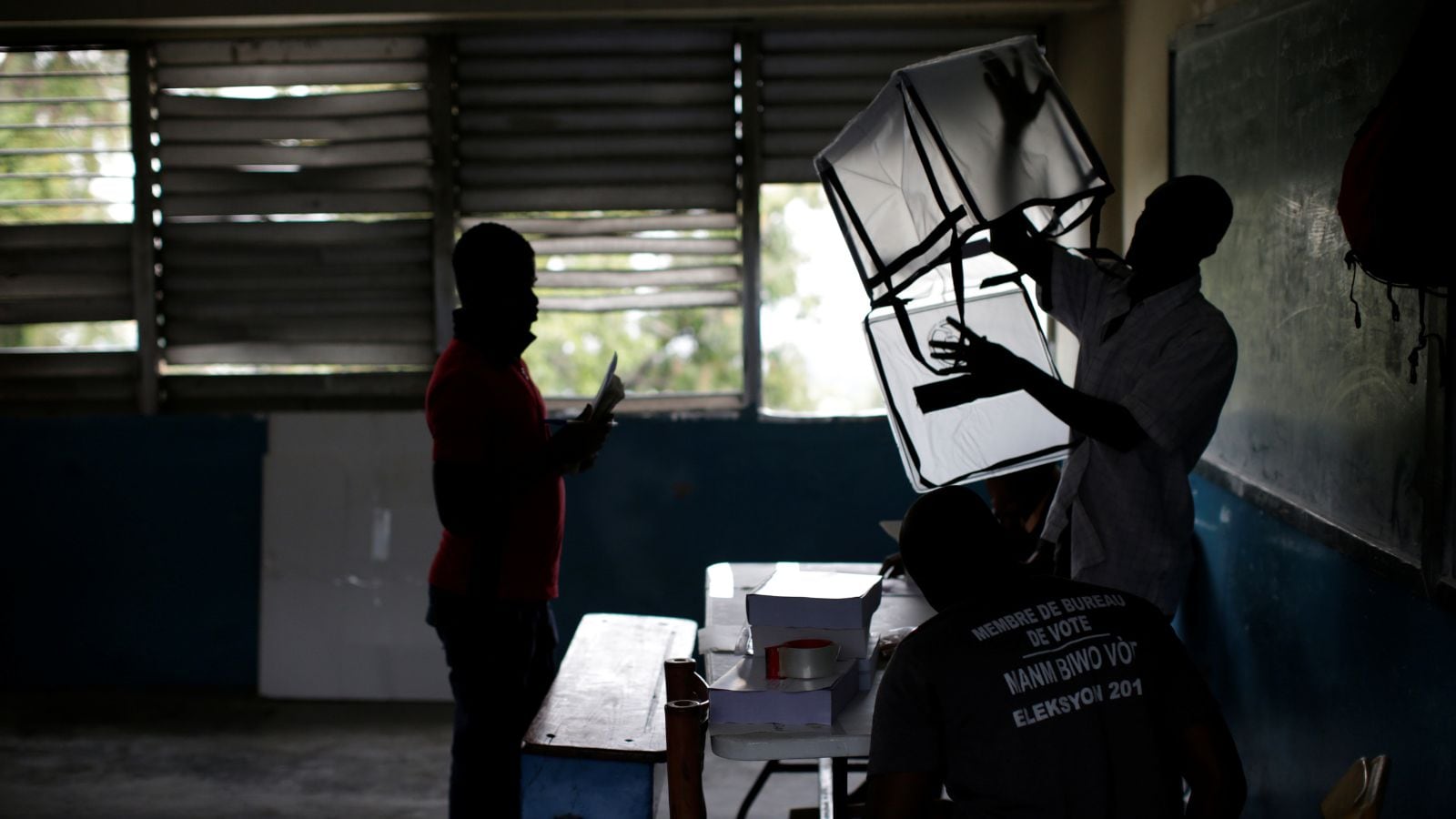
Electoral timelines in collapsed states function less as democratic blueprints and more as political instruments designed to manage international creditors and domestic factions. When Haiti's Provisional Electoral Council announced a December 13 date for the country's first presidential and legislative elections in a decade, observers treated it as a turning point. That reaction ignores the structural mechanics governing state failure. An election date published under conditions of territorial fragmentation and extreme capital scarcity is not an operational plan; it is a variable dependent upon security thresholds and fiscal injections that do not currently exist. Deconstructing this event requires analyzing the structural friction points that consistently rupture political transitions in Port-au-Prince.
The Three Structural Constraints on Electoral Execution
Executing a national ballot requires a functioning apparatus capable of logistics, security, and administrative verification. In Haiti, each of these three pillars suffers from acute systemic failure.
First, the logistical friction of voter registration and ballot distribution is exacerbated by territorial control. Armed groups dominate substantial portions of the Ouest department, including critical transit arteries into and out of Port-au-Prince. When registration processes are suspended or restricted in high-density urban sectors due to active combat, the resulting voter rolls are structurally skewed. An electoral roll missing the primary population center cannot produce a mandate recognized by either domestic factions or international observers.
Second, the capital allocation problem remains entirely unsolved. Electoral operations—ranging from secure printing facilities to poll worker compensation—demand liquid capital that the interim government cannot generate domestically. State revenues have plummeted alongside commercial activity, leaving the administration dependent on external donor pledges. When funding arrives late or conditional on intermediate benchmarks, operational timelines compress, forcing administrative shortcuts that compromise the integrity of the vote.
Third, the security deficit creates a recursive loop. The Provisional Electoral Council explicitly conditioned the December calendar on the establishment of an acceptable security climate. Yet, achieving security requires projecting state power into zones held by criminal syndicates, an objective that multinational security missions and local police forces have struggled to execute at scale. Waiting for security to hold an election creates a logical deadlock: security cannot stabilize permanently without a legitimate, elected government, but an election cannot occur safely without prior stabilization.
The Cost Function of Repeated Delays
Every postponed electoral cycle exacts a compounding toll on institutional credibility. Since the assassination of Jovenel Moïse in 2021 and the complete expiration of elected parliamentary terms in January 2023, governance has operated through transitional bodies lacking constitutional roots. This vacuum alters the incentives of political actors.
When power is distributed through temporary councils rather than ballot boxes, rent-seeking behavior replaces long-term policy formulation. Factions optimize for short-term control over state ministries and customs ports rather than institutional rehabilitation. Consequently, the announcement of a December vote acts as a signaling mechanism for these factions to position themselves within transitional alliances, rather than a genuine mobilization toward universal suffrage.
The international community faces an equivalent strategic trap. Donor governments require a calendar to justify continued financial and logistical backing, creating a moral hazard where electoral agencies publish dates they know are operationally unfeasible simply to unlock funding tranches. This produces a repeating cycle of schedule announcements, security shocks, missed deadlines, and calendar revisions.
The Mechanics of the December Timeline
A granular review of the published calendar reveals the narrow margins separating execution from cancellation. The first round is slated for December 13, with a runoff on February 21, and final results targeted for March 7. Working backward from December requires continuous, uninterrupted progress across three operational fronts: the finalization of voter lists, the procurement of tamper-evident ballots, and the deployment of a protective security grid around every polling station.
If armed actors launch territorial incursions in the weeks preceding December 13, the electoral council faces a binary choice: proceed with a truncated, highly insecure vote that lacks international legitimacy, or postpone the timeline into 2027, further straining the fragile mandate of the Transitional Presidential Council. Historical precedent strongly favors the latter, as seen when previous deadlines in 2025 and mid-2026 were shelved under identical pressures.
To break this cycle, strategic analysts must look past the calendar dates published by electoral boards and instead monitor leading indicators of infrastructural capacity. The primary metric of feasibility is not the publishing of a timeline, but the permanent clearing of supply chain corridors in the capital and the unencumbered disbursement of operational funds into escrow accounts. Until those variables shift from hypothetical to actual, any election date remains an exercise in political theater.