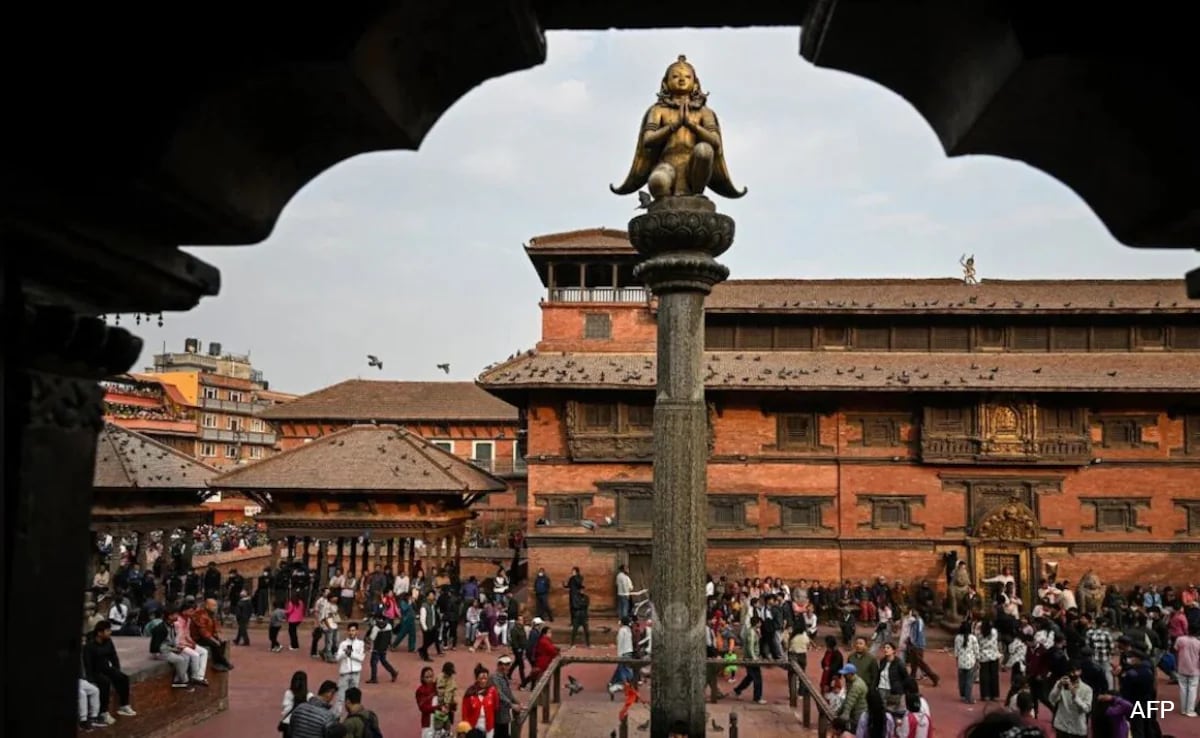
The 2026 general election in Nepal represents a fundamental departure from the post-2015 constitutional order. Following the catastrophic collapse of the Nepali Congress (NC) and CPN-UML coalition during the September 2025 "Gen Z" uprising—a movement that resulted in 77 fatalities and the total paralysis of the executive branch—the traditional triadic power structure of Nepalese politics has fractured. The March 5 vote is no longer a routine cycle of "musical chairs" between the NC, CPN-UML, and the Maoists; it is a structural stress test of the Federal Democratic Republic's viability.
The current governance vacuum, managed by an interim administration under independent Prime Minister Sushila Karki, highlights a critical failure in the 2015 Constitution’s "reformed parliamentary" model. While designed to prevent frequent dissolutions by banning no-confidence motions for two years, the system provided no circuit-breaker for the total loss of public legitimacy. The 2026 election serves as the mechanism to re-establish the state’s monopoly on authority in a landscape defined by hyper-fragmentation and the rise of technocratic populism.
The Triadic Power Decay and the Rise of the Fourth Vector
Historically, Nepal’s political stability rested on the shifting alliances between three ideological anchors. The 2026 election has disrupted this equilibrium by introducing a significant fourth vector that leverages the "youth dividend" and urban dissatisfaction.
- The Nepali Congress (NC) | The Social Democratic Status Quo: Under the leadership of Gagan Thapa, the NC has attempted a generational pivot. Thapa’s strategy focuses on "experience-backed reform," positioning the party as the only predictable partner for India and Western stakeholders. Their platform prioritizes the utilization of the $500 million Millennium Challenge Corporation (MCC) grant, framing it as a critical hedge against Chinese debt-trap diplomacy.
- CPN (Unified Marxist-Leninist) | The Organizational Machine: Led by KP Sharma Oli, the UML remains the most formidable grassroots organization. Despite Oli’s role in the 2025 crackdown, the party maintains a resilient base in the Koshi, Gandaki, and Lumbini provinces. Oli’s "friendship with all, enmity with none" doctrine is a calculated effort to appeal to nationalist sentiment while maintaining strategic ambiguity between New Delhi and Beijing.
- The Leftist Amalgam | The Radical Pivot: The merger of the CPN (Maoist Centre) with various splinter groups into the new "Nepali Communist Party" represents an attempt to consolidate the dwindling radical vote. Their influence has transitioned from a nationwide force to a "cluster pattern" dominance in specific districts like Karnali and Bagmati.
- Rastriya Swatantra Party (RSP) | The Technocratic Populist: The RSP, with former Kathmandu Mayor Balendra Shah as its prime ministerial candidate, has capitalized on the Gen Z uprising. They reject the traditional "buffer state" identity of Nepal, proposing a "vibrant bridge" model that seeks trilateral economic integration with India and China simultaneously.
The Cost Function of Coalition Math
Nepal’s electoral system—a parallel model comprising 165 First-Past-The-Post (FPTP) seats and 110 Proportional Representation (PR) seats—acts as a mathematical barrier to single-party majorities. This structure mandates the "Coalition Trap."
In the 2022 cycle, the seat-to-vote ratio revealed a significant inefficiency for smaller parties. While the NC won 89 seats and the UML 78, the Maoist Centre’s 32 seats allowed them to act as the kingmaker, effectively controlling the premiership despite a significantly smaller popular mandate. The 2026 election is seeing a tactical shift: the "big two" (NC and UML) are increasingly forming pre-poll alliances to bypass the "Maoist Pivot," aiming to reach the 138-seat threshold without the instability of a third-party junior partner.
The secondary constraint on these coalitions is the 50% gender quota for PR lists and ethnic/religious minority requirements. While these mandates have increased representation, they have also created a "bottleneck" where political parties nominate wives or relatives of senior leaders to fill quotas, maintaining patriarchal control through a veneer of inclusivity.
Geopolitical Hedging and the Strategic Maneuverability Deficit
Nepal’s domestic electoral outcomes are the primary determinants of its strategic hedging capacity. The 1950 Indo-Nepal Treaty remains the friction point for nationalist parties, yet the economic reality of a $1 billion IT export sector—largely serving Western and Indian markets—creates a powerful counter-incentive to radical shifts in foreign policy.
The 2026 candidates are navigating three distinct geopolitical pressure points:
- The Agnipath Conflict: The CPN-MC and Unified Socialist groups have pledged to end the conscription of Gurkha soldiers into the Indian military, a move that would fundamentally alter the "special relationship" with New Delhi.
- BRI vs. MCC: The communist factions view the Belt and Road Initiative (BRI) as a transformational "land-linked" opportunity. Conversely, the NC views Chinese commercial loans as a threat to sovereignty, preferring the grant-based model of the American MCC.
- The Buffer State Paradox: The RSP’s proposal to move from a "buffer" to a "bridge" assumes that India and China are willing to share economic space in the Himalayas—a hypothesis that ignores the zero-sum nature of current regional security dynamics.
Institutional Fragility and the September Legacy
The 2025 uprising demonstrated that Nepal’s institutional architecture is decoupled from its youth demographic. Two-thirds of the previous parliament are not seeking re-election, a turnover rate that indicates a massive internal purge within party structures. The election is essentially a race between the "Old Guard’s" organizational depth and the "New Guard’s" digital mobilization.
The most critical variable is the survival of the 2015 Constitution itself. If the 2026 election fails to produce a government capable of addressing the 753 municipality executives’ needs and the escalating demand for jobs, the calls for a "directly elected executive" or even a return to a "ceremonial monarchy" (advocated by the RPP) will move from the fringe to the mainstream.
Strategic recommendation: Watch the Jhapa-5 constituency. The head-to-head battle between KP Sharma Oli and Balendra Shah is the definitive proxy for the national mood. If Oli loses his home turf, it signals the total collapse of the 1990-era political class and a shift toward an era of untested, technocratic governance that may lack the "institutional socialization" required to manage Nepal’s delicate non-alignment.
Would you like me to analyze the specific seat-sharing ratios of the Democratic Left Alliance versus the UML-RPP partnership?