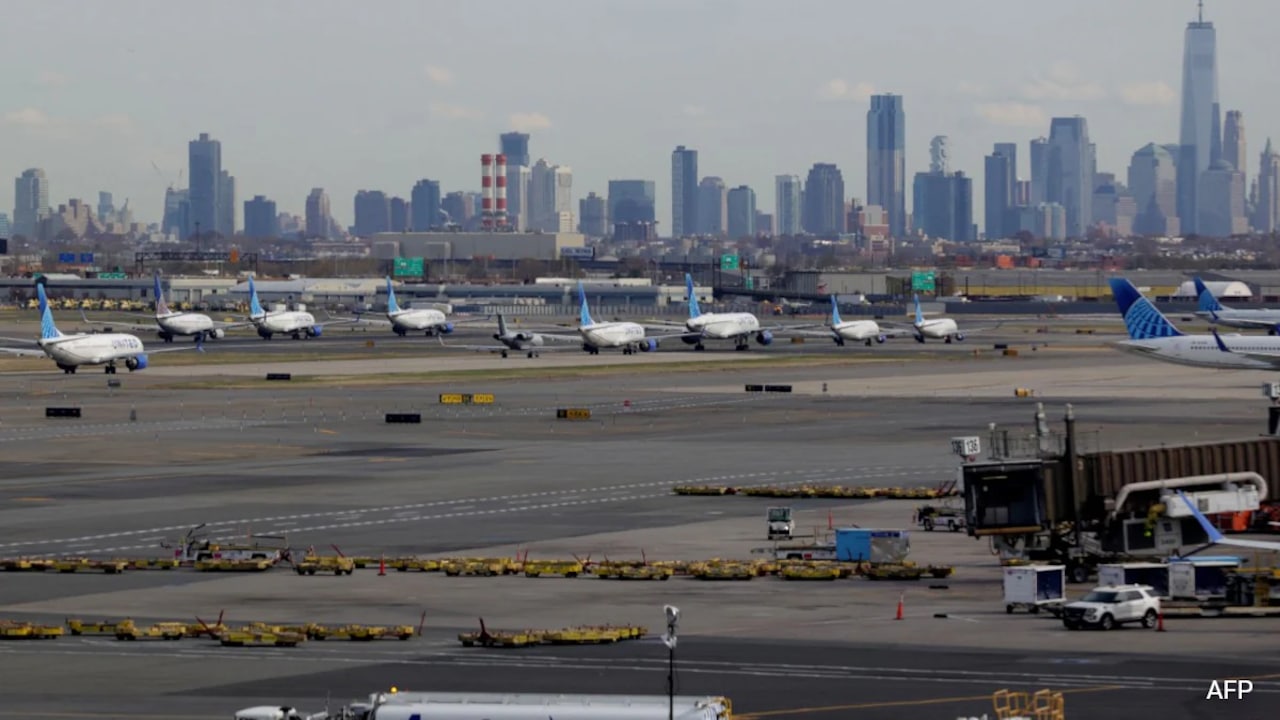
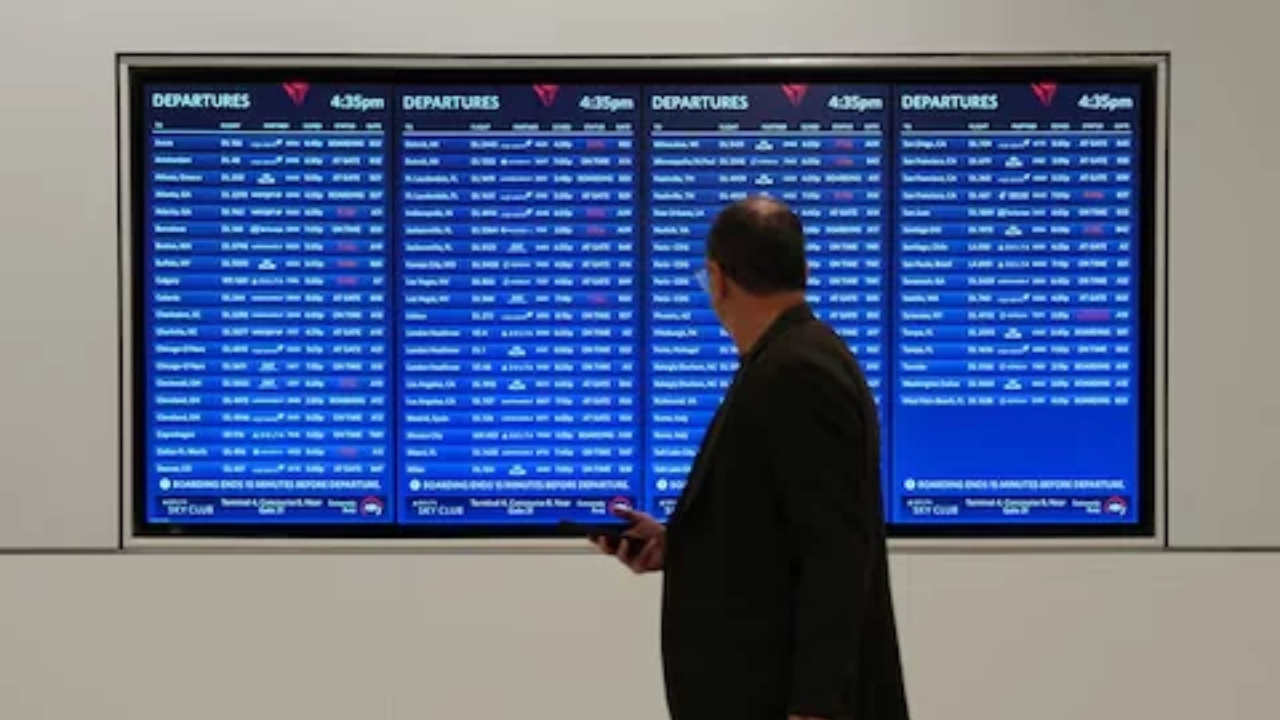
An Federal Aviation Administration (FAA) ground stop is not an isolated weather delay or a localized technical glitch; it is a systemic circuit breaker designed to prevent catastrophic airspace saturation. When thousands of flights are canceled across United States airports, the primary driver is rarely the initial trigger event. Instead, mass cancellations are the mathematical byproduct of tight coupling within the hub-and-spoke airline network model, rigid crew duty-time regulations, and cascading gate congestion. To understand why a localized disruption paralyzes national air travel, one must analyze aviation not as a collection of independent point-to-point routes, but as a high-utilization, deterministic state machine operating with near-zero buffer capacity.
The Mechanics of Air Traffic Flow Management
The FAA executes Traffic Management Initiatives (TMIs) through the Air Traffic Control System Command Center (ATCSCC) in Warrenton, Virginia. A ground stop is the most aggressive flow-control mechanism available to traffic managers, distinct from a Ground Delay Program (GDP) or miles-in-trail restrictions.
- Ground Delay Program (GDP): Assigns specific Expect Departure Clearance Times (EDCTs) to flights bound for a constrained airport. Aircraft remain on the ground at their origin airports, absorbing the delay safely rather than burning fuel in airborne holding patterns. Capacity is throttled, not zeroed out.
- Ground Stop (GS): Halts all departures bound for a specific airport, airspace sector, or carrier network immediately. Incoming traffic that is already airborne must either be absorbed into terminal airspace, placed into holding patterns, or diverted to alternate airfields.
Ground stops occur when arrival acceptance rates drop precipitously—often to zero—due to severe convective weather, runway closures, security breaches, or critical infrastructure failures such as Notice to Air Missions (NOTAM) outages or radar failures. Because modern air traffic control relies on precise spatial separation standards (typically three to five nautical miles laterally or 1,000 feet vertically), any sudden reduction in runway throughput creates an immediate imbalance between demand and capacity. The ground stop freezes the demand side of the equation at the origin gate to protect the safety margins of the destination terminal radar approach control (TRACON).
The Three Pillars of Systemic Contagion
When a ground stop persists beyond sixty to ninety minutes, the operational impact shifts from a localized arrival bottleneck to a network-wide collapse. Airlines optimize for maximum asset utilization—keeping aircraft in the air and crews flying as close to legal limits as possible to drive down Cost per Available Seat Mile (CASM). This optimization eliminates the slack required to absorb shocks.
1. Aircraft Routing Desynchronization
Commercial airliners do not fly back and forth between two cities; they fly multi-leg rotations across the national airspace system over several days. An aircraft scheduled to operate from Chicago to Dallas, then to Miami, and finally to New York cannot execute the third leg if the first leg is frozen on the tarmac in Illinois. Once a ground stop halts the initial departure, every downstream flight assigned to that specific tail number loses its physical equipment. Airlines maintain minimal spare aircraft at major hubs—often less than two percent of the active fleet—meaning localized holds rapidly starve distant, unaffected airports of metal.
2. Crew Legality and FAR Part 117 Constraints
Under Federal Aviation Regulations (FAR) Part 117, flight crews are governed by strict Flight Duty Period (FDP) limits based on report time and the number of flight segments. These limits are absolute legal boundaries, not flexible guidelines. When a ground stop traps a flight crew on a taxiway or in a terminal, their duty clock continues to run. If a two-hour ground stop pushes a crew past their maximum FDP before they can complete their final leg, the airline cannot legally operate the flight—even after the FAA lifts the ground stop and weather clears. Finding reserve crews requires positioning pilots and flight attendants from crew bases, a process that frequently takes longer than the remaining operational window of the day.
3. Gate Saturation and Ramp Gridlock
Airports are designed around rapid turnarounds, typically 35 to 55 minutes for narrow-body aircraft. When departures are halted by a ground stop, outbound aircraft remain parked at gates, blocking incoming flights that have already landed. Arriving aircraft are forced to wait on taxiways or remote penalty boxes. This ramp gridlock prevents ground handling teams from unloading baggage, refueling, or catering subsequent flights. Even if an airline possesses an available aircraft and a legal crew, the inability to access a physical gate stops operations dead.
The Cost Function of Mass Cancellations
Live news coverage routinely fixates on the raw count of canceled flights, treating cancellations as a metric of failure. In airline operations control centers (OCC), however, proactive mass cancellation is a deliberate mathematical optimization used to stop the bleeding and reset the network.
The cost function of an irregular operations (IROPS) event balances immediate lost revenue and passenger rebooking expenses against the catastrophic cost of multi-day network paralysis. Allowing delays to roll indefinitely creates an unmanageable backlog of out-of-position crews and aircraft. By executing a "network reset"—canceling hundreds of flights in a concentrated window—dispatchers deliberately sacrifice current-day schedule integrity to ensure aircraft and crews end the night at their designated maintenance bases and crew domiciles.
This explains why thousands of flights are often canceled after the FAA lifts a ground stop. The airspace may be open, but the spatial distribution of planes and pilots no longer matches the published schedule. Dispatchers must prune the schedule down to the capacity that the displaced assets can actually support for the following morning's launch.
Structural Limitations of Current Recovery Models
The aviation industry's reliance on algorithmic recovery solvers faces hard physical and regulatory ceilings. While modern airline OCCs utilize advanced integer programming and machine-learning models to re-pair crews and aircraft during disruptions, these systems cannot bypass real-world bottlenecks.
First, load factors across domestic carriers regularly exceed 85 percent. When flights operate nearly full, the network lacks the empty seat inventory required to re-accommodate displaced passengers on subsequent departures. A single canceled wide-body or high-density narrow-body flight displaces 180 to 300 passengers into a system that only has 10 to 15 empty seats per flight on the same route. Consequently, passenger recovery stretches across three to five days even after flight operations return to 100 percent on-time performance.
Second, air traffic control staffing shortages in critical sectors—such as the New York TRACON (N90) and Jacksonville Center—reduce the FAA's ability to run high-density parallel arrival streams during marginal weather. When ATC staffing is below target levels, traffic managers must widen spacing between aircraft earlier and impose ground stops sooner than historical models would predict.
Operational Protocol for Navigating Ground Stops
For corporate travel managers, logistics coordinators, and high-frequency flyers, reacting to an FAA ground stop requires ignoring airline customer service queues and operating directly on real-time operational data.
- Monitor the FAA National Airspace System Status directly. Do not rely on airline mobile apps for delay intelligence; carrier apps lag behind ATCSCC advisories by 15 to 45 minutes as internal dispatchers process the impact. Check the FAA Air Traffic Control System Command Center advisories for active Ground Stops, their projected expiration times, and the scope of affected facilities (e.g., Tier 1 centers vs. national scope).
- Track the inbound aircraft, not the scheduled departure. Use flight-tracking telemetry to locate the specific tail number assigned to your flight. If the inbound aircraft is currently sitting on the ground at a hub affected by a ground stop, your flight will not depart on time regardless of what the departure board states.
- Execute self-service rebooking before the network reset. Once a ground stop exceeds 60 minutes at a major hub, initiate rebooking to an itinerary that completely bypasses the affected airspace region and avoids carriers with heavy hub concentration in that area. Book alternative flights via point-to-point carriers or secondary hubs before the airline's automated IROPS solver executes mass cancellations and consumes all remaining seat inventory across competing airlines.
- Prioritize morning departures during recovery windows. Following a major ground stop, evening flights face the highest probability of cancellation due to cumulative crew duty-time expirations. If forced to rebook for the following day, secure the first departure of the morning (typically 06:00 to 07:30 local time), as these flights rely on aircraft and crews that overnighted locally and are insulated from mid-day airspace congestion.