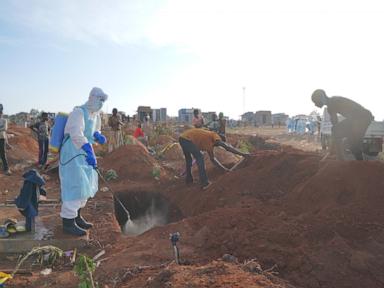
Epidemiological containment relies on a precise triad: rapid case detection, absolute contact tracing, and unbroken immunization chains. When this triad fractures within a conflict zone, a localized pathogen transforms into a systemic emergency. The tenth Ebola outbreak in the Democratic Republic of the Congo, centered primarily in the North Kivu and Ituri provinces, exposed the structural vulnerabilities inherent in executing public health interventions amid fragmented state governance, deep-seated community distrust, and active military hostilities. Surpassing two thousand three hundred fatalities, this epidemic became the deadliest in the history of the nation and the second-largest globally, trailing only the 2014-2016 West African crisis.
Standard metrics reported by international agencies often track case counts and mortality rates as isolated indicators. To understand why transmission persisted despite the availability of an efficacious recombinant vesicular stomatitis virus-Zaire ebolavirus vaccine, one must deconstruct the operational architecture of the response. The containment failure was not merely medical; it was a structural collapse across three distinct domains: infrastructural friction, security deficits, and community epistemologies.
The Operational Friction of Conflict Zones
Delivering clinical interventions requires a predictable supply chain, secure transport corridors, and standardized data collection. In Eastern Congo, these operational prerequisites were chronically absent. More than one hundred armed groups operate within the region, creating administrative vacuums and frequent kinetic engagements that routinely severed transport links between treatment centers and rural health zones.
When supply lines are contested, the lead time between specimen collection and laboratory confirmation expands exponentially. In an infectious disease dynamic governed by exponential growth, operational delays convert localized clusters into regional transmission chains.
- Logistical Bottlenecks: Cold-chain maintenance for the rVSV-ZEBOV vaccine demands ultra-low temperatures, requiring stable refrigeration networks that failed frequently due to grid instability and fuel shortages.
- Information Latency: Decentralized reporting mechanisms suffered from manual data aggregation, preventing rapid spatial-temporal mapping of new transmission nodes.
- Resource Misallocation: High-security overhead consumed operational budgets that otherwise would have funded localized triage units and decentralized community care.
These friction points generated a lag in response velocity. While international response frameworks are designed for stable developing nations, deployment into an active asymmetric warfare zone required entirely different resource-to-risk ratios.
Epistemological Divergence and Trust Deficits
Public health directives frequently assume a passive population willing to comply with institutional protocols. In the Kivu crisis, this assumption crashed against a historical backdrop of state neglect, economic marginalization, and political disenfranchisement. Decades of structural violence by state and international actors bred profound skepticism toward centralized authority.
When rapid-response teams arrived in full personal protective equipment accompanied by armed escorts, local communities did not interpret these actions as medical benevolence. Instead, structural heuristics led populations to view outsiders through the lens of threat.
External Intervention Model -> Armed Escorts & PPE -> Local Perception: Coercion & Threat -> Resistance, Hiding Cases, & Attack on Facilities
This divergence in epistemology manifested as operational resistance. Patients fled treatment centers to seek care within traditional healing networks, inadvertently seeding new infection chains across family and community structures. Contact tracing efficiency plummeted because community members withheld information regarding contacts and symptom onset.
To bypass this barrier, response teams shifted from top-down enforcement to localized, participatory engagement. Utilizing local nurses, traditional leaders, and recovered survivors as primary communicators altered the reception of medical interventions. Trust, in an epidemiological crisis, operates as a quantifiable currency: high trust accelerates contact tracing velocity, while low trust introduces friction that neutralizes clinical efficacy.
The Economics of Ring Vaccination under Siege
The deployment of the rVSV-ZEBOV vaccine represented a technological leap forward from previous outbreaks, utilizing a ring vaccination strategy designed to immunize contacts of confirmed cases and contacts of those contacts. However, deploying a targeted ring strategy under siege conditions introduced severe geometric and logistical limitations.
Ring vaccination assumes static populations and reliable identification of infection chains. In dense urban centers like Beni and Butembo, population mobility severed these rings. Furthermore, deep-seated suspicion meant that the secondary ring often refused vaccination, viewing the preventive measure as a vector of inoculation or political control.
Targeted Case -> Identify Primary Contacts -> Map Secondary Contacts -> Execute Ring Vaccination
                                                                   -> Interrupted by Population Mobility & Distrust
The economic cost function of the response escalated rapidly as security expenses dwarfed direct medical costs. Armored vehicles, armed guards for convoys, and the repair of facilities damaged by community backlash diverted capital from core epidemiological necessities such as community-based sentinel surveillance and rapid diagnostic testing at peripheral health posts.
Structural Bottlenecks in Clinical Triage
Clinical management of Ebola virus disease requires aggressive supportive care, specifically targeted fluid resuscitation, electrolyte correction, and management of secondary infections. Early presentation to a treatment unit correlates directly with survival probability.
However, the architecture of the treatment centers themselves created a paradox. Designed as high-security, isolated compounds protected by high fences and strict entry controls to prevent nosocomial spread, they functioned symbolically as containment prisons rather than healing spaces. Families were initially barred from entering, cutting patients off from vital psychological support and nutritional assistance tailored to local dietary preferences.
- Barrier Nursing Isolation: While medically necessary to prevent viral shedding, physical walls exacerbated rumors that patients were being harvested for organs or intentionally exterminated to draw international aid funds.
- Centralization vs. Decentralization: Early strategies favored large, centralized Ebola Treatment Centers. This required critically ill patients to travel hours over unpaved, insecure roads, accelerating mortality before admission.
- Triage Redesign: The eventual decentralization into smaller, community-embedded transit units allowed rapid stabilization and diagnostic testing closer to the point of origin, reducing transit-induced mortality.
Systemic Vulnerabilities in Surveillance Infrastructure
Epidemiological surveillance depends on passive reporting from health facilities and active case finding within communities. In a region where a significant percentage of healthcare delivery occurs outside the formal state sector through informal pharmacies and traditional healers, official case counts captured only a fraction of the true disease burden.
Informal healthcare providers lacked the personal protective equipment and training required to safely triage febrile patients. Consequently, these clinics functioned as amplifier nodes. A single misdiagnosed case presenting with malaria-like symptoms could seed multiple secondary chains before formal notification reached the central database.
Active surveillance was further crippled by direct attacks on health infrastructure. Treatment facilities, laboratories, and vehicles were targeted by unidentified armed actors, leading to temporary suspensions of surveillance activities in high-risk zones. When surveillance halts, the invisible spread of the virus accelerates unchecked, creating a compounding deficit that requires weeks of intensive tracing to recover.
The trajectory of the Kivu outbreak demonstrates the limits of deploying advanced biomedical tools into fragile political ecosystems without an equivalent investment in social architecture, local agency, and security stabilization. Technical efficacy remains bounded by the operational environment. Future interventions must prioritize decentralized, community-owned response frameworks from day zero, integrating security assessments and sociological mapping directly into the foundational epidemiological calculus.