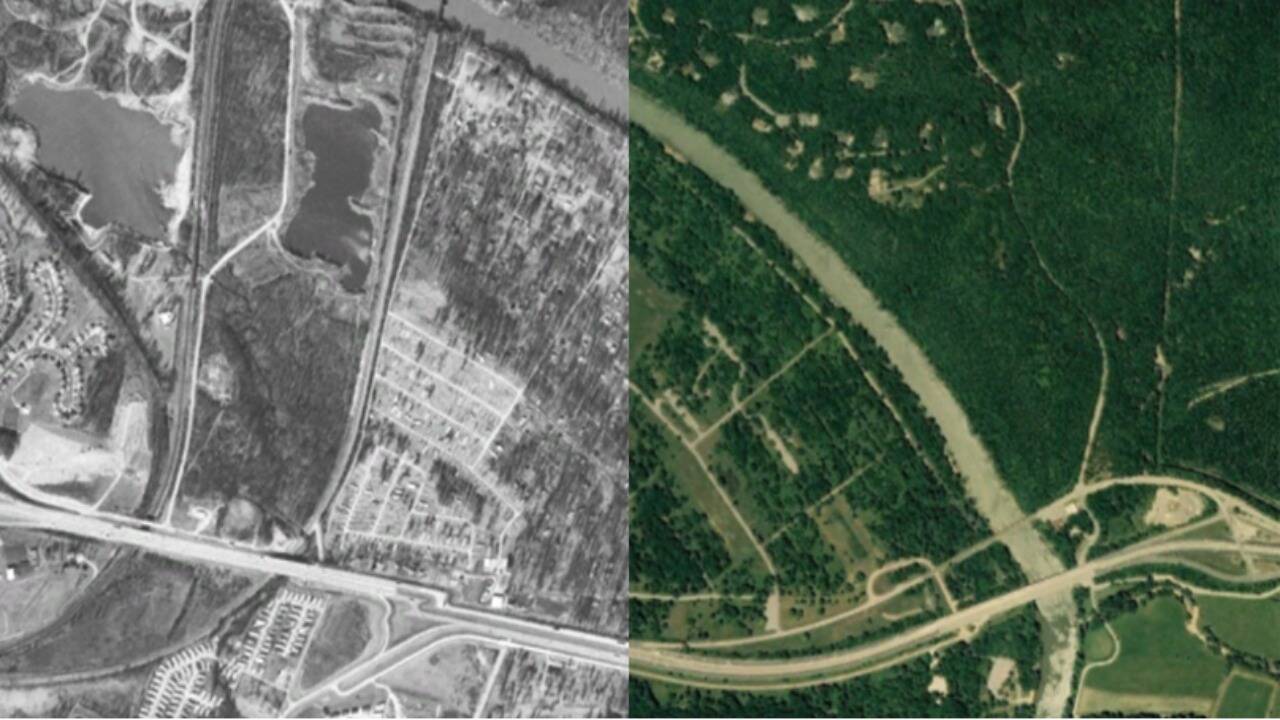
Municipal asset management relies on cost-avoidance strategies that can inadvertently introduce systemic tail risks. When the municipal government of Times Beach, Missouri, attempted to suppress particulate emissions on unpaved roadways during the early 1970s, operational constraints drove them toward a low-cost binder alternative. Contracting an independent waste hauler to apply recycled industrial oil to dirt roads represented a micro-economic optimization for local infrastructure maintenance. That optimization ignored supply chain provenance, converting a localized dust-mitigation routine into an unprecedented toxic exposure vector.
The underlying mechanics of the disaster trace back to chemical synthesis operations miles away. Industrial manufacturing facilities processing hexachlorophene and related compounds generated 2,3,7,8-tetrachlorodibenzo-p-dioxin (TCDD) as a secondary by-product. Rather than executing high-temperature thermal destruction protocols, waste management intermediaries mixed these concentrated chemical residues with standard waste oil. The resulting composite fluid retained the physical viscosity required to bind road particulate matter while concealing parts-per-billion concentrations of a persistent organic pollutant.
The Regulatory and Epidemiological Failure Cascade
Public health monitoring systems failed to capture the degradation sequence until acute markers appeared in local biological populations. Sentinel species—including horses, dogs, and cats—experienced sudden mortality events following initial road-oiling applications. Because environmental epidemiology frameworks in the pre-Superfund era lacked baseline testing protocols for halogenated dibenzodioxins, initial local investigations misattributed these animal mortalities to standard veterinary pathogens.
The toxicological profile of TCDD centers on its chemical stability and lipophilic nature. Once applied to roadway matrices, the compound resisted photolytic degradation and microbial breakdown. It adsorbed tightly to soil particles, cycling continuously through local atmospheric dust and surface runoff.
The institutional response curve activated only after cumulative evidence forced federal intervention:
- Phase One Exposure: Unregulated waste oil application spanning multiple years across municipal infrastructure.
- Phase Two Biological Signaling: Widespread mammalian and avian mortality alongside unverified chronic human morbidities.
- Phase Three Analytical Detection: Soil spectrometry confirming TCDD concentrations exceeding standard health advisory thresholds by orders of magnitude.
- Phase Four Systemic Evacuation: Federal buyout authorization under emergency environmental statutes.
Soil samples evaluated by public health authorities revealed concentrations ranging from non-detectable baselines up to 100 parts per billion in specific transit corridors. Given that contemporary risk models established acceptable safety parameters near 1 part per billion, the physical environment of a 2,000-resident municipality had been transformed into an untenable biohazard zone.
Capital Allocation and the Economics of Remediation
The realization that mitigation was impossible through standard containment forced a structural shift in federal liability management. In February 1983, the federal government deployed resources from the Comprehensive Environmental Response, Compensation, and Liability Act—commonly known as the Superfund program—to execute a complete municipal buyout.
The financial structure of the evacuation relied on a multi-tiered public sector funding mechanism. The federal administration allocated $33.1 million to finance the permanent relocation of households and commercial entities. State-level participation required local co-investment, binding the state of Missouri to absorb a ten percent implementation share. This capital expenditure covered property acquisition, structural demolition, and the subsequent immobilization or incineration of nearly 265,000 tons of tainted topsoil.
The total expenditure profile illustrates the economic disproportion between short-term infrastructure savings and long-term remediation liabilities. Procuring cheap industrial waste oil to treat municipal dirt roads saved nominal operational dollars during the initial implementation window. Decades later, the full economic recovery cycle—comprising property buyouts, soil extraction, specialized incineration units, and long-term site monitoring—demanded an ultimate investment scaling toward a quarter of a billion dollars across affected regional zones.
Systemic Takeaways for Municipal Risk Governance
Evaluating historical environmental catastrophes requires moving beyond narrative descriptions of corporate negligence to examine structural vulnerabilities in municipal procurement.
When evaluating infrastructure maintenance inputs, administrative bodies face three persistent governance challenges:
- Supply Chain Opacity: Outsourcing municipal utilities without auditing secondary subcontractors exposes public entities to unregulated hazardous material injection.
- Delayed Feedback Loops: Persistent organic pollutants lack immediate sensory feedback mechanisms, allowing chronic exposure to compound before analytical detection occurs.
- Asymmetric Cost Distribution: Operational savings realized by municipal budget officers are trivial compared to the sovereign debt liabilities required for post-hoc environmental remediation.
Modern municipal engineering standards prohibit the application of untracked industrial residues for dust suppression or surface stabilization. Regulatory oversight now mandates strict chain-of-custody documentation for all recycled petroleum products.
To eliminate systemic exposure vectors in contemporary public works, asset managers must subject all secondary-market chemical inputs to rigorous analytical assaying before authorization. Operational efficiency must never supersede baseline toxicological screening.