The screen glows. It is 2:00 AM, and the blue light of a smartphone is the only thing illuminating Sarah’s face. She isn’t a radical. She isn’t a career protester or a fringe theorist living in a bunker. She is a mother of two who teaches middle school social studies. But as she scrolls through the slowed-down footage of a rally in Butler, Pennsylvania, her thumb pauses. She squints at the pixelated blur of a hand reaching for an ear, the sudden swarm of suits, and the streak of red.
She whispers to the empty room: "That doesn't look right."
This is the birth of a modern ghost story. It isn't born of malice, but of a profound, shivering disconnection from reality. When a former president is nearly assassinated on live television, the world doesn't just stop; it fractures. For a significant portion of the population, the event didn't register as a tragedy or a political turning point. It registered as a production.
We are living in an era where the "staged" narrative is no longer the property of the tinfoil-hat brigade. It has become a psychological self-defense mechanism for a society that has been lied to so often it has forgotten the taste of truth.
The Screen Between Us and the Sun
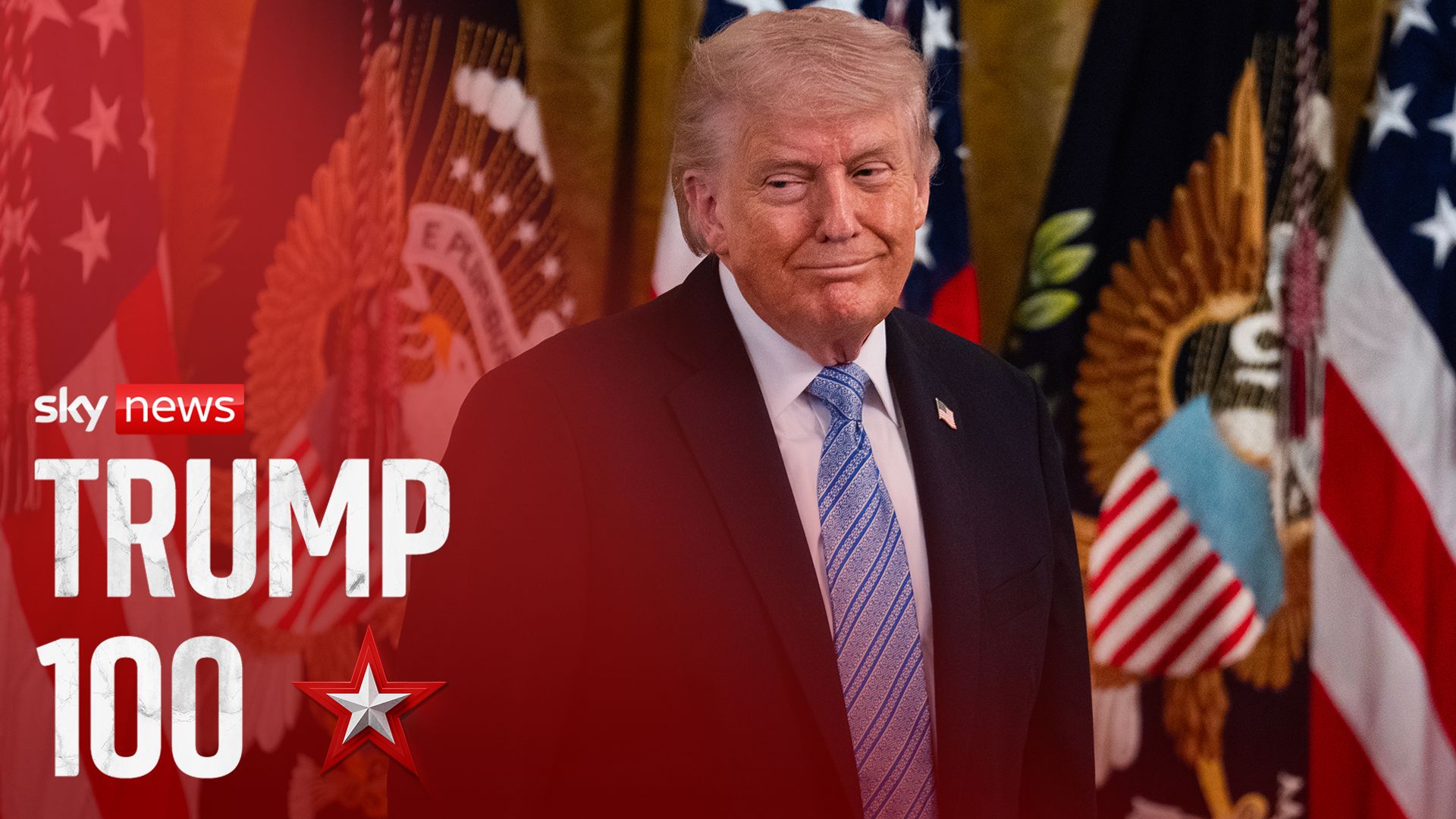
Everything we consume is curated. From the filters on a breakfast photo to the scripted "reality" of a Netflix docuseries, we are trained to see life through a lens of intentionality. When Donald Trump ducked and emerged with a fist raised against a backdrop of the American flag, the image was too perfect.
That is the first trap of the skeptical mind: the belief that reality is messy and ugly, therefore anything cinematic must be fake.
We have spent decades watching high-budget political thrillers where every camera angle is calculated. When Evan Vucci of the Associated Press captured that frame, he did so with the instincts of a Pulitzer-winning veteran. But to a generation raised on "deepfakes" and CGI, a perfect composition feels like a "tell." The human brain, exhausted by the constant bombardment of marketing, begins to look for the wires. If it looks like a movie, we assume there must be a director.
The Physics of the Impossible
Consider the sheer improbability of the act. A twenty-year-old with a budget rifle, outsmarting the most elite security detail on the planet? To Sarah, sitting in her kitchen, that doesn't sound like a security failure. It sounds like a plot hole.
In her classroom, Sarah teaches her students about the "Great Man" theory of history, but the internet has taught her something else: the "Great Script" theory. We find it easier to believe in a sprawling, perfectly executed conspiracy involving hundreds of actors than to believe in the terrifying, chaotic reality of a single incompetent kid with a gun and a roof.
Conspiracy theories provide a strange kind of comfort. They imply that someone is in control. Even if that "someone" is a shadowy cabal orchestrating a fake shooting to boost poll numbers, it is a world with a plan. The alternative—that a bored young man can nearly end the American experiment because a local police officer didn't check a specific ladder—is far more frightening. Randomness is the ultimate monster. We hide from it by inventing villains who are geniuses.
The Echo in the Chamber
Sarah isn't looking at the footage in a vacuum. She is looking at it through the comments section.
"Look at the blood," one user writes. "It’s too bright. It’s stage makeup."
"Why did they wait so long to move him?" another asks. "They were waiting for the photo op."
These aren't just comments; they are building blocks for a new reality. The algorithms that govern our lives don't care about factual accuracy; they care about engagement. If Sarah lingers on a video questioning the acoustics of the gunfire, the machine will feed her ten more. Within an hour, she isn't just a skeptic. She is an investigator.
This digital feedback loop creates a phenomenon called "proportionality bias." Our brains struggle to accept that a small cause (a lone, disturbed individual) can have a massive effect (the near-death of a world leader). We demand that the cause be as big as the consequence. If the event is earth-shattering, the reason behind it must be equally seismic. A "staged" event fits the scale. A "lone nut" does not.
The Death of the Shared Witness
There was a time when the evening news was an altar. We all sat before it, and we all saw the same thing. Whether it was the moon landing or the fall of the Berlin Wall, there was a baseline of consensus.
That altar is gone. It has been replaced by a million shards of glass, each reflecting a different version of the sky.
When the shooting happened, the reaction was split instantly along tribal lines. For some, it was a moment of martyrdom. For others, it was a "false flag." This isn't just about politics; it’s about the erosion of our sensory trust. We no longer believe our eyes because we know our eyes can be deceived. We’ve seen the AI-generated images of celebrities in places they never were. We’ve seen the "glitches in the matrix" trending on TikTok.
We have reached a point where "I'll believe it when I see it" has become "I saw it, and I still don't believe it."
The Burden of Proof
The facts of the Butler shooting are documented by ballistic reports, medical records, and the tragic reality of Corey Comperatore, the spectator who lost his life in the crossfire. To suggest the event was staged is to suggest that a father of two was murdered as a "prop."
But the skeptical mind has an answer for that, too. "Collateral damage," they say. "Part of the script."
This is where the narrative becomes dangerous. When we stop viewing our political opponents as humans and start viewing them as characters in a simulation, our empathy dies. If everything is a performance, then no one is actually hurting. The blood isn't real, the grief isn't real, and therefore, our response doesn't have to be human.
Sarah shuts off her phone. Her eyes ache. She looks at her own hands, then at the quiet street outside her window. The world feels thinner than it did an hour ago. She wants to trust the news. She wants to believe that the world is as it appears. But then she remembers a headline she saw yesterday, or a lie she was told by a politician three years ago, or a deepfake video that looked indistinguishable from the truth.
The doubt isn't a choice. It’s a symptom.
We are not suffering from a lack of information. We are suffering from a surplus of deception. When the atmosphere is saturated with "alternative facts," the truth doesn't just get lost—it becomes an option. We pick the reality that hurts the least, or the one that confirms our deepest fears.
In the end, the question isn't why people think the shooting was staged. The question is how we ever expected them to believe it was real in a world that has turned reality into a commodity.
The silence of the night offers no answers. Only the faint, persistent hum of the internet, waiting for the next frame to deconstruct, the next tragedy to edit, and the next truth to bury under a mountain of "what ifs."
The blood on the pavement was dry by morning, but the stain on our collective psyche is just beginning to spread. It is a dark, indelible mark, shaped exactly like a question mark.