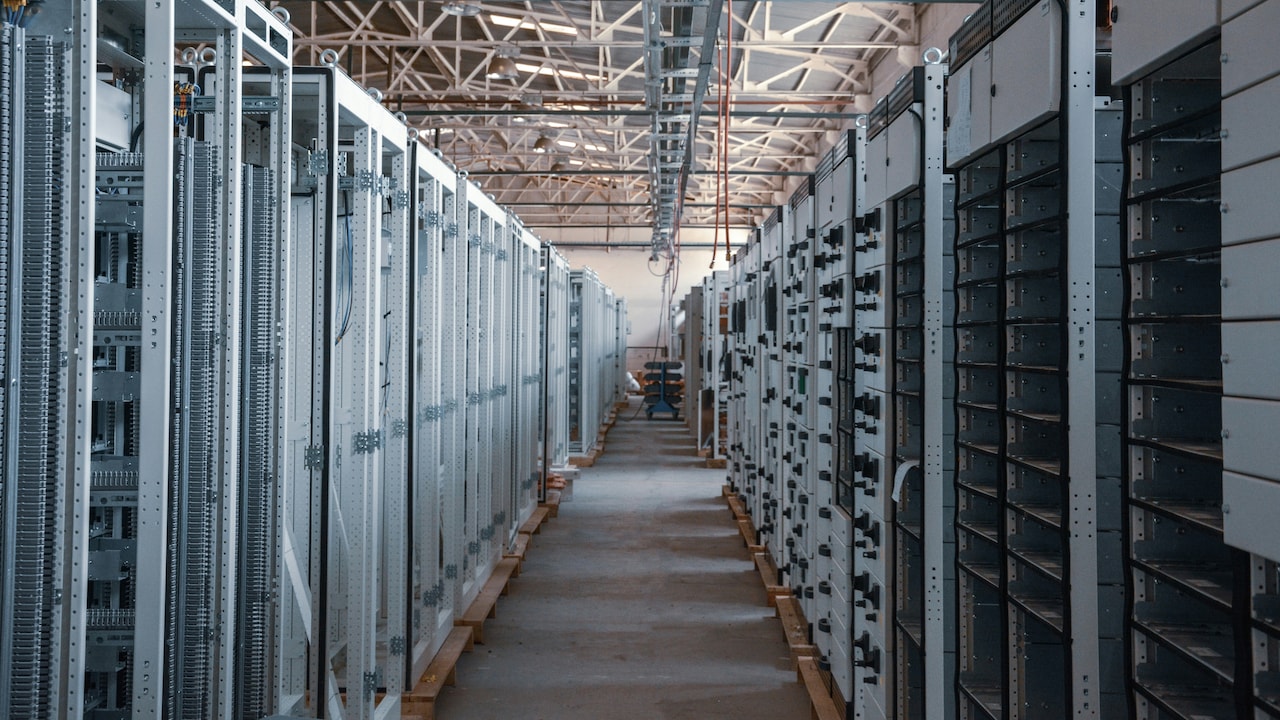
The projection by the United Nations that artificial intelligence computation could double energy consumption and associated pollution within a four-year window is not a speculative anomaly; it is the predictable output of fundamental thermodynamic and economic scaling laws. Current public discourse frames this trajectory as an unexpected crisis of sustainability. In reality, the surge in resource consumption is a systemic property of training and deploying frontier large language models (LLMs). To understand why carbon and energy footprints are compounding at this rate, one must analyze the industry's underlying cost functions, hardware architecture limits, and the structural failure of traditional efficiency gains to outpace demand.
The Three Pillars of Computational Demand
The environmental trajectory of machine learning is governed by three independent variables: model architecture scaling, operational hardware utilization, and the grid carbon intensity of data center deployment zones.
1. Model Architecture and the Power-Law Trap
Frontier AI development operates under empirical scaling laws. Performance scales as a power law with respect to compute budget, dataset size, and parameter count. To achieve a linear increase in model capability, developers must invest exponential increases in training compute.
The primary driver of energy consumption during the training phase is the total floating-point operations (FLOPs) required to optimize model weights. A standard approximation for the computational cost of training a transformer-based model is:
$$C \approx 6ND$$
where $N$ represents the number of parameters and $D$ represents the size of the training dataset in tokens. As frontier developers push parameter counts into the trillions and token datasets into the tens of trillions, the total FLOP requirement expands non-linearly. This creates an structural floor for energy consumption before the first server rack is even powered on.
2. Operational Hardware Utilization and Infrastructure Overheads
Compute efficiency at the silicon level does not translate directly to efficiency at the data center level. While hardware accelerators like application-specific integrated circuits (ASICs) and graphics processing units (GPUs) show improving performance-per-watt metrics, the systemic infrastructure overhead introduces severe penalties.
Data center efficiency is historically measured via Power Usage Effectiveness (PUE), defined as the ratio of total facility energy to the energy delivered to the computing equipment. Traditional cloud data centers achieve PUE ratios between 1.1 and 1.2. High-density AI clusters, however, require specialized hardware configurations that degrade this efficiency:
- Thermal Density Bottlenecks: AI server racks frequently draw 40 to 100 kilowatts (kW) per rack, compared to 5 to 15 kW for legacy enterprise IT. Managing these thermal profiles forces a shift from air cooling to liquid-to-chip cooling systems, driving up auxiliary power infrastructure requirements.
- Interconnect Inefficiencies: Large-scale training requires distributing a single model across tens of thousands of discrete processors. The energy consumed by optical and copper interconnects, high-bandwidth memory (HBM) access, and network switches represents a growing percentage of the total energy envelope, independent of actual mathematical computation.
3. Grid Carbon Intensity and Spatial Arbitrage
Energy consumption only translates to pollution when mapped against the local power generation mix. Data center operators engage in spatial arbitrage, locating facilities where land is cheap, fiber latency is acceptable, and power is abundant.
When high-density clusters are deployed in jurisdictions reliant on fossil-fuel baseload power, such as coal or natural gas, the carbon intensity per megawatt-hour (MWh) skyrockets. Even when operators purchase Renewable Energy Certificates (RECs) or enter into Power Purchase Agreements (PPAs) for solar or wind, the physical reality of grid operations creates a mismatch. AI workloads operate at a flat 24/7 baseload profile, whereas renewable generation is intermittent. When the sun sets or the wind dies down, the data center draws power from whatever thermal generation assets are stabilizing the local grid.
Jevons Paradox and the Efficiency Fallacy
A common defense within the technology sector is that hardware optimization will mitigate the environmental impact. This argument fails to account for Jevons’ Paradox, an established economic principle stating that an increase in the efficiency with which a resource is used tends to increase the rate of consumption of that resource.
Historically, as the energy cost per FLOP decreases, the financial viability of deploying AI at scale increases. Lowering the cost of token generation expands the addressable market, transforming AI from an experimental research tool into an ambient infrastructure layer integrated into search engines, operating systems, and automated workflows.
+------------------------+      +--------------------------+      +------------------------+
| Silicon Optimization   | ---> | Unit Cost Per Inference  | ---> | Exponential Demand     |
| (Higher FLOPs/Watt)    |      | Drops Significantly      |      | For Model Deployment   |
+------------------------+      +--------------------------+      +------------------------+
                                                                              |
                                                                              v
+------------------------+      +--------------------------+      +------------------------+
| Net Net Resource       | <--- | Aggregated Grid Load     | <--- | Total Volume of Compute|
| Consumption Doubles    |      | Surpasses Capacity       |      | Multiplies Instantly   |
+------------------------+      +--------------------------+      +------------------------+
The transition from training-dominated energy profiles to inference-dominated energy profiles exacerbates this paradox. Training a model is a fixed capital expenditure of energy. Inference—the process of running queries through a trained model—is a variable operational expenditure that scales linearly with user adoption. When a frontier model is deployed to hundreds of millions of daily active users, the aggregated inference energy requirements quickly eclipse the initial training energy investment. Efficiency gains do not shrink the footprint; they unlock new scales of deployment that compound the total net energy draw.
Supply Chain Bottlenecks and Secondary Pollution
Focusing exclusively on operational electricity consumption ignores the broader ecological lifecycle assessment (LCA) of AI hardware production. The pollution vectors scale across multiple phases of the supply chain.
Semiconductor Fabrication and Chemical Footprints
The manufacturing of advanced node silicon chips (3nm and below) requires hyper-pure water, hazardous gases, and rare earth elements. Ultra-pure water (UPW) systems consume millions of gallons daily to rinse silicon wafers during photolithography and etching phases. The chemical byproducts, including per- and polyfluoroalkyl substances (PFAS), present severe containment and disposal challenges. Furthermore, the embodied carbon of a data center—the emissions generated during the mining, refining, and manufacturing of structural steel, concrete, and silicon—can constitute up to 30% of its total lifetime carbon footprint.
Water Scarcity and Evaporative Cooling
Data centers that rely on evaporative cooling to maintain low PUE metrics consume vast quantities of local water supplies. For every megawatt-hour of electricity consumed, typical data centers can dissipate hundreds of gallons of water via cooling towers to protect silicon from thermal throttling. In arid deployment zones, this creates direct competition with municipal water infrastructures and agricultural sectors, transforming an energy efficiency strategy into a regional water scarcity crisis.
Technical and Operational Hurdles to Mitigation
Resolving the tension between AI growth and environmental degradation requires addressing severe technical trade-offs. There are no frictionless solutions.
The Limits of Model Compaction
Techniques such as quantization (reducing the precision of model weights from FP32 to INT8 or INT4), distillation (training smaller "student" models from large "teacher" models), and pruning (removing non-essential parameters) significantly lower the computational cost of inference. However, these methods hit strict performance ceilings. Compaction techniques frequently degrade model reasoning capabilities, introduce hallucinatory vulnerabilities, or reduce robustness when processing edge-case inputs. For enterprise-grade applications requiring deterministic accuracy, uncompressed frontier models remain the non-negotiable standard.
Nuclear Sourcing and Regulatory Realities
The tech sector’s growing interest in co-locating data centers with nuclear power plants or investing in Small Modular Reactors (SMRs) represents a viable approach to securing carbon-free baseload power. Yet, this strategy faces massive lead-time friction. Designing, permitting, and constructing traditional nuclear co-location projects takes close to a decade due to stringent safety regulations and grid interconnection queues. SMR technology remains unproven at commercial scale, with meaningful deployment unlikely to impact the grid profile before the UN's four-year doubling horizon lapses.
Strategic Playbook for Infrastructure Allocators
To insulate capital allocations from impending regulatory penalties and grid capacity constraints, operators must move beyond superficial carbon offsets and implement structural optimization frameworks.
Deploy Asymmetric Architecture Frameworks
Stop routing all user queries through monolithic frontier models. Implement a routed multi-tier model architecture that matches query complexity to computational cost.
- Intent Classification Layer: Deploy an ultra-lightweight, highly optimized classifier model at the edge to evaluate incoming queries.
- Tier 1 Routing (Low Complexity): Route routine data retrieval, basic formatting, and simple syntax tasks to highly quantized, task-specific models under 10 billion parameters. This satisfies up to 70% of standard enterprise volume at a fraction of the energy footprint.
- Tier 2 Routing (High Complexity): Reserve unquantized frontier models exclusively for complex reasoning, multi-step orchestration, or highly ambiguous creative tasks.
Execute Spatial and Temporal Compute Shifting
Exploit the non-time-sensitive nature of model training and batch offline inference by decoupling compute from a single physical location or rigid schedule.
- Geographic Relocation for Training: Locate massive pre-training clusters in high-latitude regions (e.g., Iceland, Northern Scandinavia) or areas with stranded, non-exportable renewable energy surpluses (e.g., specific geothermal or hydroelectric zones). This eliminates reliance on mechanical chilling systems and utilizes power that would otherwise be curtailed.
- Temporal Shifting for Batch Jobs: Implement scheduler systems that dynamically scale training workloads up or down based on real-time grid carbon intensity data. Run heavy optimization passes during peak solar generation windows or periods of low regional grid demand, minimizing reliance on fossil-fueled peaker plants.
Transition to True Carbon Transparency
Abandon traditional annual PPA accounting, which allows companies to claim 100% renewable matching even if they drew fossil-fuel power during peak evening grid loads. Adopt 24/7 Carbon-Free Energy (CFE) matching protocols. This requires tracking hourly data center energy consumption against the real-time grid mix and securing localized, dispatchable clean energy sources—such as geothermal, battery storage systems, and hydro—to guarantee that every watt consumed is physically carbon-free in real time. This proactive shift de-risks operations against impending scope 2 emissions accounting mandates and localized environmental taxation frameworks.