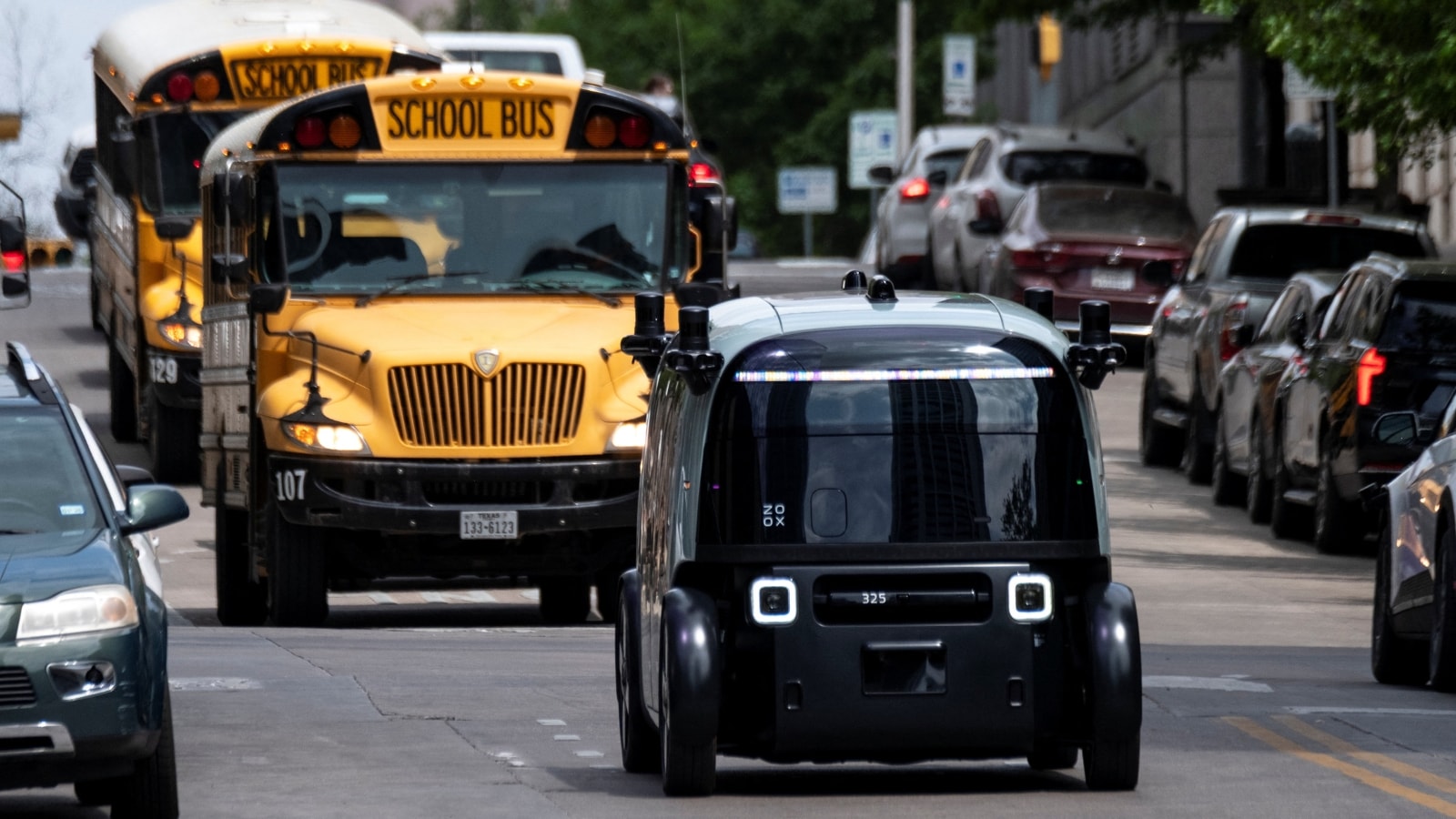
You can look high and low across the modern automotive market, but you won't find another vehicle quite like the one Amazon's Zoox built. It has no steering wheel. It has no brake pedals. It doesn't even have a designated front or back.
For years, federal safety rules treated cars as iron boxes built around a human driver who needed to stare through a windshield and grab a wheel in an emergency. Zoox just broke through that wall. The National Highway Traffic Safety Administration granted the company a landmark commercial exemption. For the first time in United States history, a federal safety regulator cleared a purpose-built, wheel-free robotaxi to charge human passengers for rides.
This isn't just another incremental update in the autonomous vehicle space. It's a fundamental shift in how the government views transportation, and it leaves competitors scrambling to catch up.
The Problem with Retrofitting Old Ideas
If you've hailed a driverless ride in San Francisco or Phoenix recently, you've likely stepped into a modified vehicle. Companies like Waymo built their early dominance by taking conventional SUVs and electric crossovers, stripping out the human driver, and packing the roof racks and trunks with expensive sensor suites.
It was a smart strategy for getting cars onto public roads quickly, but it came with massive design compromises. You're still sitting in a normal cabin facing forward, staring at a dormant steering wheel that nobody can touch.
Zoox took the harder, riskier path. Backed by Amazon's deep pockets, the company designed an electric, carriage-style pod from scratch. Four passengers sit facing each other on two inward benches. It moves bidirectionally, meaning it doesn't need to perform awkward three-point turns in cramped city cul-de-sacs. It just rolls forward or backward with equal ease.
Federal Motor Vehicle Safety Standards were written decades ago, assuming every car on the highway had a human holding a manual control. Zoox had to petition regulators to waive eight distinct safety rules covering everything from glazing to windshield defrosters. When NHTSA Administrator Jonathan Morrison stated that the tech packed into the Zoox pod exceeded the safety performance requirements of a standard human-driven vehicle, he effectively signaled that the era of the mandatory steering wheel is drawing to a close.
The Strict Reality Behind the Exemption
Before you assume autonomous pods are about to flood every American suburb, look at the fine print. The federal green light comes with a very tight leash.
NHTSA capped the approval at 2,500 vehicles per year for an initial two-year window. Zoox cannot sell these pods to private consumers; they remain strictly for commercial ride-hailing fleets. Furthermore, federal regulators imposed heavy reporting mandates. If a pod stops inappropriately in traffic or gets involved in a minor fender bender, Washington wants to know about it immediately.
The agency made it crystal clear that this permission is conditional. If the safety problems that have plagued other robotaxi operators—such as blocking emergency vehicles or freezing in intersections—pop up consistently in the Zoox fleet, the federal government will pull the exemption. Zoox also faces recent reminders of how fragile public trust can be, having recalled a small batch of test vehicles over software handling of heavy smoke conditions.
Hopping over the federal hurdle is only half the battle, anyway. While Zoox plans to flip the switch on fare collection starting in Las Vegas, breaking into other major markets requires local sign-offs. In California, for instance, the company still needs operational permits from both the Department of Motor Vehicles and the Public Utilities Commission before passengers can swipe a credit card for a fare.
What This Means for Waymo and Tesla
The timing of this ruling sends shockwaves through the rest of the autonomous landscape.
Alphabet's Waymo currently leads the commercial market in terms of scale and completed passenger trips, but its reliance on retrofitted vehicles limits how much it can optimize passenger space. Meanwhile, Elon Musk's Tesla has teased a dedicated Cybercab built without steering controls, yet it lacks an established regulatory pathway to put paying passengers into those vehicles at scale today.
Zoox just proved that a company can design a vehicle optimized entirely around human comfort and safety without driver controls, secure federal backing, and actually launch a paid service. It changes the competitive calculus entirely. Other manufacturers can no longer claim that a wheel-free design is a regulatory impossibility.
If you are tracking where urban mobility is heading, keep your eyes on how Las Vegas riders respond to paying for a ride in a toaster-shaped pod with no driver seat. If the units run smoothly over the next twenty-four months, expect the floodgates to open for a second wave of custom autonomous pods across major American cities.
Start by watching how quickly state regulators in Nevada and California clear the commercial paperwork. The technology is finally ready. Now it is up to the city streets to prove they can handle a car designed for a world where drivers no longer exist.