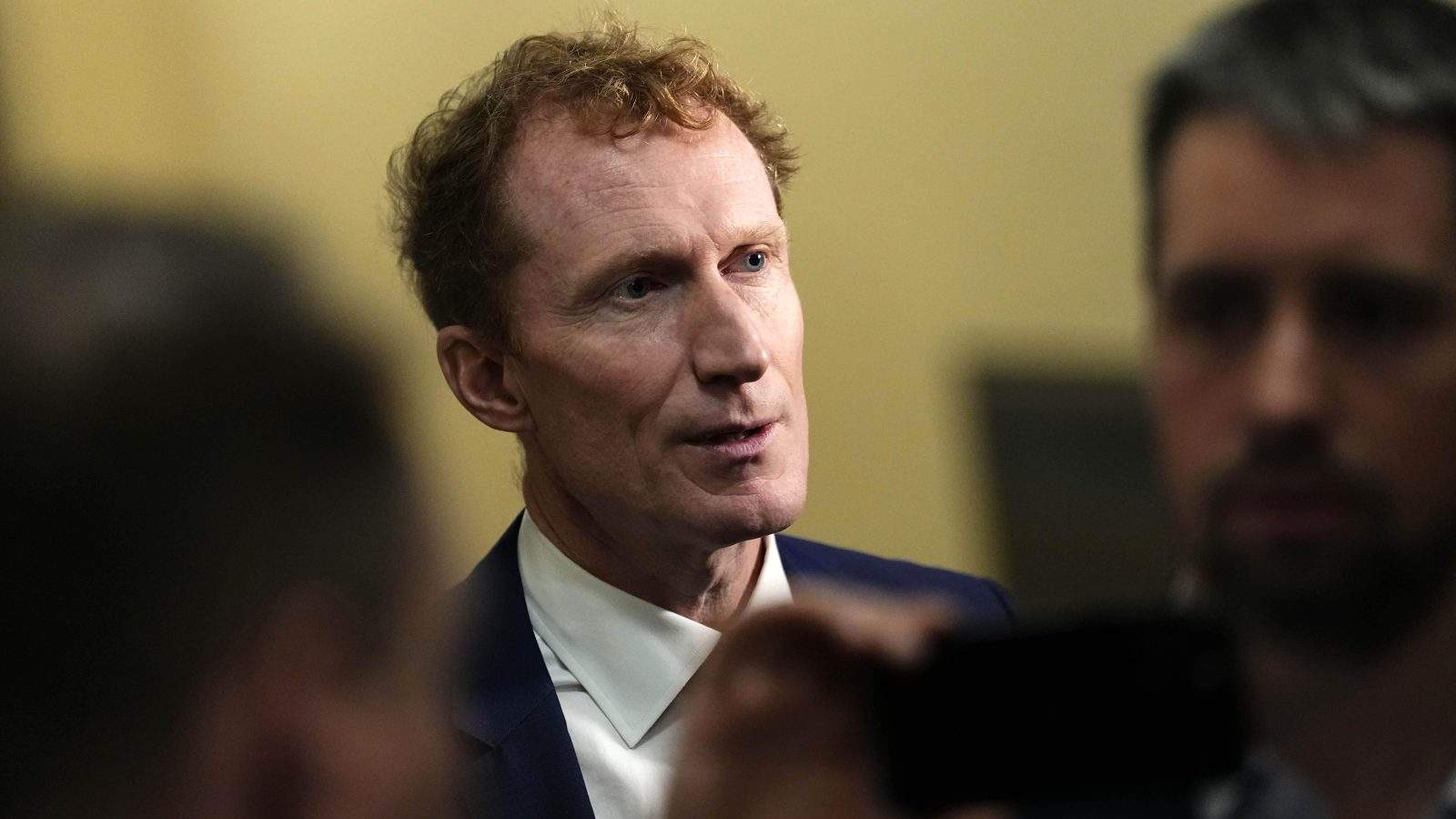
Jaan Tallinn spent over a decade warning anyone who would listen that artificial intelligence could wipe out humanity. Then he wrote the first big check to build it.
Following Anthropic's massive November 2026 stock market debut—which priced at $83 a share and pushed the company past a $1.5 trillion valuation—the Estonian programmer and Skype co-founder sits on an equity windfall estimated between $15.6 billion and $18.3 billion. On paper, the man who bankrolled the modern AI safety movement just became one of the richest beneficiaries of the very technology he says might end us all. Also making waves lately: What a Trillion-Dollar Anthropic Valuation Actually Means for Your Job and Wallet.
If that sounds like peak Silicon Valley hypocrisy, look closer. Tallinn's bet wasn't an accident, and it wasn't a sudden change of heart. It was a calculated hedge born out of pure panic over how fast frontier AI labs were moving.
How a Skype Co-Founder Became Silicon Valley's Chief Prophet of Doom
Before his name showed up in Anthropic's S-1 filing, Tallinn made his fortune writing code. He was a founding engineer behind Kazaa, the peer-to-peer file-sharing network, and later co-founded Skype, which sold to eBay for $2.6 billion in 2005. Most tech founders take that kind of exit money and buy vineyards or yacht fleets. Tallinn went down a very different rabbit hole. More insights on this are explored by ZDNet.
Around 2009, he began reading writings by Eliezer Yudkowsky and Nick Bostrom on artificial general intelligence. The core argument hooked him immediately: if humans build machines vastly smarter than ourselves without solving how to align their goals with ours, we lose control of the planet's future. Not in a Hollywood terminator-shooting-lasers way. In an indifferent, optimization-gone-wrong way.
Tallinn didn't just tweet about it. He put serious capital behind existential risk research years before mainstream tech executives took the topic seriously:
- He co-founded the Centre for the Study of Existential Risk (CSER) at the University of Cambridge.
- He co-founded the Future of Life Institute (FLI), the nonprofit that famously organized the 2023 open letter calling for a six-month pause on giant AI experiments.
- He poured tens of millions into the Survival and Flourishing Fund, steering grants toward alignment researchers and biosecurity.
For years, mainstream venture capitalists treated Tallinn like a fringe eccentric. You couldn't pitch a standard Sand Hill Road fund on "stopping the apocalypse." Tallinn didn't care. He funded warning bells while everyone else chased ad-tech and crypto.
The 2021 Bet That Changed Everything
By late 2020, a quiet civil war was brewing inside OpenAI. Dario Amodei, then OpenAI's Vice President of Research, alongside his sister Daniela Amodei and five other senior researchers, grew increasingly uncomfortable with the lab's commercial direction and pace. They walked out in early 2021 to start Anthropic.
They needed money fast. Training frontier models required astronomical compute budgets, and traditional investors wanted aggressive product timelines.
Dario Amodei reached out to Tallinn. In May 2021, long before Claude existed as a household name, Tallinn led Anthropic's $124 million Series A round at a $461 million post-money valuation.
Think about those numbers for a second. A $461 million entry valuation on a company that just debuted on the public markets at $1.5 trillion. Even accounting for massive dilution from later mega-rounds by Amazon, Google, and FTX's early estate, Tallinn's early slice multiplied hundreds of times over. Forbes pegged his stake at $15.6 billion based on the initial offering range, climbing past $18 billion as shares surged on opening day.
Why did an avowed AI pessimist fund a frontier lab? Because Tallinn believed someone was going to build superintelligence no matter what. If you can't stop the race, you try to make sure the team in front cares about safety mechanics—things like mechanistic interpretability and Constitutional AI—rather than pure speed.
Why Critics Call It the Ultimate Conflict of Interest
Not everyone buys that explanation. Honestly, critics have plenty of ammunition.
Watchdog groups and skeptics inside the AI policy world have spent years pointing out the tangled financial web connecting safety nonprofits to Anthropic. Tallinn sits on the boards or advisory circles of organizations lobbying governments for strict AI regulations—regulations that happen to raise compliance barriers for smaller open-source competitors while favoring heavily capitalized incumbents like Anthropic.
When the person warning Congress that AI could destroy civilization also holds an $18 billion stake in one of the three companies building it, people notice.
The optics get messier when you look at Anthropic's own trajectory. The company launched as a Public Benefit Corporation with a "Long-Term Benefit Trust" designed to prevent pure profit-seeking from overriding safety. Yet by late 2026, Anthropic's annualized revenue run rate had exploded past $81 billion, fueled by aggressive enterprise contracts and deep cloud integrations with Amazon and Google. In its own IPO prospectus, Anthropic warned investors of "existential AI risks to humanity" right alongside projections of hundreds of billions in future revenue.
You can't easily separate the safety mission from the commercial juggernaut anymore. They're fused together.
What Tallinn's Windfall Means for AI Safety Funding
Strip away the drama around hypocrisy, and a massive practical question remains: what happens to all that money?
Unlike typical tech billionaires looking to buy sports teams or fund space tourism, Tallinn has treated his wealth primarily as fuel for his philanthropic obsession. Through vehicles like the Survival and Flourishing Fund and direct grants, he has already distributed hundreds of millions of dollars to independent safety labs, policy think tanks, and academic centers.
An $18 billion liquid—or semi-liquid, once standard IPO lock-up windows expire—war chest changes the scale of independent AI safety overnight. For perspective, the entire global nonprofit ecosystem studying AI alignment previously operated on budgets measured in the tens or low hundreds of millions per year. Tallinn now personally controls more capital than almost every government AI safety institute on Earth combined.
There's a catch, though. Lock-up periods restrict insiders and early backers from dumping shares immediately after listing. And public market volatility around AI infrastructure spending means paper valuations can swing by billions in a single trading session—as Anthropic's own bumpy first week of trading already proved.
How to Read the Money Behind AI Safety Claims
If you follow AI news, invest in tech stocks, or make software purchasing decisions for your business, Tallinn's payout offers a sharp lesson in reading between the lines of Silicon Valley rhetoric.
- Always check cap tables alongside policy papers. When an executive, investor, or think tank founder pushes for specific AI licensing rules or compute thresholds, look at who funded their organization. Safety arguments and competitive moats often point in the exact same regulatory direction.
- Separate paper wealth from liquid influence. Headlines love throwing around "$18 billion" numbers right after an IPO bell rings. Watch SEC Form 4 filings over the next six to twelve months to see what early backers actually sell versus what they hold through market drawdowns.
- Watch where the philanthropic grants land. If Tallinn funnels billions out of Anthropic equity into independent interpretability research and third-party auditing bodies, his original thesis—using commercial AI upside to fund survival—holds up. If that capital simply recycles back into commercial AI startups, the critics were right all along.
Tallinn bet $124 million on the idea that steering a dangerous technology from the inside beat shouting from the sidelines. Five years later, Wall Street validated his timing to the tune of $1.5 trillion. Whether that fortune buys humanity a safer future—or just cements the power of a handful of AI giants—is the only metric left that actually matters.