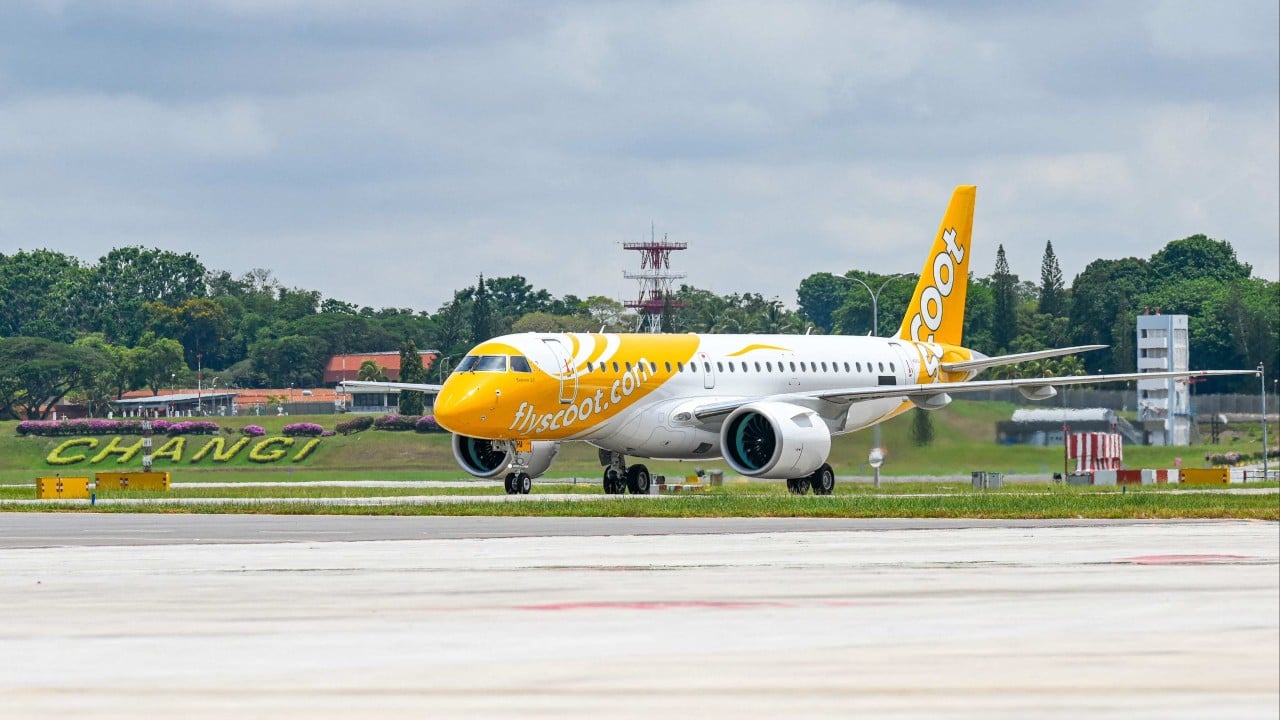
The headlines are predictable. A 38-year-old man on a Scoot flight from Singapore to Perth gets charged with two counts of sexual assault. The public erupts in a chorus of scripted outrage. People demand "blacklists" and "stricter penalties." They treat the event like an anomaly—a freak occurrence in an otherwise orderly system.
They are wrong.
This isn't a failure of one passenger's moral compass. It is a systemic failure of a global aviation framework that treats the cabin like a lawless bubble until the wheels touch the tarmac. We are obsessed with the optics of the crime and completely blind to the logistical vacuum that allows it to happen.
The Jurisdiction Trap
Most people think "international law" is a solid safety net. It’s actually a sieve. When an assault happens at 35,000 feet, you aren't in a country; you are in a legal gray zone defined by the Tokyo Convention of 1963 and the Montreal Protocol of 2014.
Under the Tokyo Convention, the primary jurisdiction for a crime belongs to the "state of registration" of the aircraft. If you are on a Singapore-registered plane flying over international waters, Singaporean law applies. But what happens when the victim and the perpetrator are from different countries, and the plane lands in a third?
The chaos that follows is a gift to defense attorneys. Local police often lack the immediate authority to process crimes committed outside their airspace. We see charges laid in the Perth case because Australia pushed for the Montreal Protocol 2014 (MP14), which allows the "landing state" to exercise jurisdiction. But guess what? Not every country has ratified it.
If that Scoot flight had landed in a nation that hadn't signed on to MP14, that perpetrator might have walked off the jet bridge a free man. We are flying in a patchwork of 20th-century treaties trying to solve 21st-century depravity.
The Myth of the Sky Marshal
The "lazy consensus" suggests that we need more security on flights. People want a cop in every aisle. This is a fiscal fantasy.
Adding a dedicated security officer to every medium-to-long-haul flight would collapse the economics of budget carriers like Scoot. You’d be looking at a 30% hike in ticket prices just to cover the seat, the salary, and the weight of a person who—statistically—will have nothing to do 99.9% of the time.
The industry doesn't need "more eyes." It needs empowered crews. Currently, flight attendants are trained as safety professionals first and waitstaff second. They are taught to de-escalate, which is fine for a drunk passenger complaining about the chicken wrap. It is useless for a predatory assault.
The "nuance" the media misses is that we’ve neutered our crews. They are terrified of lawsuits, terrified of being filmed on a smartphone, and terrified of "violating the rights" of a predator. I have consulted with airline ops teams who admit their internal manuals are more focused on avoiding PR disasters than physically neutralizing a threat.
The Alcohol Alibi
Stop blaming the mini-bottles.
Whenever a mid-air assault occurs, the immediate reaction is to call for a ban on alcohol. This is a classic "correlation is not causation" blunder. Yes, alcohol is often present in these incidents. No, it is not the root cause.
Predatory behavior is a choice. By framing this as a "disorderly passenger" issue or an "intoxication" issue, we provide a legal out. "He didn't know what he was doing; he was drunk."
The industry uses alcohol as a scapegoat because it's easier to regulate a beverage than it is to address the psychological profiling of passengers. We need to stop treating mid-air sexual assault as a subset of "unruly behavior." It is a violent crime. It should be handled by the same biometric tracking and permanent ban-lists used for suspected terrorists.
The Invisible Victim
In the Perth incident, the headlines focus on the charges. They rarely focus on the six hours the victim likely had to sit in the same cabin as their attacker.
Airline protocols for "cabin reassignment" are abysmal. On a full flight, there is often nowhere to move a victim. The "industry standard" is to keep people in their assigned seats unless there is a physical altercation.
Think about that. You are assaulted, and the crew's primary concern is maintaining the weight and balance of the aircraft or not "disturbing" other passengers. We prioritize the schedule over the psyche.
What Actually Works
If we want to fix this, we have to stop asking the "wrong" questions. Don't ask "How do we punish them?" Ask "How do we make the cabin an impossible environment for a predator?"
- Mandatory MP14 Ratification: Any airline flying into your country must belong to a state that recognizes the "Landing State" jurisdiction. No treaty, no landing rights. Period.
- Digital Seat Tagging: Link every passenger's biometric identity to their seat in real-time. If someone is out of their seat or in a space they shouldn't be, the crew should know via a haptic alert.
- The "No-Fly" Unified Database: Currently, if you get banned from Scoot, you can go buy a ticket on Qantas tomorrow. There is no global, cross-carrier database for violent offenders. We share intelligence on "people who might have a bomb," but we don't share intelligence on "people who have a history of grabbing women in 14B."
The Hard Truth
We love the "freedom" of cheap flight. We love the $200 tickets to Perth. But that price point is built on a foundation of minimal staffing and "self-regulation."
The Perth incident isn't a wake-up call; it's a siren that's been blaring for decades. We just keep hitting the snooze button because we'd rather have cheap fares than a secure cabin.
The industry likes to say "safety is our top priority." That is a lie. If safety were the priority, the legal and physical infrastructure of the cabin would have evolved past 1963.
The perpetrator in the Scoot case is facing the law now, but only because the flight happened to land in a jurisdiction with the backbone to prosecute. Next time, the victim might not be so lucky.
Stop looking at the man in handcuffs. Look at the system that gave him six hours of uninterrupted access to a victim and a legal loophole big enough to fly a Boeing 787 through.