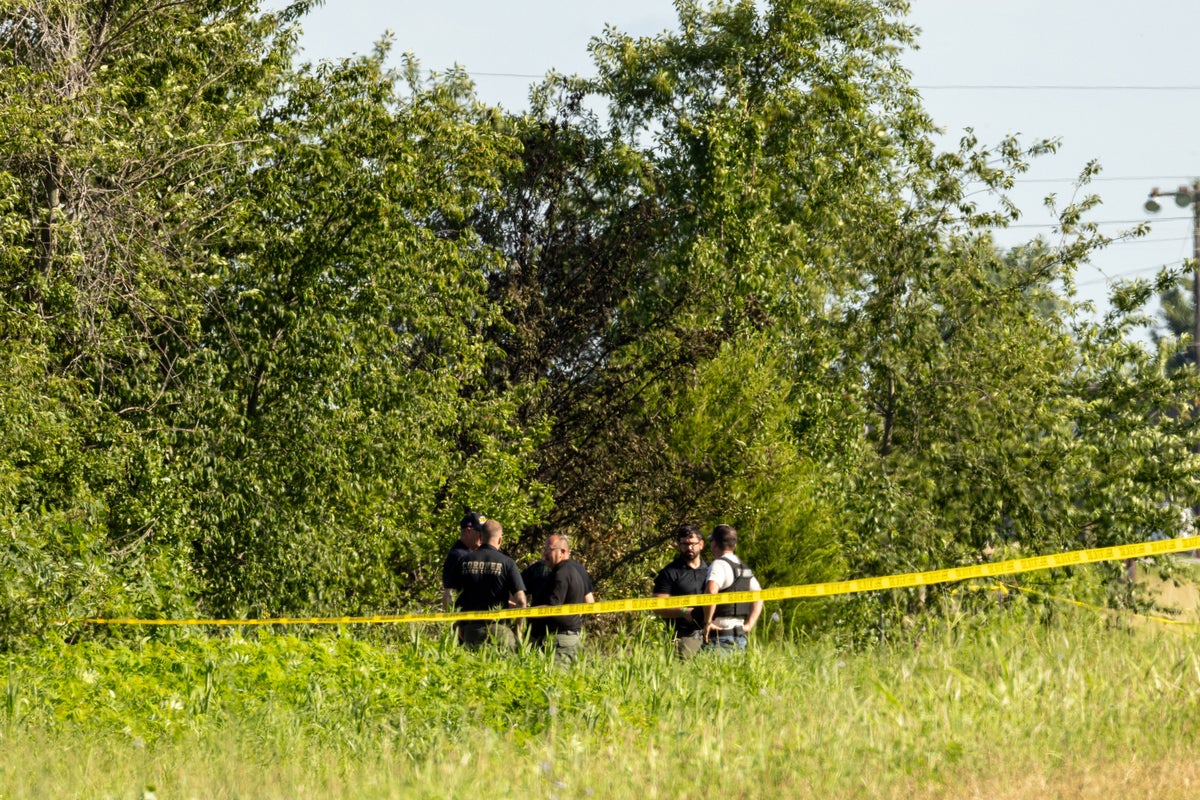
The preliminary National Transportation Safety Board report on the June 14, 2026, Pacific Aerospace 750XL crash near Butler, Missouri, introduces an analytical paradox: the systemic elimination of standard mechanical failure modes shifts the investigative focus entirely to asymmetric flight dynamics, sudden control vectors, or acute pilot incapacitation. When an aircraft carrying 12 people enters a gradual roll that culminates in wings completely perpendicular to the horizon during initial climb, it has exited the envelope of normal aerodynamic transport and entered a critical state of vertical lift liquidation. By isolating what did not happen—engine failure, fuel contamination, or gross center-of-gravity violations—the initial federal telemetry forces a structural examination of the thin margin between stable climb and catastrophic roll progression in specialized commercial jump operations.
The Aerodynamic Mechanics of Lift Liquidation
The core flight profile described by eyewitnesses and corroborated by the initial federal review notes a gradual left turn during the initial climb out from Butler Memorial Airport, terminating in a vertical bank angle before a nose-down impact. To evaluate why this transpired, one must analyze the fundamental lift equation:
$$L = \frac{1}{2} \rho v^2 C_L S$$
Where:
- $\rho$ represents air density
- $v$ represents true airspeed
- $C_L$ represents the coefficient of lift
- $S$ represents the total wing surface area
In straight and level flight, or a standardized shallow climb, the vertical component of lift directly opposes the weight of the aircraft. As a plane banks, that vertical component is compromised, divided into a vertical vector ($L \cos\theta$) and a horizontal vector ($L \sin\theta$), where $\theta$ represents the bank angle.
When the bank angle reaches 90 degrees (perpendicular to the ground), the term $\cos(90^\circ)$ drops to zero. The wings no longer generate any vertical component of lift to counteract the gravitational force acting upon the aircraft's mass. At this precise juncture, the vehicle transforms from an aerodynamic lift-generating body into a purely ballistic mass undergoing accelerated descent.
The transition from a gradual left turn into a terminal perpendicular roll indicates a continuous, uncorrected roll rate. In a standard multi-crew transport aircraft, an uncommanded bank is immediately met with counter-aileron and rudder inputs. In single-pilot operations utilizing high-performance turboprops like the Pacific Aerospace 750XL, an uninterrupted roll progression points to one of three mechanical or physical constraints: a physical jamming of the lateral control surfaces, a massive aerodynamic asymmetric stall, or a complete loss of pilot control capacity.
Deconstructing the Eliminated Mechanical Failure Modes
The primary function of a preliminary NTSB report is the systematic exclusion of high-probability accident causes. The documentation released regarding the Butler occurrence isolates three critical operational pillars, verifying their compliance with safety baselines.
Powerplant Dynamics and Energy Production
Initial ground-level hypotheses often default to engine failure during the critical departure phase. However, physical inspection of the turboprop engine wreckage revealed distinct signature marks indicating the engine was actively producing power at the moment of ground impact. Turboprop engines operating under high power settings at impact exhibit specific rotational damage, including blade twisting, trailing edge curling, and internal compressor casing scoring. The presence of these physical deformations allows investigators to rule out a "dead-stick" or unpowered glide scenario. The pilot was not managing a sudden loss of thrust; the aircraft possessed sufficient kinetic energy from the powerplant to maintain controlled flight had that energy been directed appropriately through the control surfaces.
Fuel Chemistry and System Purity
Fuel starvation or contamination frequently causes sudden power loss, but post-accident sampling from the specific fuel truck utilized to service the Pacific Aerospace 750XL revealed zero evidence of water contamination, particulate sediment, or chemical degradation. The fuel system integrity prior to the flight was verified clean, removing the vector of pre-departure fuel management failure from the analytical equation.
Mass, Balance, and Structural Load Limits
Skydiving operations present highly volatile weight-and-balance challenges due to the dense concentration of human weight within an open cabin layout. The NTSB reviewed the digital flight tracking and operational manifests managed via the operator's software. The analysis confirmed that the total weight of the pilot and 11 passengers fell within the certified maximum takeoff weight (MTOW) of the Pacific Aerospace 750XL. Furthermore, the longitudinal and lateral centers of gravity were calculated to be within the permissible envelope for the departure phase.
This finding eliminates the theory of an initial overweight condition or an incorrect pre-flight balance configuration causing an uncontrollable pitch-up or pitch-down stall immediately upon leaving the runway.
The Operational Asymmetry of Regulatory Frameworks
The structural tension underlying skydiving aviation safety centers on the regulatory classification of these flights. Skydiving operations in the United States operate primarily under Federal Aviation Regulations (FAR) Part 91. This framework governs general aviation and features less stringent operational, maintenance, and training oversight compared to FAR Part 135 (commuter and on-demand charter operations) or FAR Part 121 (scheduled commercial airlines).
This structural differentiation introduces distinct variances in risk management:
- Recorder Mandates: Under Part 91, aircraft of this size are not legally required to carry crashworthy Flight Data Recorders (FDR) or Cockpit Voice Recorders (CVR). The absence of these devices creates a severe data bottleneck for accident investigators, forcing a reliance on peripheral data streams such as consumer action cameras or ground-based flight tracking software.
- Maintenance Programs: While commercial air carriers must adhere to continuous airworthiness maintenance programs with rigid oversight, Part 91 operators frequently utilize standard annual or 100-hour inspection intervals, which can allow subtle structural fatigue or control system wear to persist undetected between cycles.
- Crew Complement: Skydiving transport assets are heavily optimized for single-pilot operations to maximize cabin volume and payload capacity for paying passengers. This layout eliminates the redundant human layer found in multi-crew cockpits, where a secondary pilot can instantly diagnose and correct a primary pilot's spatial disorientation or sudden medical incapacitation.
The Federal Aviation Administration established a rulemaking committee in April 2024 to review modifications to parachute operations oversight, acknowledging the statistical divergence between commercial passenger transport and sport aviation. The slow adoption rate of historical safety recommendations remains an unresolved systemic vulnerability.
The Unresolved Variables under Forensic Review
With major mechanical failures, fuel issues, and weight limits excluded, the investigation must proceed down less clear analytical paths. Forensic tracking now focuses on three core domains.
Flight Control Cable Contiguity
The Pacific Aerospace 750XL utilizes traditional mechanical linkages, including cables and pulleys, to transmit inputs from the pilot's control column to the ailerons, elevator, and rudder. Thermal damage from the post-impact fire severely compromised the airframe's major structural components, complicating the assessment of pre-impact control continuity. Investigators must painstakingly examine every cable break under microscopic conditions to differentiate between a high-stress tensile fracture occurring during impact versus a pre-existing fatigue failure that could have severed a control line in mid-air.
Asymmetric Aerodynamic Stall Modes
A gradual turn that develops into an uncorrected vertical bank can be caused by an asymmetric wing stall. If the left wing experienced a localized loss of lift due to an uncommanded aerodynamic disturbance—such as a shifting cargo profile or an localized mechanical distortion of the wing skin—the aircraft would roll violently toward the stalled wing. Because the aircraft was in its initial climb-out phase, its airspeed was relatively low and its angle of attack was elevated, reducing the margin of error before an aerodynamic stall condition occurs.
Human Factors and Biometric Incapacitation
The pilot possessed more than 4,100 hours of total flight time and was deeply familiar with the specific operational environment of the jump zone. Given this high baseline of experience, a basic piloting error causing a continuous, uncorrected 90-degree bank under clear meteorological conditions remains anomalous.
The investigation must evaluate the potential for acute pilot incapacitation due to a sudden medical event. In a single-pilot configuration, if the pilot loses consciousness or motor control while a slight lateral input is introduced to the controls, the aircraft will naturally continue down that uncorrected flight path until terrain impact occurs.
The Next Strategic Phase of Evidence Extraction
Because the aircraft lacked formal flight recorders, the path forward relies entirely on non-traditional data recovery. The NTSB's recovery of damaged consumer action cameras from the wreckage represents the highest-leverage vector for definitive analysis. Specialized laboratories will attempt to extract digital data directly from the flash memory chips of these devices, bypassing fire and impact damage to the camera housings.
If successful, this data can provide a timestamped visual record of the cockpit instruments, control inputs, passenger placement, and structural performance immediately prior to impact. Until that telemetry is synthesized, the operational reality of the Butler event serves as a clear warning about the risk profiles inherent to single-pilot, high-performance operations operating outside of primary commercial transport oversight. Operators must respond by proactively enforcing internal safety management systems that go beyond the baseline requirements of Part 91 regulations, particularly regarding continuous control-system inspections and rigorous pilot health screenings.