Political pundits love a neat little autopsy. Whenever a clip racks up millions of views, the conventional media class rushes in to declare a winner, a loser, and a textbook "misstep."
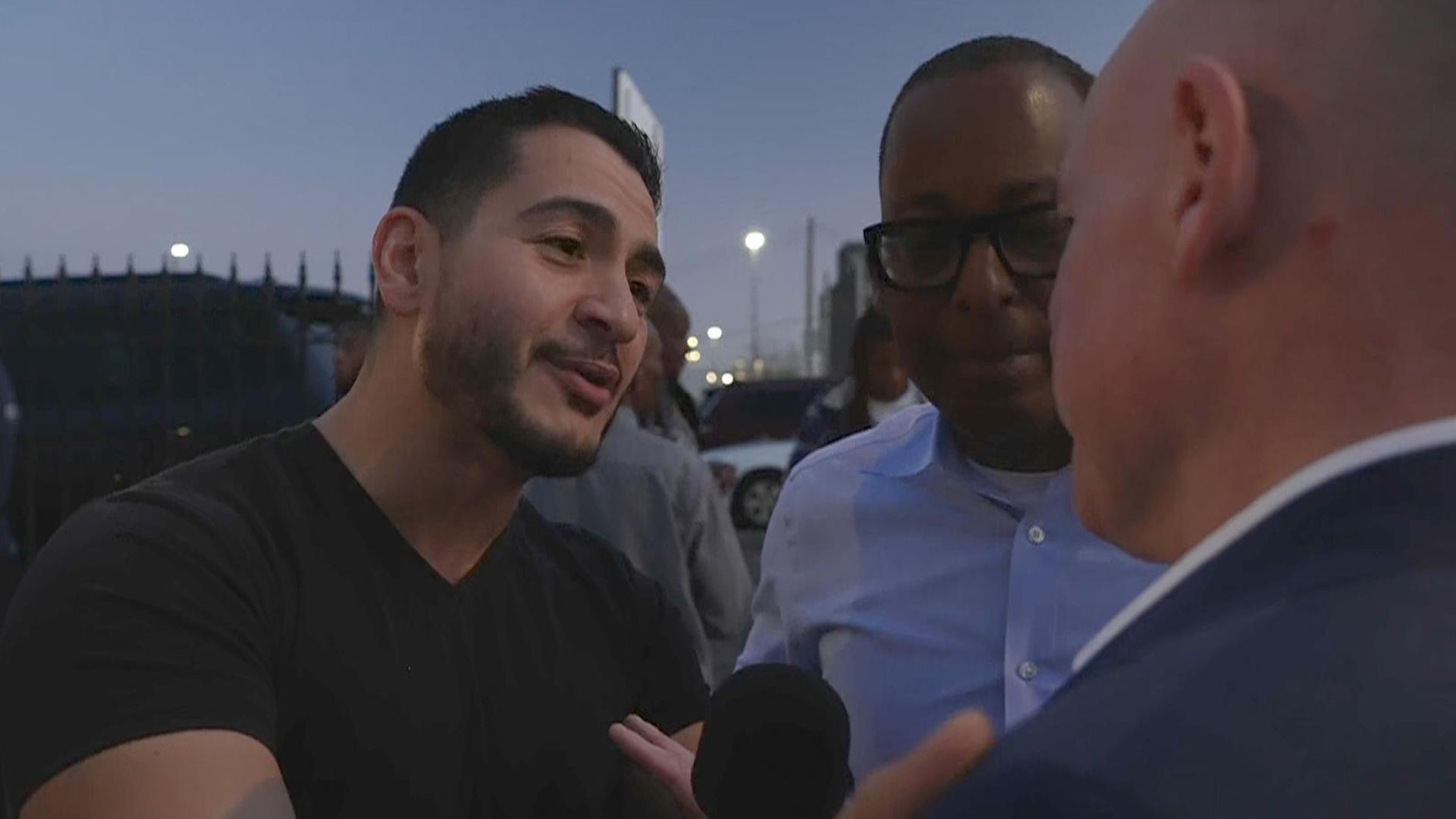
They look at Abdul El-Sayed’s widely shared interaction and see a candidate failing the basic test of retail politics. They see friction. They see a refusal to play along with the expected script. And because modern political commentary treats friction like a fatal disease, they label the whole thing an unforced error.
They are completely wrong.
That viral clip wasn't a blunder. It was an intentional, high-yield filter in an attention economy that actively punishes polite conformity. If you measure political communication by the standards of 1990s cable news, sure, it looked rough around the edges. If you measure it by how campaigns actually build durable coalitions in an era of algorithmic fragmentation, El-Sayed did the exact right thing—and the pundit class is too stuck in legacy media habits to notice.
The Myth of the Frictionless Candidate
Most political consultants operate on a deeply outdated premise. They believe the goal of every public interaction is to minimize resistance. Smile, nod, pivot to a pre-tested talking point, and leave zero sharp edges for an opponent to grab onto.
I have watched campaigns burn tens of millions of dollars on media training designed to sand down every human instinct a candidate possesses. The result is always the same. You get a polished, completely forgettable soundbite that offends nobody and excites nobody. In a media environment where algorithms reward emotional resonance over polite consensus, being inoffensive is the fastest way to become invisible.
When a reporter or voter corners a candidate with a framed premise, the standard playbook says you validate the questioner's framing before gently redirecting. El-Sayed refused to validate the premise. To traditional observers, that reads as combative or dismissive.
In reality, refusing to accept a flawed premise is the only way to maintain narrative control. Once you accept someone else's framing—even just to be polite—you are fighting on their turf. You spend the next ninety seconds playing defense, trying to explain why the baseline assumption of the question doesn't quite fit. By breaking the script immediately, you force the audience to look at the framing itself rather than just grading how smoothly you danced around it.
Why Million-View Clips Follow Different Physics
Let’s look at the mechanics of why that interaction hit millions of views in the first place.
Clips do not go viral because a politician gave a remarkably balanced, diplomatic answer. They go viral because of tension. Behavioral researchers who study online information diffusion—like Jonah Berger at Wharton, whose work on contagious content broke down the mechanics of high-arousal emotions—have repeatedly shown that content triggering strong reactions drives sharing far more effectively than low-arousal contentment.
When pundits say, "This interaction felt like a misstep," they are usually projecting their own discomfort with confrontation onto the broader electorate. They assume that because they found the exchange jarring, millions of viewers watched it and walked away alienated.
That misunderstands how viral political clips actually function:
- Algorithms do not distinguish between "good" friction and "bad" friction. High watch time, quote-tweets, and heated comment sections signal relevance to every major platform. A clip that sparks debate gets distributed to ten times as many feeds as a clip where everyone politely agrees.
- Supporters read defiance as authenticity. Voters are exhausted by focus-grouped politicians who sound like human press releases. When a candidate pushes back visibly, their base doesn't see a gaffe; they see someone willing to fight for their worldview without flinching.
- Critics amplify the message for free. Every detractor sharing the clip to dunk on it is simultaneously introducing the candidate's core argument to new audiences who might actually agree with the pushback.
Imagine a scenario where El-Sayed had handled that exact same interaction using standard consultant-approved etiquette. He would have thanked the questioner, offered a nuanced hedge, and pivoted smoothly to a safe talking point. The clip would have gotten four thousand views, zero media write-ups, and vanished from the internet by Tuesday morning.
Instead, millions of people watched it. They argued about it. They learned who he was and where he stood. Calling that a failure requires believing that obscurity is preferable to controversy. In modern politics, obscurity is death.
You Are Asking the Wrong Question About Political Gaffes
Whenever a clip like this blows up, the immediate search trend is some variation of: Did this viral moment hurt their campaign?
That is the wrong question. It treats a campaign like a fragile glass sculpture where one crack ruins the whole piece. Campaigns are not glass sculptures; they are asymmetric attention engines.
If you want to understand whether a viral confrontation actually hurt or helped, stop asking whether everyone liked it. Ask three much better questions instead:
- Did it clarify the candidate’s core contrast? A great political moment draws a bright line between who is with you and who isn't. If the clip made El-Sayed’s ideological posture unmistakable, it did its job.
- Did it mobilize high-intent supporters? Elections aren't won by mildly impressing passive observers; they are won by convincing dedicated supporters to donate, knock on doors, and argue on your behalf. Friction fuels mobilization.
- Did it cost any actual persuadable voters? Most of the people expressing outrage in the comments were never going to vote for him anyway. Losing people you never had costs you zero votes.
People also ask whether candidates owe interviewers and voters complete deference during public exchanges. Brutally honest answer: no. Voters don't elect a customer service representative. They elect an executive or a legislator to make hard calls under pressure. Watching someone refuse to be bullied by a leading question is actually a decent stress test for how they will handle hostile committees, lobbyists, or opposing lawmakers.
The Real Risk of the Confrontational Playbook
Of course, pushing back on the lazy consensus doesn't mean every combative clip is secretly genius. There is a very real downside to the high-friction approach, and ignoring it is just as naive as believing every gaffe is fatal.
The danger isn't that you alienate your opponents. The danger is that you fatigue your own allies if every single interaction turns into a cage match.
When confrontation becomes a reflex rather than a strategic choice, you stop looking principled and start looking brittle. Voters can tell the difference between a leader who pushes back when a core principle is misrepresented and a politician who simply cannot handle scrutiny without losing their temper. If you fight over trivial details, you dull the impact of the moments when you actually need to draw a hard line.
Furthermore, viral attention is a raw, volatile resource. It floods your top-of-funnel awareness, bringing thousands of new eyeballs to your platform overnight. If your campaign infrastructure isn't ready to capture that attention—with clear messaging, direct ways to get involved, and disciplined follow-up—then all that friction just burns up in the atmosphere without building lasting support.
How to Actually Win When the Cameras Are Rolling
If you are advising a public figure, a founder, or a candidate stepping into a high-stakes interview, throw out the 1990s crisis-communications binder. Stop training people to dodge and weave. Train them to own the frame.
First, name the premise out loud. When someone asks a loaded question, don't answer the trap and don't mumble through a pivot. Point directly at the assumption baked into the question. Say, "That question assumes X, and that's exactly what I'm challenging." Viewers respect clarity far more than smoothness.
Second, never apologize for tone when the substance is right. The biggest mistake public figures make after a viral moment is the follow-up walk-back. Once the pundits declare an interaction a "misstep," nervous aides pressure the principal to soften their stance or express regret for how it came across. That instantly validates the critics' narrative and demoralizes the supporters who backed you precisely because you stood your ground.
Third, let the clip breathe. You do not need to win the immediate news cycle's superficial grading rubric. Media commentators evaluate interactions based on etiquette; voters evaluate them based on conviction. Etiquette fades in twenty-four hours. Conviction sticks.
The next time a political interaction racks up millions of views and the usual chorus calls it an unforced error, look closer at who is complaining. Usually, it’s the people whose job depends on politics staying polite, predictable, and entirely ignorable.
Abdul El-Sayed didn't fail the test. He just refused to take the test the pundits wanted him to take—and millions of people tuned in to watch.