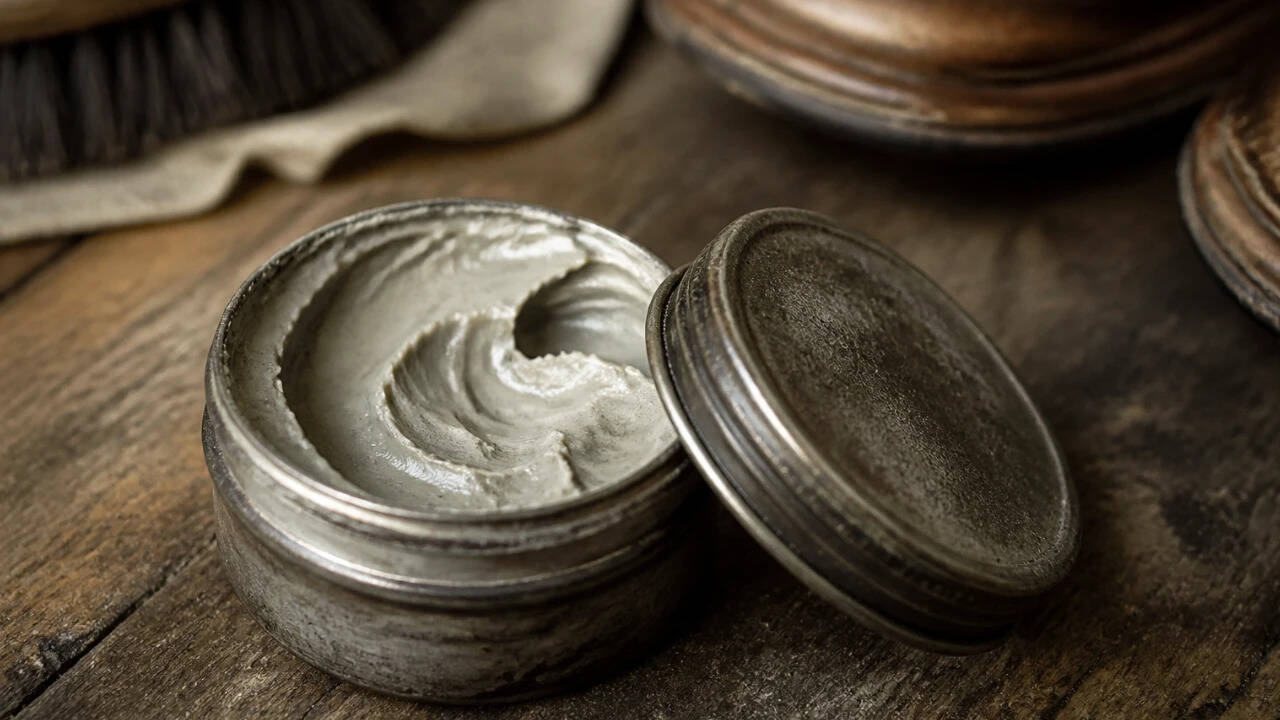
Someone in second-century London swiped a finger through a pot of white face cream, put the lid back on, and never came back for it. Almost two millennia later, archaeologists dug it up.
That's not a movie plot. In 2003, excavators working at a site in Southwark, just across the River Thames from Roman Londinium, uncovered a small tin pot sealed tight with a lid. Inside sat a creamy, off-white ointment that had survived roughly 1,800 to 1,900 years in the ground. Even better, the paste still carried fingerprint ridges from the person who scooped it out last.
Most people treat ancient history like a dusty textbook full of emperors, tax laws, and battle maps. Finding a pot of skincare flips that habit on its head. Roman Britons cared about how their skin looked and felt, and they had serious chemical know-how to back it up. Honestly, if you've ever stared at a modern jar of moisturizing cream wondering what's actually inside it, this Roman find will make you look twice.
What Archaeologists Actually Found in Southwark
The dig took place in 2003 in Southwark, London, an area that formed part of the sprawling Roman settlement across the Thames. Excavations in this part of town regularly turn up domestic debris, trade goods, and clues about everyday urban life rather than grand imperial monuments.
When researchers examined the small tin container and its contents, the details stood out immediately. The tin itself had a fitted lid that helped keep air and contaminants out over the centuries. When opened, the cream hadn't dried into a rock-hard puck or vanished into soil. It still looked like a thick, pale cosmetic cream, complete with swirls and marks left behind by fingers reaching in for a dab.
Those finger impressions hit differently than a stone inscription or a broken potsherd. They capture a tiny, ordinary moment. Someone getting ready for the day, soothing dry skin, or applying makeup in a damp northern climate.
How Scientists Cracked the Roman Cream Recipe
A weird pale paste in a tin pot is cool on its own, yet the real payoff came from lab analysis. Researchers—including specialists working with ancient cosmetic residues and museum conservation teams in London—used chemical testing to figure out what went into the mixture.
Here's what the science turned up. The cream wasn't just simple olive oil slathered onto a face. It was a formulated emulsion made from animal fat, starch, and tin (specifically a tin compound such as tin oxide).
Think about how those ingredients work together:
- Animal fat acted as the rich lipid base, giving the ointment body and helping it spread and hold moisture on the skin.
- Starch helped thicken and stabilize the texture so it felt creamy rather than runny or greasy.
- Tin compounds played a key role in the pale, opaque appearance—and archaeologists and chemists have long noted how a bright white finish appealed to Roman beauty standards that prized fair skin.
When modern researchers tried recreating the formula from those ingredients, it behaved like a real cosmetic cream. It went on smooth, left a white cast on darker skin, and could even be wiped off or adjusted depending on how much you used. That matters because it proves this wasn't some accidental kitchen mashup. Whoever made it understood texture, stability, and visual effect.
Why Roman Skincare Was Way Smarter Than You Think
We like to assume ancient people had crude remedies and modern beauty brands invented cosmetic science. That's a pretty smug myth.
Roman writers like Pliny the Elder and Ovid already talked about cosmetics, skin treatments, and beauty routines in the first century AD, sometimes mocking people who spent too much time or money on them while giving us a window into how common those habits were. Meanwhile, archaeological finds like the Southwark tin pot show the practical craft behind the scenes.
Making a stable cream out of fat, starch, and mineral compounds takes trial and error. If you overheat fat, it smells awful and breaks down. If you don't balance your base and thickeners, the mixture separates into a greasy mess. Roman formulators knew how to blend fats and powders into a usable cream that actually lasted on the shelf—and clearly, in the right container, lasted for centuries.
There's also a surprising cultural detail here. Londinium sat on the edge of the Roman Empire, rainy and cool compared to sunny Italy. People living there still bought into empire-wide ideas of grooming and appearance, using imported or locally produced goods to shape how they presented themselves. Beauty routines weren't just a Mediterranean luxury; they traveled along trade routes right alongside coins, wine, and pottery.
Misconceptions About Ancient Cosmetics That Need to Go
Whenever a story like this pops up, a few lazy assumptions follow right behind it. Let's clear them up.
First, people assume ancient cosmetics were always deadly poison. Yes, some ancient makeup and remedies used toxic ingredients—lead compounds show up in historical beauty practices—and you should never put random historical recipes on your face today. Still, lumping every ancient cream into "toxic sludge" ignores real formulation skill. The Southwark cream used fat, starch, and tin rather than classic lead white, showing that makers used different recipes for different effects.
Second, folks often picture cosmetics as strictly for wealthy women lounging in marble villas. Real life was messier. Urban centers like Roman London had merchants, craftspeople, soldiers, travelers, and households of varying means. While fine metals and imported goods weren't cheap, personal grooming and skin care crossed more lines than rigid stereotypes suggest.
Third, some readers think ancient cream would smell sweet like roses or frankincense. Not necessarily. Without modern synthetic fragrances—or strong aromatics added in heavy amounts—a fat-and-starch base has its own earthy, fatty scent. In fact, when researchers tested recreated versions, the smell wasn't a modern perfume shop. History doesn't always smell like a spa.
What This Discovery Means for Modern Skincare Lovers
You don't need to dig up a Roman tin pot to get something practical out of this story. It actually sharpens how you can read today's skincare labels and marketing.
Modern brands love throwing around buzzwords like "ancient secret," "timeless ritual," or "pure botanical." Usually that's clever branding rather than proof a formula works. Look past the storytelling and check what the base actually does: occlusives and emollients lock in moisture, humectants draw water in, and thickeners or emulsifiers keep the texture pleasant so you'll actually use it every day.
Notice, too, how packaging changes everything. The Southwark cream survived so remarkably well because it was sealed in a tin pot with a lid. Air, light, and bacteria are the enemies of any cream or balm. Even today, keeping jars tightly closed, storing products away from direct heat and sun, and keeping clean hands or spatulas out of open tubs makes a real difference in how long your products stay fresh and effective.
Finally, keep a healthy dose of skepticism toward "historical DIY skincare" trends online. Just because a recipe is old doesn't mean it's gentle, non-comedogenic, or right for your skin barrier. Ancient creams were made for ancient goals—like creating a pale matte look—not necessarily modern dermatological comfort.
Practical Ways to Apply This to Your Own Routine
If you want to take something useful from a 2,000-year-old London discovery without playing mad chemist in your kitchen, try these steps:
- Check the base before the hype. When eyeing a moisturizer or balm, look at the first few ingredients to see if it relies on fats, oils, waxes, or silicones to seal in hydration, rather than getting swept away by a tiny splash of an exotic extract near the bottom of the list.
- Protect your jars like an archaeologist. Tightly screw lids back on right after use, keep products out of steamy or sun-baked spots when possible, and use clean fingers or a small spatula so you aren't introducing extra moisture and microbes into a tub.
- Skip DIY historical experiments on sensitive skin. If you're curious about ancient beauty history, read museum notes and archaeological studies—don't rub raw starches, random minerals, or unrefined fats onto irritated skin hoping for a miracle glow.
- Look up museum collections for the real context. When you read viral archaeology posts, check museum reports or archaeological summaries from London excavations so you separate verified lab findings from internet exaggeration.
A tiny tin pot in Southwark reminds us that people have been trying to care for their skin—and leave their mark—for a very long time.