The pre-dawn light over the Port of Melbourne is usually a comforting slate gray. On any given Tuesday, you can stand near the docks and watch the gargantuan container ships glide in, heavy with electronics, clothing, and the endless inventory of modern Australian life. It feels permanent. It feels safe.
But look closer at the tankers pumping refined fuel into the holding tanks. That liquid is the true oxygen of the nation. It keeps the ambulances moving in Brisbane. It powers the massive combine harvesters in the wheat belt of Western Australia. And almost all of it relies on a fragile, invisible thread stretching halfway across the planet.
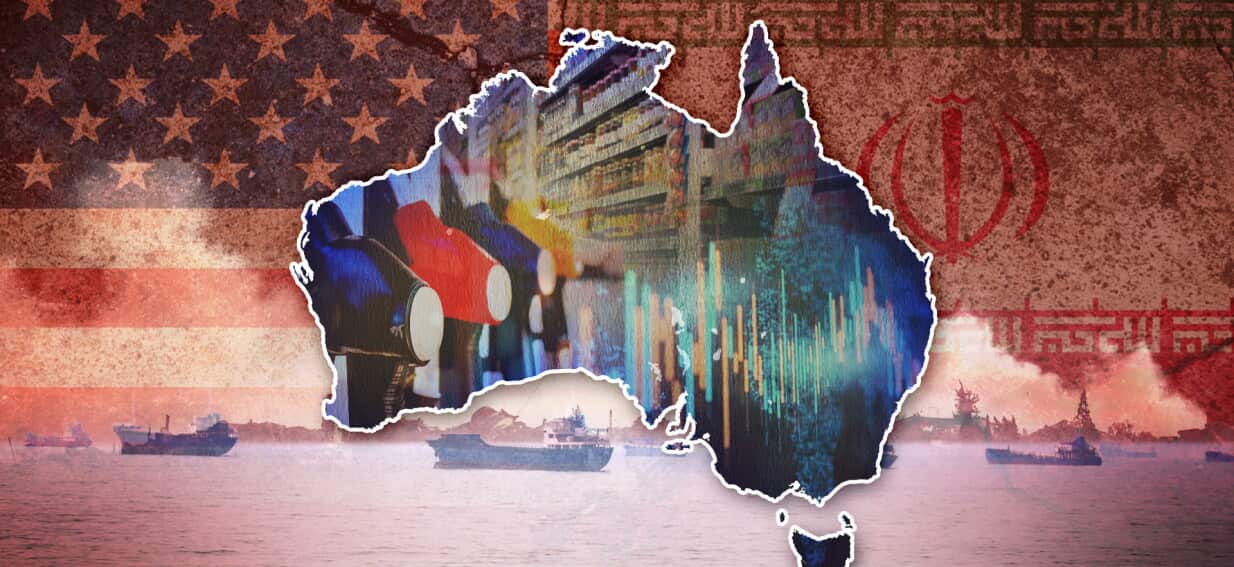
If a conflict erupts between the United States and Iran, that thread snaps.
Australia is uniquely vulnerable to shocks in the Middle East, specifically around the Strait of Hormuz—a narrow choke point through which a third of the world’s liquefied natural gas and 20% of its total oil consumption passes. To understand how a flare-up in the Persian Gulf touches a suburban driveway in Sydney, we have to look past the geopolitical chessboards and focus on the immediate, tangible friction of a world starved of energy.
The Long Fuse
Consider a hypothetical truck driver named Sarah. She lives in Dubbo and drives interstate freights. She does not read intelligence briefings. She does not track the movements of the US Navy's Fifth Fleet. Yet, her livelihood is entirely hostage to them.
Australia holds a notoriously low reserve of commercial fuel. While International Energy Agency guidelines mandate that member countries hold emergency oil stocks equivalent to 90 days of net imports, Australia has historically operated on a knife-edge, often possessing less than half of that in actual, physical wet reserves on its own soil. The rest is "tickets"—contractual options to buy oil stored overseas, or fuel currently on ships making the agonizingly slow journey across the ocean.
If Washington and Tehran engage in open kinetic warfare, the Strait of Hormuz will likely close, either via Iranian naval mines or retaliatory Western blockades.
When the Strait closes, global oil prices do not rise gradually. They spike. Instantly.
For Sarah, the math is brutal. Fuel accounts for roughly one-third of the operating costs of a long-haul transport business. When diesel prices soar past three dollars a liter, the ripples turn into a tidal wave. She has to charge more to move groceries. The supermarket chain passes that cost down. Suddenly, a family in Adelaide is paying double for a block of cheese and a loaf of bread, completely unaware that their grocery bill was decided by a drone strike in the Gulf of Oman.
The Mirage of Self-Reliance
There is a common misconception that because Australia is rich in natural resources, it is immune to these shocks. We are, after all, a global superpower in liquefied natural gas (LNG) exports.
But this is a tragic structural irony. Australia has systematically closed its domestic oil refineries over the past two decades. We lack the industrial capacity to turn our own crude resources into the highly specific refined products—like diesel and aviation turbine fuel—that keep the country running. We ship our raw energy out, and we buy refined fuel back, mostly from mega-refineries in Singapore, South Korea, and Japan.
Those Asian refineries get their crude from the Middle East.
If the supply chain breaks at the source, the refineries in Singapore slow down. The ships destined for Melbourne and Sydney are delayed or rerouted to the highest bidder. This is not a theoretical panic; it is a mechanical certainty. The Australian economy is built on a "just-in-time" logistics model. We do not store wealth or security; we stream it, hoping the signal never drops.
The Modern Draft
The impact is not merely economic. The strategic alliance between Canberra and Washington is an explicit pact. Under the ANZUS Treaty, if American forces come under sustained attack, the pressure on Australia to provide military support is immediate and immense.
This would not look like the land campaigns of the twentieth century. A war with Iran in the current era is a war of attrition, cyber-warfare, and asymmetric naval engagement.
Australian frigates could find themselves deployed to the Red Sea or the Persian Gulf to protect commercial shipping lanes from anti-ship missiles and explosive-laden sea drones. For families with loved ones in the Royal Australian Navy, the abstract news tickers on TV suddenly transform into sleepless nights spent staring at the ceiling, waiting for a WhatsApp message that might not come through because of operational communications blackouts.
Simultaneously, the front line moves to the digital space. Iran possesses highly sophisticated state-sponsored cyber units. In a wider conflict involving US allies, Australian critical infrastructure—power grids, banking networks, transport systems—becomes a legitimate target for disruptive cyberattacks.
Imagine waking up to find your banking app offline. The traffic lights in Brisbane are flashing amber, dark, then amber again. The local hospital is forced to pivot to backup generators because the regional grid has been hit by ransomware. This is how modern war crosses borders. No bombs need to fall on Australian soil to paralyze an Australian city.
The Price of Distance
We have grown accustomed to the tyranny of distance working in our favor. We are the lucky country, isolated by vast oceans from the historical tinderboxes of Europe and the Levant.
But in a globalized, hyper-connected energy market, that distance is a vulnerability, not a shield. We are at the very end of the longest supply chains on Earth. When the global economy catches cold, Australia feels the chill; when the Middle East catches fire, we pay for the smoke.
The next time you see a headline about tensions flares in the Gulf, do not look at it as a distant tragedy on a screen. Look at the car keys sitting on your kitchen counter. Look at the lights humming in your living room. The connection is direct, intimate, and frighteningly thin.