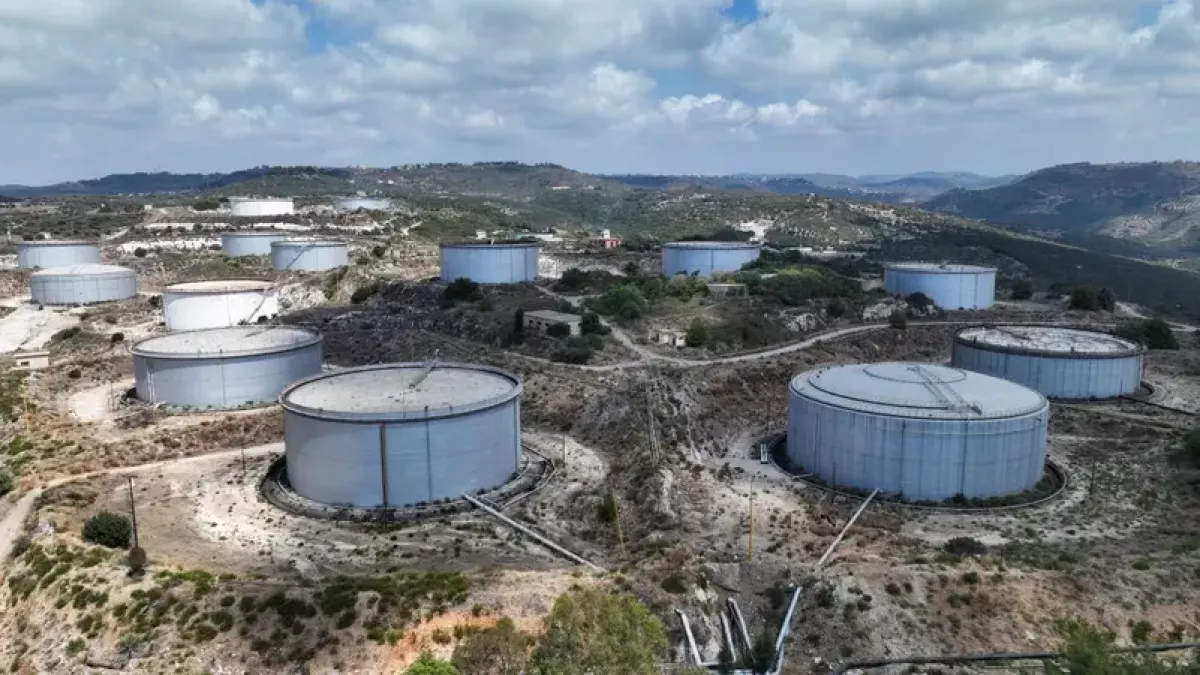
The headlines are screaming about a demand funeral. Analysts are staring at satellite imagery and refinery run rates in the Middle East, weeping over 1.6 million barrels per day (bpd) of "destroyed" oil demand. They see smoke over storage tanks and shuttered industrial hubs and conclude that the floor has dropped out from under the market.
They are wrong.
What the consensus calls "destroyed" demand is actually deferred consumption and supply-chain structuralization. The market isn’t shrinking; it is coiled. Every barrel that isn't burned today because of regional kinetic conflict is a barrel that the global economy will scream for the moment the geopolitical fever breaks—or worse, it's a barrel that is being rerouted through shadow fleets where "official" data cannot track it.
If you’re trading on the idea that 1.6 million bpd is gone forever, you’re about to get steamrolled by the most violent snapback in a decade.
The Myth of Permanent Destruction
Economists love the term "demand destruction" because it sounds final. It implies that the consumer has found an alternative or that the need for the energy has vanished.
When a factory in a conflict zone stops pulling power from a diesel generator, that isn't demand destruction. That is a temporary operational halt. The underlying economic need—the demand for the goods that factory produces—has not disappeared. It is being backlogged.
I’ve spent twenty years watching traders mistake a pause for a pivot. In 2020, they said demand was "destroyed." By 2022, we were staring at $120 Brent because the world realized you can't just flip a switch and make 100 million bpd of global thirst go away.
Why the 1.6 Million Figure is a Lie
Let’s look at the math the "experts" are using. They calculate demand by looking at:
- Reported refinery throughput.
- Official customs data for imports/exports.
- Visible inventory changes.
Here is the problem: In a war zone involving a major producer like Iran, official data is fiction.
When sanctions or kinetic strikes hit, oil doesn't just evaporate. It moves into the "grey market." Iran has mastered the art of Ship-to-Ship (STS) transfers, turning off AIS transponders, and "teaspooning" crude into smaller vessels that blend into the noise of the South China Sea.
If 1.6 million bpd isn't showing up on a spreadsheet in London or Houston, it doesn’t mean it wasn't consumed. It means it was consumed by someone who doesn't want to tell you they bought it. By labeling this as "destroyed demand," the consensus is undercounting global consumption, creating a massive, invisible deficit that will eventually force a price correction.
The Inventory Lag Trap
The "lazy consensus" argues that if demand were truly healthy, we would see massive draws in OECD inventories. Since we aren't seeing those draws in the middle of this supposed 1.6 million bpd loss, they assume the market is oversupplied.
This ignores the Global Buffer Shift.
During high-intensity regional conflicts, nations stop reporting their "strategic" reserves accurately. China and India are currently vacuuming up discounted barrels that are supposedly "lost" to the market. They aren't burning them immediately; they are stocking them.
- Scenario A: The conflict escalates. The Strait of Hormuz sees a real disruption. Those "lost" 1.6 million barrels suddenly become the only liquidity left in the system.
- Scenario B: The conflict de-escalates. The "lost" demand returns to the official books instantly, but the shadow inventories have already been tucked away.
In both scenarios, the price doesn't go down. It goes up. The 1.6 million bpd is a ghost that will haunt short sellers when they realize the physical market is tighter than the paper market suggests.
The Efficiency Fallacy
Another favorite argument of the bears is that high prices during the Iran conflict are forcing "efficiency gains" that permanently kill demand.
Give me a break.
Efficiency is a slow, decade-long crawl. You don't replace an entire fleet of internal combustion engines or retool a petrochemical plant because of a six-month spike in regional tension. What you see instead is demand suppression. People stop driving to see their families; small businesses cut back on deliveries.
This is a rubber band being pulled back. The moment the tension eases—even slightly—that suppressed demand returns with a vengeance. We saw this post-2008 and post-COVID. Every time the "experts" predicted a permanent shift in consumer behavior, the consumer proved them wrong by consuming more than ever before.
The Cost of Rerouting
War doesn't just kill demand; it makes the remaining demand much more expensive to satisfy.
When you can't ship through the Red Sea or near the Persian Gulf, you go around the Cape of Good Hope. This adds 10 to 14 days to a tanker’s journey.
- Ton-miles increase.
- Bunker fuel consumption per journey skyrockets.
- Insurance premiums go vertical.
So, while the "total volume" consumed might look lower in a specific region, the energy intensity required to move a single barrel of oil to the end consumer has increased significantly. The "lost" 1.6 million bpd is partially offset by the massive increase in fuel burned by the shipping industry just to keep the lights on elsewhere.
The bears look at the destination and say "demand is down." I look at the journey and see that the system is burning more energy just to stay in the same place.
The Wrong Questions Everyone is Asking
People keep asking: "When will the 1.6 million bpd come back?"
That’s the wrong question. The right question is: "Where is the 1.6 million bpd actually going?"
If you believe it’s just gone, you’re betting against 150 years of industrial history. Demand for high-density liquid energy is inelastic in the short term. If a country like Iran is squeezed, the demand doesn't vanish; it migrates. It moves to coal in some regions, it moves to the black market in others, and it moves into the strategic stockpiles of America’s rivals.
The Brutal Reality of "Price Discovery"
Price discovery in oil is currently broken. It is being driven by algorithmic trading bots that react to headlines about "demand destruction" without understanding the underlying physics of the market.
These bots see a "1.6 million bpd loss" headline and sell. This creates a disconnect between the financial price and the physical reality.
I have seen companies lose billions trying to hedge based on these faulty demand narratives. They think they are protected because the "data" says the market is soft. Then, a physical delivery window opens, they can't find a cargo, and the basis blowout ruins their quarter.
The Bullish Case for Conflict
It sounds counter-intuitive, and perhaps a bit cold, but conflict creates a floor for oil prices that "demand destruction" cannot break.
- Risk Premia Compression: Traders have become desensitized to Middle East tension. They've priced out the "war premium" because the 1.6 million bpd demand loss is being used as an offset. When the market realizes that loss was a temporary accounting error, the risk premium will return with a 2x multiplier.
- Infrastructure Decay: You don't just "turn off" oil fields and refineries and turn them back on like a lightbulb. Lack of maintenance during conflict leads to permanent reservoir damage and equipment failure. The "lost demand" today is actually lost supply capacity tomorrow.
The 1.6 million bpd isn't a sign of a dying market. It is the sound of the spring being compressed.
The consensus is looking at a snapshot of a burning building and concluding that nobody wants to live in houses anymore. I’m looking at the people standing on the sidewalk with cash in their hands, waiting for the fire to go out so they can start rebuilding.
Stop reading the headlines about demand destruction. Start looking at the global inventory of "unmet needs." The world is starving for energy, and a temporary localized conflict isn't a diet—it's a fast that ends in a feast.
The market is currently pricing in a funeral. It’s actually a pressure cooker.
Check the technicals, ignore the "destruction" narratives, and realize that the most dangerous time to be a bear is when everyone else thinks the prey is already dead.